


You are terribly wrong about mankading and moral policing, Ricky Thomas Ponting

Growing up as an Australian fan, it was a pleasure to watch Ricky Ponting in his full flow, smashing bowlers while still holding a pose here and there with his stunning shots. But that was 2003 and 2007, this is 2020 and the captain I admired has indeed turned out to be turning heels.
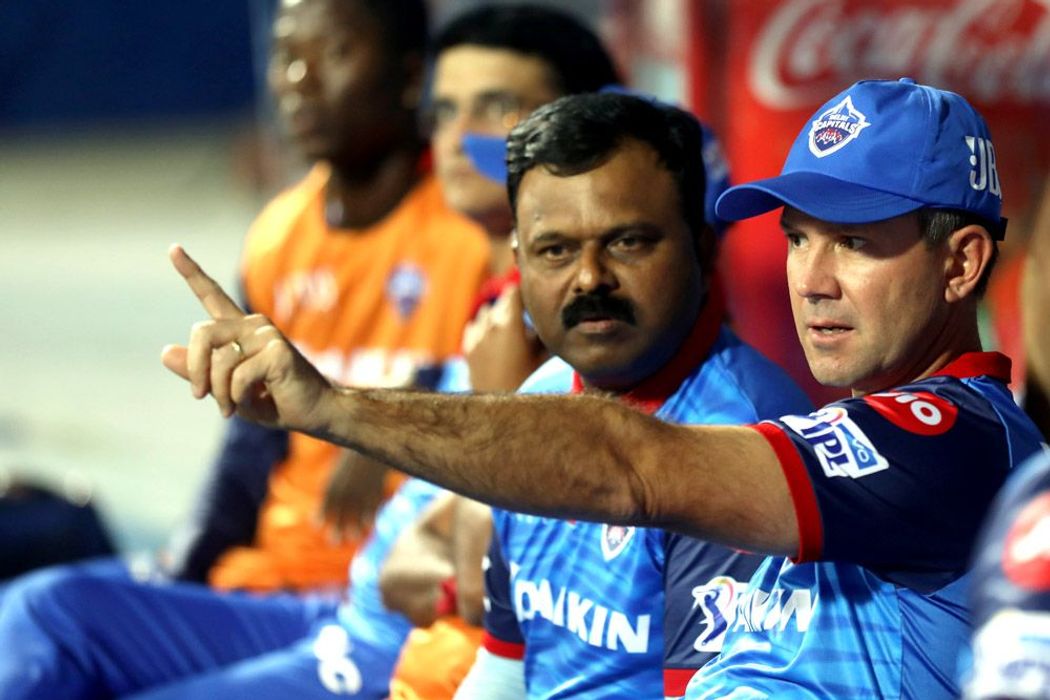
It is no WWE, which is all real and bloody until you find out that it is scripted, which leaves you disappointed. This is cricket, everyone plays to win and who better to understand that point than Australia’s Ricky Ponting. Ponting, arguably one of the best skippers around the world across the generations, always played to win. It didn’t matter if it was fair, unfair, verbal or non-verbal, he and his team would always just aim to win.
After calling it quits from his playing life, the Australian has become a rather veteran coach, with his stints all over the world. India and Indian Premier League were no different, as Ponting was involved in the setup for Mumbai Indians in the past season, with him becoming the head coach of the revamped Delhi Capitals side. Everything was going fairly well for the franchise, who were preparing to win their first title until the Tasmanian decided to turn all the attention towards him, hogging the wrong limelight.
Remember, it is not the first time, the Australian has become the so-called ‘moral’ compass, with his comments on the Englishman Alex Hales regarding his movement while fielding created huge chaos. In 2005 ahead of the Ashes in England, there was Ponting who brought with him in his back pocket another Spirit of Cricket manifesto, promising no more sledging, no more questioning of the umpires' decisions. He wanted his team to play hard but fair and just a month after all of these promises, it turned out to be just nothing more than toilet paper.
Post that, the Australian skipper was carrying and using a bat that was graphite-reinforced, that contravened one of MCC’s law, which deemed it illegal. Where was Ponting that time and his comments? In 2006, there was Ponting’s sense of pride that took over his moral self, when he shoved aside BCCI’s chief Sharad Powar, only to later apologise that it was in the heat of the moment. In the 2003 World Cup semi-final, Australia’s then vice-captain Adam Gilchrist walked the talk after edging a delivery. Instantly, the Australian captain had admitted to the media that he wouldn’t walk, even after knowing he had edged. Talk about moral policing, why couldn’t he then get on board with Gilchrist and say that this Australian team will set a good example to the future generations when he was still the most powerful member of that team’s setup!
Let’s leave this one and pick up another topic, up for discussion - 2008 Sydney Test, infamously known for ‘Monkeygate’ but who was leading the Australian team then? One certain Ricky Ponting, who was not just a skipper but also an acting umpire, a match referee and moreso, a decision-maker on that day. Sourav Ganguly was not-out, with Michael Clarke clearly grassing the opportunity but Ponting was right there, becoming the third-umpire as he walked straight to Steve Bucknor and insisted that it was out. After that incident, in the post-match press conference, "Only one team is playing in the spirit of the game,” and that was not Ponting’s team. Do you think we were done?
In 2010, the Australian batsman ensured that he did not stop his long-list of controversies behind when he stepped on the pitch against England. Once again, he was there giving orders to the umpire, stepping the line excessively, making it to the front pages of many newspapers around the world for the wrong reasons. He was fined 40 per cent of his match fee for a Level One charge of dissent after remonstrating with Dar after Kevin Pietersen’s decision. Do you think he was done? He continued on, chirping in Tony Hill’s ears to say that the umpiring team was terribly wrong with the choicest of words.
The guy who talks and epitomes the so-called ‘spirit’ of the game went missing on that day. It wasn’t just morally wrong but also legally, a player-turning-umpire was something that was unheard in the game but that day, he was everything, from captain to umpire. In 2020, he stepped up a notch and become a judge, a morally right one, or at least self-proclaimed. Ponting might have been the epitome of competitive spirited nature but he can’t claim to be a true lover of the spirit of the game. In this case, let’s assume that he is indeed the one that he is acting to be, in that case, wouldn’t the batsmen gain an undue advantage over the fielding team?
Being the moral compass, would the Delhi coach then go to his batsmen and advice them to keep a foot inside the non-striker’s end without gaining an advantage? The very fact that it came under the microscopic view is that he did not make that comment from a personal space but rather talking as one of Delhi’s head coach. As a head coach who is responsible for representing the team came out and delivered one of the most absurd statements in the tournament, which only shows his shallow idealogy.
There are no two ways about it, cricket and batsmen should start accepting this mode of dismissal just like they do to bowled, LBW or caught behind. Ponting too should understand that these words coming from his mouth does not do any poetic justice, it is rather like a vow that politicians around the world find it hard to keep.
 0
0 0
0 0
0 0
0 0
0 0
0