DRS and Umpire's Call: Why the "Soft Signal" Still Matters in Cricket
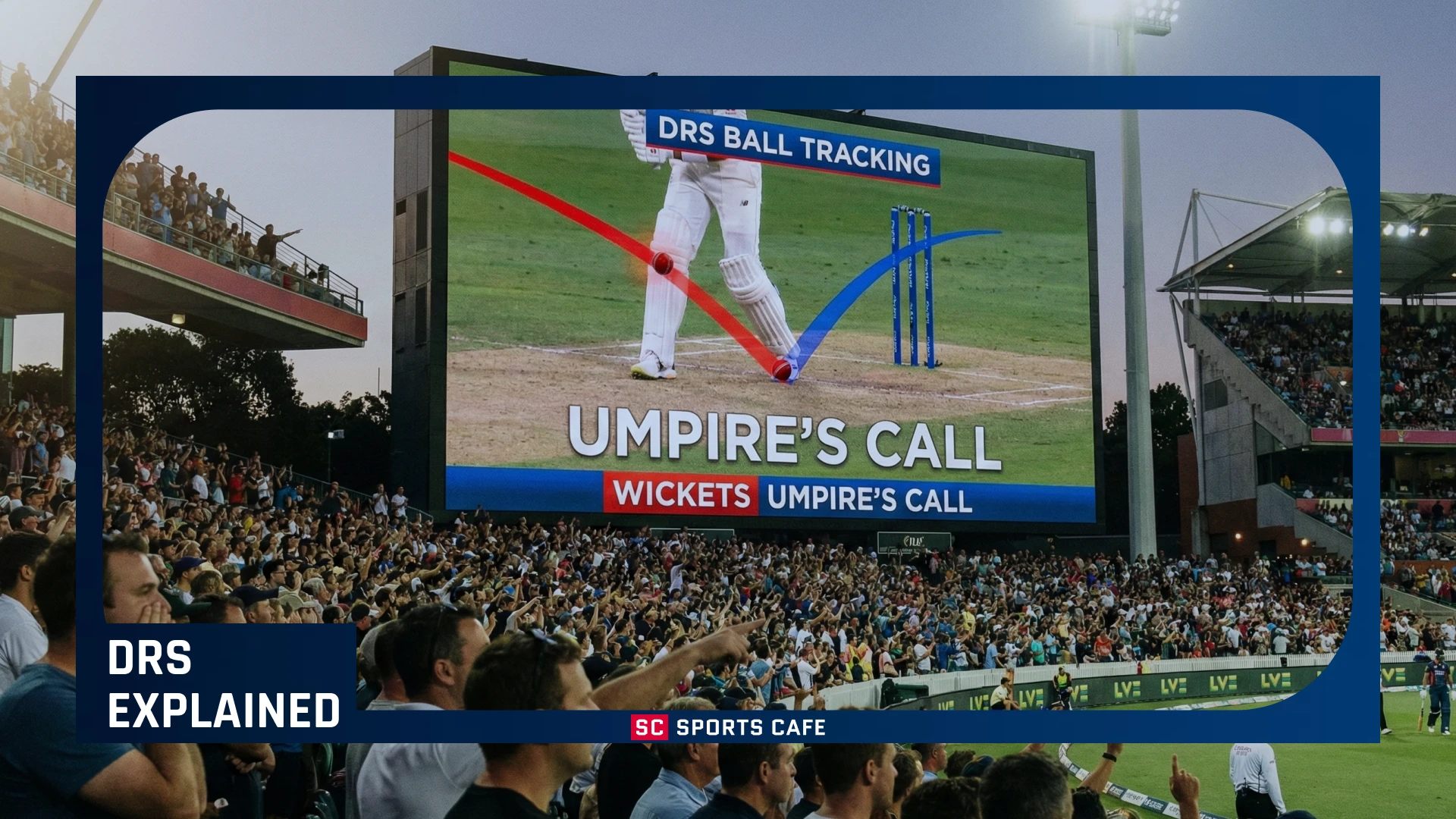
Umpire’s Call sits at the center of many heated debates in modern cricket, and confusion around it never seems to fade. Fans watch replays, see ball-tracking graphics, and still wonder why a decision stays the same. At its core, what is the meaning of umpire's call in cricket comes down to uncertainty. Inside the Decision Review System, Hawk-Eye projects the ball’s path after pad impact, but in very close cases, the projection only shows partial contact with key areas such as Impact or Wickets. When that contact falls into a narrow margin, technology cannot justify a full reversal.
In these marginal situations, DRS respects the original on-field call. The system signals that the ball may clip the stumps or brush the line, but not with enough confidence to overrule the umpire who made the live judgment. That is why spectators sometimes see identical graphics lead to different outcomes. The difference does not come from bias, but from the rule that places trust in the human decision when the evidence is incomplete.
This guide breaks down how that balance works. You will see how the so-called 50 percent rule defines reversals, why teams keep their reviews when umpire’s call appears, and how limits in predictive tracking create a margin of error that technology cannot erase. Understanding these points helps explain why the soft signal still carries weight, even in an era driven by data and slow-motion replays.
Understanding DRS in Cricket
Before diving into the umpire’s call, it helps to understand how DRS works during live play. The system exists to support on-field officials, not replace them. Reviews give teams a chance to challenge decisions that may look wrong in real time, while technology steps in to test those calls against available evidence.
What is DRS and Hawk-Eye?
The Decision Review System allows players to question an on-field umpire’s call by using technology. Each team receives a limited number of reviews per innings, which forces careful use. Once a review gets requested, third umpires rely on several tools, with ball tracking playing the biggest role in leg-before-wicket cases.
Hawk-Eye tracks the ball from release to impact and then projects its expected path after it strikes the pad. Cameras around the ground collect data points, and software builds a predicted trajectory. That projection helps officials judge events that the naked eye cannot fully confirm at match speed.
The Three Critical Zones in LBW Decisions
Every LBW review passes through three fixed checkpoints. Each one must satisfy the law before a dismissal stands.
Pitching Zone: Officials first check where the ball landed. The delivery must pitch in line with the stumps or on the legal side allowed by the laws. If it lands outside that area, the batter is not out, and no further checks apply.
Impact Zone: Next comes the point of contact between ball and pad. The system checks whether an impact occurred in line with the stumps. Contact outside the line often favors the batter, especially when the on-field call says not out.
Wickets Zone: The final stage looks at what would have happened next. Hawk-Eye estimates whether the ball would have hit the stumps. Only when the projected path shows a clear hit does DRS support an out decision.
Together, these zones create the structure behind every LBW review. Understanding how they interact explains why some calls feel obvious while others end with an umpire’s call and continued debate.
The Science Behind Umpire's Call
Debates around umpires’ calls usually start with fairness, but the rule comes from physics and probability rather than opinion. Ball tracking supports decisions, though it cannot claim absolute certainty. Understanding those limits explains why the on-field call still carries weight.
Margin of Error and Predictive Path
Once the ball strikes the pad, its future path no longer exists in reality. Hawk-Eye reconstructs that path using speed, angle, bounce, and spin recorded before impact. From that data, the system predicts where the ball would have travelled next. Prediction always includes a margin of error, even with high-speed cameras and advanced models.
Umpire’s call exists to respect that uncertainty. In borderline cases, technology signals a possible outcome but stops short of full confidence. The message stays clear: evidence points one way, but not strongly enough to overturn a human decision made in real time. Rather than pretend precision where none exists, the system defers to the umpire.
The 50% Rule Explained
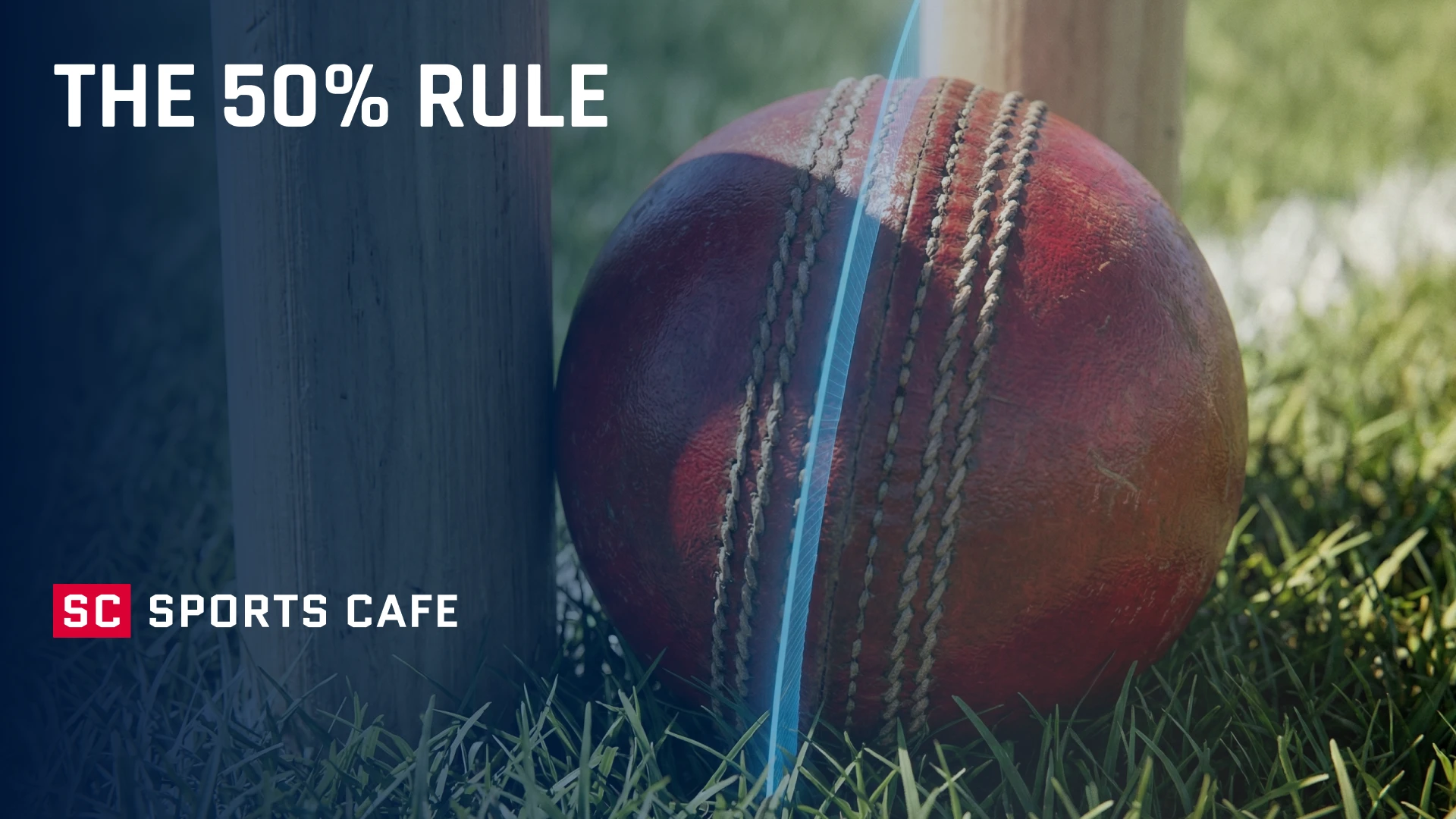
A clear numerical threshold governs these calls. For DRS to reverse an on-field decision, more than half of the ball must lie within the key zone under review. That zone could involve impact in line with the stumps or projected contact with the wickets.
When less than 50% of the ball overlaps that area, the verdict becomes an umpire’s call. The original decision stands because the margin falls inside the accepted error range. The benefit of the doubt remains with the on-field umpire, not the technology. This rule prevents marginal projections from rewriting decisions based on guesses rather than certainty.
How Umpire's Call Works in Different Scenarios
Most debates around DRS begin when everyone watches the same replay but walks away with different opinions. Confusion usually comes from the fact that LBW decisions are not judged as a single action. Each stage of the delivery gets checked separately, and the umpire’s call applies only in certain zones. Once that structure becomes clear, many of the arguments start to make more sense.
Scenario
On-field Umpire Decision
DRS Verdict
Pitching outside the line
Not Out
Not Out (No Umpire’s Call)
Impact marginal (less than 50%)
Not Out
Umpire’s Call – Not Out
Wickets clipping bails (less than 50%)
Out
Umpire’s Call – Out
Scenario A: Pitching Zone (No Umpire's Call)
The pitching zone leaves no room for interpretation. Hawk-Eye checks where the ball lands and gives a clear answer. The delivery either pitches in line with the stumps or it does not. Since this part relies on an actual contact point rather than prediction, the umpire’s call never applies here. A ball pitching outside the allowed area immediately rules the batter safe, no matter what happens afterward.
Scenario B: Impact Zone
Impact decisions often frustrate viewers because they sit right on the edge. An umpire may judge that pad contact happened outside the line and signal Not Out. When ball tracking later shows the ball brushing the line but not by enough margin, the system cannot overturn the call. Less than half of the ball in line triggers the umpire’s call, which means the original decision stays. Technology acknowledges the contact but lacks enough certainty to change the verdict.
Scenario C: Wickets Hitting
Most controversies come from the wicket-hitting stage. An umpire may give Out based on live judgment, and Hawk-Eye later shows the ball clipping the bails by a narrow margin. In that case, the decision remains Out. If the umpire had originally given Not Out, the same visual would protect the batter instead. Identical graphics can lead to opposite results, not because the system is inconsistent, but because it defers to the on-field call when certainty stays below the required level. That balance explains why the umpire’s call continues to divide opinion.
Review Retention: Do You Lose a Review?
The review rule around umpire’s call matters a lot for captains, analysts, and even bettors who track match momentum. A wrong assumption here can change how aggressively teams challenge decisions late in an innings.
Why Reviews Are Retained
Under ICC playing conditions, a team does not lose its review when the final verdict comes back as Umpire’s Call. The logic stays practical. The review shows that the call sat on a very fine margin, where technology could not clearly prove the on-field umpire wrong. Since the challenge was justified, the review is retained.
A review is lost only when DRS shows a clear error by the player or captain. Examples include pitching clearly outside the line, impact well outside off stump, or the ball missing the stumps by a visible gap. In those cases, the system delivers a decisive answer, and the team pays the price by losing a review.
This rule encourages teams to challenge close calls without fear. Captains know that borderline decisions do not punish them, which keeps reviews active deeper into the match and preserves balance between technology and on-field judgment.
Expert Perspective and Controversies
Few parts of modern cricket trigger debate like the umpire’s call. Players, commentators, and fans often split into two camps, with strong opinions on fairness, technology, and the role of the on-field umpire.
Virat Kohli and the "Stumps" Argument
Virat Kohli has repeatedly questioned the logic behind the umpire’s call, especially in cases where ball tracking shows even the slightest contact with the stumps. His argument focuses on clarity rather than probability. If technology confirms that the ball would touch the wicket, even by 1%, he believes the batter should be given out, without relying on the original on-field decision.
From this perspective, percentages feel artificial. A delivery that clips the bails by a fraction still hits the stumps, and for many players, that fact alone should decide the outcome. Kohli and others see the current rule as protecting batters through technical margins instead of rewarding accurate bowling. This view continues to fuel debate whenever a replay shows the ball barely brushing the wicket, but the decision stays unchanged.
The Technology Limitation Argument
Supporters of the current rule point to the limits of ball-tracking technology. The predictive path shown by Hawk-Eye is still a calculation based on speed, angle, and bounce, not a recorded fact after impact. Small variations in seam position or surface contact can change the real outcome, even if the graphic looks precise.
Because of that uncertainty, defenders argue that the on-field umpire must stay central to the decision. Until technology can guarantee 100% accuracy, the original call acts as a safety net. Umpire’s call exists to balance data with judgment, keeping human authority in place when the margin sits too close to certainty.
FAQs about the Umpire's Call in Cricket
What does Umpire's Call mean in DRS?
Umpire’s Call appears when the tracking technology shows a very tight outcome. The data suggests contact with the line or stumps, but not strongly enough to reverse the on-field decision. In short, the original judgment stays because certainty does not reach the required level. That situation explains what is umpire call in cricket in practical terms.
Do teams lose a review on Umpire's Call?
No review gets lost in this case. When DRS returns an Umpire’s Call verdict, the system treats it as a marginal decision. Teams keep the review because the challenge did not prove clearly wrong.
Why is Umpire's Call controversial?
Debate comes from the fact that the same ball-tracking image can lead to two different outcomes. One initial call gives Out, another gives Not Out, even though the replay looks identical. That uncertainty sits at the center of arguments about explain umpire’s call in cricket and fairness.
Does Umpire's Call apply to Pitching?
No. Pitching stays binary. The ball either lands in line with the stumps or it does not. Umpire’s Call only applies to Impact and Wickets, where prediction enters the process.
Is Umpire's Call used in IPL?
Yes. The league follows ICC playing conditions, so the same DRS framework applies. That includes Umpire’s Call, review retention, and the same margin rules seen in international matches.
0
0
0
0
0
0
Comments
0/1000
Sign up or log in to your account to leave comments and reactions




Comments
Sign up or log in to your account to leave comments and reactions
0 Comments