Yorker Meaning in Cricket: From Yorkshire Origins to Death Over Tactics
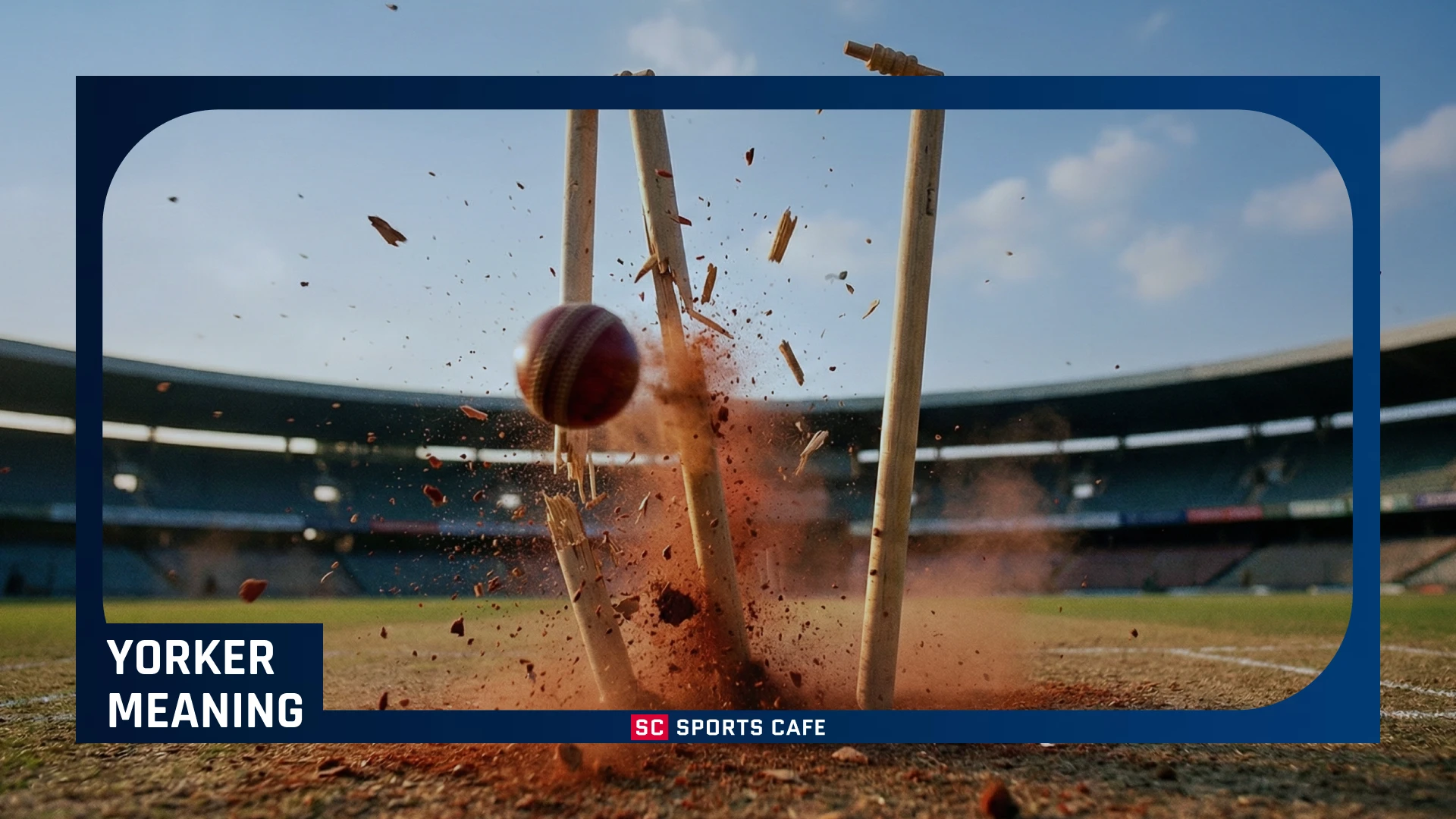
Among all deliveries a fast bowler can use, the yorker stands out as the most feared and decisive. The yorker ball meaning stays clear in cricket terms. It is a full-length delivery aimed straight at the batter’s feet, targeting the narrow space near the popping crease known as the blockhole, the point where the bat must come down at exactly the right time. Even a slight delay leaves no room for correction.
The yorker also carries the nickname “toe crusher”, and that label did not appear by accident. At high pace, the ball can smash into the front shoe, hurt toes, trap the batter lbw, or crash straight into the base of the stumps. When executed well, the shot options disappear, and survival becomes the only goal.
This guide breaks the yorker down from every angle. You will learn where the term came from and how its roots link back to Yorkshire, why modern bowlers rely on it during death overs, and how to master the release technique that separates a perfect yorker from a costly full toss. Just as important, batters will see how to cope with this delivery, how to play it safely, and how some elite players turn defense into attack through tools like the helicopter shot or a late shuffle across the crease.
What is a Yorker Ball in Cricket? Detailed Definition
A clear answer to what is yorker ball in cricket starts with its length and intent. The yorker targets the smallest and most uncomfortable space for a batter. It lands full, right at the base of the bat, and forces an instant decision with almost no margin for error. Unlike other full deliveries, it arrives too late for a free swing and too fast for easy adjustment.
The Target Zone: Blockhole and Toes
The ideal yorker pitches on the popping crease, directly beneath the bat face. That landing point sits in the blockhole, the area batters try to protect at all costs. A half-volley lands earlier and allows a drive, while a full toss skips the bounce and invites punishment. A yorker does neither. It drops at the last moment, removes space for the hands, and turns timing into a survival test rather than a scoring chance.
Why is it Called the "Toe Crusher"?
The nickname comes from the damage it can cause. When bat speed falls even slightly behind, the bat fails to reach the ground in time. The ball then slams into the front shoe at pace, often leading to bruised or broken toes. In many cases, the same delivery traps the batter leg before the wicket because the bat never arrives. The term reflects both the physical risk and the brutal efficiency of a well-placed yorker.
Origins and History: Why is it Called a Yorker?
The name sounds unusual, and many fans search for its roots. The answer sits deep in early English cricket, long before modern formats or televised matches shaped the game.
The Yorkshire Connection
Most historians trace the term back to 19th-century England. Bowlers from the county of Yorkshire earned a reputation for straight, full deliveries aimed at the base of the stumps rather than wide movement or short length. Opponents often looked surprised when the ball rushed in at their feet instead of rising toward the bat. Old cricket stories describe a batter asking, “What was that?” and a teammate replying, “That was a yorker, sir”. Over time, the phrase stuck and spread beyond the county, becoming part of cricket’s shared language.
"Yorked" as a Cricket Slang
The verb “to be yorked” grew from the same idea. A batter becomes yorked when footwork and judgment fail together. Expecting the ball to drop shorter, the bat stays high for a moment too long. The delivery then sneaks in at the toes, clips the stumps, or traps the leg in front. In that instant, the batter looks beaten by length rather than pace. This term captures the feeling of surprise and defeat that a perfect yorker delivers.
Types of Yorkers: Variations for Modern Cricket
The yorker no longer exists as a single delivery. Modern cricket, especially T20, pushed fast bowlers to adjust length, pace, and angle while still targeting the blockhole. Each version serves a different purpose and fits a specific match situation. Some aim for wickets, others focus on run control during the final overs.
Yorker Type
Key Feature
Main Purpose
Typical Use
Inswing yorker
Late movement toward the stumps
Bowled or lbw dismissals
Death overs, attacking spell
Reverse swing yorker
Sharp inward movement with an old ball
Beat bat and pads
Late innings with a worn ball
Wide yorker
Full length outside off stump
Prevent boundaries
T20 death overs
Slower yorker
Reduced pace with disguised release
Deception
Against set batters
The Swinging Yorker (Inswing and Reverse)
The swinging yorker ranks among the hardest deliveries to survive. An inswinging yorker curves late into the batter, attacking the toes and base of the stumps at the same time. A reverse swing yorker, delivered with an older ball, moves sharply in the opposite direction just before impact. That late movement removes reaction time and forces the batter into rushed footwork. Because the ball changes direction in the air, timing becomes almost impossible. Bowlers like Waqar Younis built entire careers on this weapon, using pace, late swing, and precise targeting to produce deliveries many batters described as unplayable.
The Wide Yorker
The wide yorker reflects modern T20 thinking. Instead of attacking the stumps, the bowler aims at a wide line, close to the tramline but still legal. The length stays full, but the angle prevents the batter from reaching the ball with a strong bat swing. Even powerful hitters struggle to access boundaries from that position. In death overs, this approach limits scoring options and forces mistimed shots toward the off-side field. As a T20 strategy, the wide yorker serves one main purpose: boundary prevention without risking a slot ball.
The Slower Yorker
A slow yorker relies on deception rather than speed. The bowler releases the ball with a back-of-the-hand action or subtle cutters, reducing pace while keeping the same arm speed. The batter commits early, expecting a fast yorker, and loses balance when the ball arrives later than planned. That delay often leads to mistimed contact or missed swings. When executed well, the slow yorker turns the batter’s aggression into a weakness, especially in the final overs.
How to Ball a Yorker in Cricket: Guide for Bowlers
Bowling a yorker looks simple on paper, but execution separates control from disaster. Small details decide everything, from how the ball sits in the hand to the exact moment it leaves the fingers. For bowlers at any level, consistency matters more than raw pace.
Grip and Seam Position
A reliable yorker starts with a firm bowling grip. Fingers must stay tight on the seam without tension in the wrist. The seam position should remain upright and straight, which helps the ball cut cleanly through the air and stay on its intended line. Any tilt in the seam increases swing or drift, which raises the risk of missing the target. Fast bowlers who trust their grip gain better control at full speed, especially under pressure.
Focus and Release Point
Accuracy comes from clear visual focus. Many bowlers fix their eyes on the batter’s shoes or the base of the stumps, often described as stumps cartwheeling, to lock in the landing area. The release point plays a huge role here. A higher and later release keeps the trajectory flatter and preserves pace. Early release usually pulls the length fuller than intended, while a rushed action often sends the ball down the leg side.
The Risk of Missing the Length
Yorkers punish small errors. A miss by just a few inches can turn the delivery into a low full toss or a slot ball, both ideal for boundary hitting. At that length, even mistimed shots can clear the rope. That danger explains why precision bowling matters more than speed. Bowlers who chase perfect yorkers without control often leak runs, while those who accept a slight margin and stay disciplined force mistakes over time.
How to Play and Hit a Yorker Ball: A Batter's Survival Guide
Facing a yorker places a batter under extreme pressure. The ball arrives late, stays low, and leaves almost no margin for error. Anyone searching for how to play yorker ball in cricket quickly learns that survival comes before style, while those asking how to hit yorker ball need timing, balance, and nerve in equal measure.
Defensive Technique: Digging It Out
The first response to a yorker focuses on defense. A batter must react instantly and drop the bat straight down, a move often described as jamming the bat. The goal stays clear: get the full face of the bat behind the ball at the last possible moment and kill its pace. This action, known as digging it out, keeps the ball near the feet and prevents lbw or bowled dismissals. Late bat speed usually spells trouble, so sharp reflexes and a quiet head matter more than strength.
Attacking Options: The Helicopter Shot
Attacking a yorker demands confidence and wrist strength. One famous answer came from MS Dhoni, whose helicopter shot turned defensive deliveries into scoring chances. The shot relies on strong wrists rather than a full swing. By getting under the ball and snapping the wrists upward, a batter can lift the yorker from the blockhole and clear the infield, sometimes even the boundary. Timing remains critical, since mistiming often leads to a straight catch or a missed chance.
Using the Crease: Shuffling Across and Scoops
Modern batters add movement to their setup. Players such as AB de Villiers and Jos Buttler use shuffling across to change the angle before the ball arrives. This shift opens new scoring areas and disrupts the bowler’s plan. Another option involves scoop shots, where the batter uses the pace of the delivery to guide the ball over the wicketkeeper. These methods carry risk, but they punish predictable yorkers when executed with control.
Standing Deep in the Crease
Position inside the crease also changes the equation. Standing deeper gives the batter extra time and can turn a perfect yorker into a half-volley. That fraction of a second often makes the difference between a blocked ball and a driven shot. The adjustment works best when paired with balance and stillness, since leaning too far back limits control and invites mistakes.
Masters of the Art: Famous Yorker Kings
Perfecting the yorker takes years of repetition, nerve, and control under pressure. Only a handful of bowlers turned this delivery into a reliable weapon rather than a hopeful gamble. Their careers show how a well-executed yorker can dominate even the best batters, especially when matches reach their most tense moments.
Lasith Malinga: The Slinging King
Lasith Malinga changed how the cricket world viewed death bowling. His low, slinging action released the ball from an unusual angle, which shortened a batter’s reaction time. That release point allowed him to disguise both fast yorkers and slower yorkers without changing his arm speed. In the IPL, batters often prepared for pace but received a dipping full ball at their toes instead.
Malinga’s yorkers did not rely only on speed. Control played the main role. He aimed repeatedly at the blockhole, even under extreme pressure, which forced batters into survival mode. Many of his dismissals came from shattered stumps or cramped digs back onto the pads. Few bowlers matched his ability to deliver the same ball again and again in the final over.
Jasprit Bumrah: The Precision Machine
Jasprit Bumrah represents a different model of yorker mastery. His short run-up and late arm release hide the ball until the final moment. Batters struggle to pick the length early, which makes his yorker even harder to read. Bumrah rarely depends on raw pace. Instead, he focuses on execution and placement.
In death overs, his yorkers serve one main purpose: run containment. Rather than chase wickets at all costs, he shuts down scoring options. Misses remain rare, and even slight errors often land close enough to prevent clean strikes. That consistency explains why captains trust him with the final over in high-pressure matches.
Waqar Younis and Wasim Akram
During the 1990s, Waqar Younis and Wasim Akram turned reverse swing yorkers into a feared art form. With an old ball, they generated late movement at high speed, sending deliveries crashing into the base of the stumps or the batter’s footwear. Waqar’s pace, combined with a sharp inward swing, produced countless bowled dismissals, earning him the nickname sandshoe crusher.
Wasim added variation and deception. His ability to swing the ball both ways meant batters rarely guessed correctly. Together, they defined an era where yorkers decided matches long before the final scorecard appeared.
FAQs about Yorker Ball in Cricket
What is the meaning of a yorker in cricket?
A yorker is a delivery of full length that lands at the batter’s feet or right near the base of the stumps. The ball stays very low after pitching, which removes room for a free swing and forces the batter into a rushed response.
How to face the yorker ball effectively?
Batters usually rely on balance and timing rather than power. A slightly deeper position in the crease can help convert the ball into a more playable length. Keeping the bat straight, watching the bowler’s hand closely, and dropping the bat late reduces the chance of missing the ball or trapping the pad in front of the stumps.
Why is the yorker so difficult to play?
The difficulty comes from speed and length working together. The ball reaches the batter quickly and pitches so close to the feet that footwork options disappear. Late movement in the air or off the surface adds another layer of uncertainty, which often leads to lbw or bowled dismissals.
Is a full toss the same as a yorker?
A full toss and a yorker look similar at first glance, but the difference matters. A full toss does not touch the pitch and usually sits at a comfortable height, which gives the batter time to hit. A yorker must bounce at the toes, and that single bounce changes the entire outcome of the delivery.
How to ball yorker in cricket with control?
Bowlers focus on discipline rather than force. A firm grip, an upright seam, and a late release close to the front foot help control length. Visual focus on the batter’s shoes or the base of the stumps also improves accuracy. Even a small error of a few inches can turn the ball into a scoring chance.
Who bowled the fastest yorker?
Names like Shaun Tait and Shoaib Akhtar often appear in these discussions. Both produced yorkers at speeds above 160 km/h, which left batters with almost no time to react once the ball left the hand.
0
0
0
0
0
0
Comments
0/1000
Sign up or log in to your account to leave comments and reactions





Comments
Sign up or log in to your account to leave comments and reactions
0 Comments