Economy Rate Explained: How to Calculate Bowling Performance
Cricket statistics reveal details that raw scores often miss. In modern formats, especially T20, a bowler who limits runs can change a match just as much as one who takes wickets. Teams depend on control during key phases, and steady run containment often decides momentum.
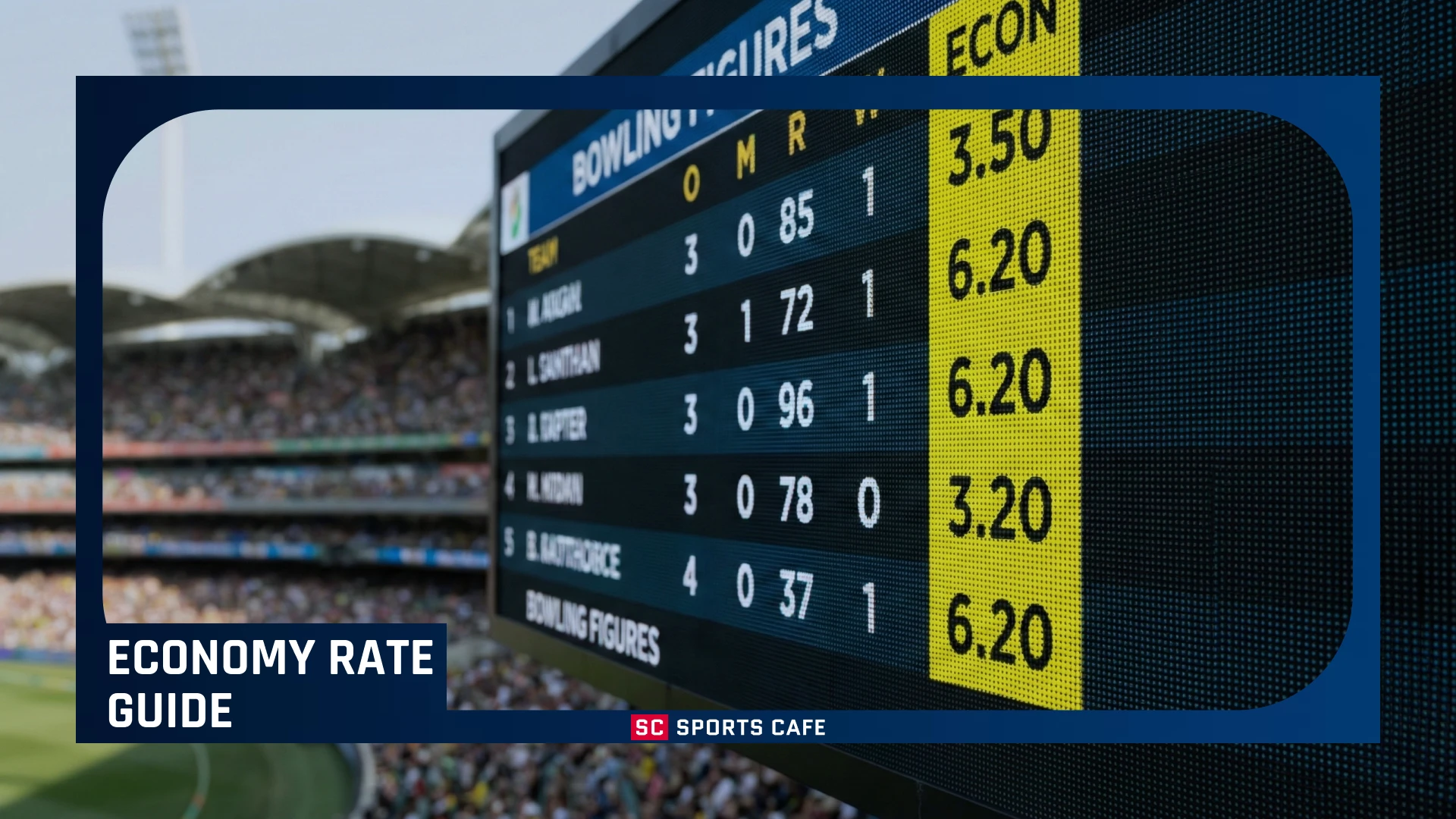
Many readers want a clear answer to what is economy rate in cricket. It refers to the average number of runs a bowler concedes per over. A lower figure signals control and discipline, while a higher number points to pressure on the fielding side, even if wickets come along the way.
In this guide, you will see the economy rate formula in action, learn how to calculate figures when overs are incomplete, and understand the gap between economical bowling and an expensive bowler. The discussion also shows how these numbers shape fantasy cricket points and influence decisions beyond the scorecard.
Economy in Cricket Meaning: Defining the Term
Economy rate sits at the center of bowling analysis. It shows how much control a bowler keeps over scoring and explains why some spells feel restrictive even without wickets. Understanding economy in cricket meaning helps place bowling performance into the proper context, especially when matches turn on small margins.
The Definition of Economy Rate
Economy Rate, often shortened to ER, shows how efficiently a bowler limits scoring. It compares the total runs conceded with the number of overs bowled. Fewer runs across the same overs usually point to stronger control and better planning. When people ask what does economy mean in cricket, the answer stays practical. It measures how hard a bowler makes scoring, even during spells without wickets.
Why Economy Matters More in Limited Overs
In Test matches, economy rate helps apply pressure over long periods. Bowlers can repeat areas, stay patient, and wait for mistakes without worrying about the clock. Control matters, but it works alongside stamina and long spells.
Limited overs formats shift priorities. With a fixed number of balls, every run changes the equation. In T20 and ODI cricket, one loose over can undo careful work from earlier phases. Tight spells often decide results on their own, which explains why economy becomes a key factor for victory in these formats.
How is Economy Calculated in Cricket? The Formula
Bowling figures look easy at first glance, but details matter. Small calculation errors can change how a spell appears on paper. Knowing how is economy calculated in cricket helps avoid confusion when reading scorecards or comparing performances across matches.
The Basic Economy Rate Formula
The formula remains consistent in every format:
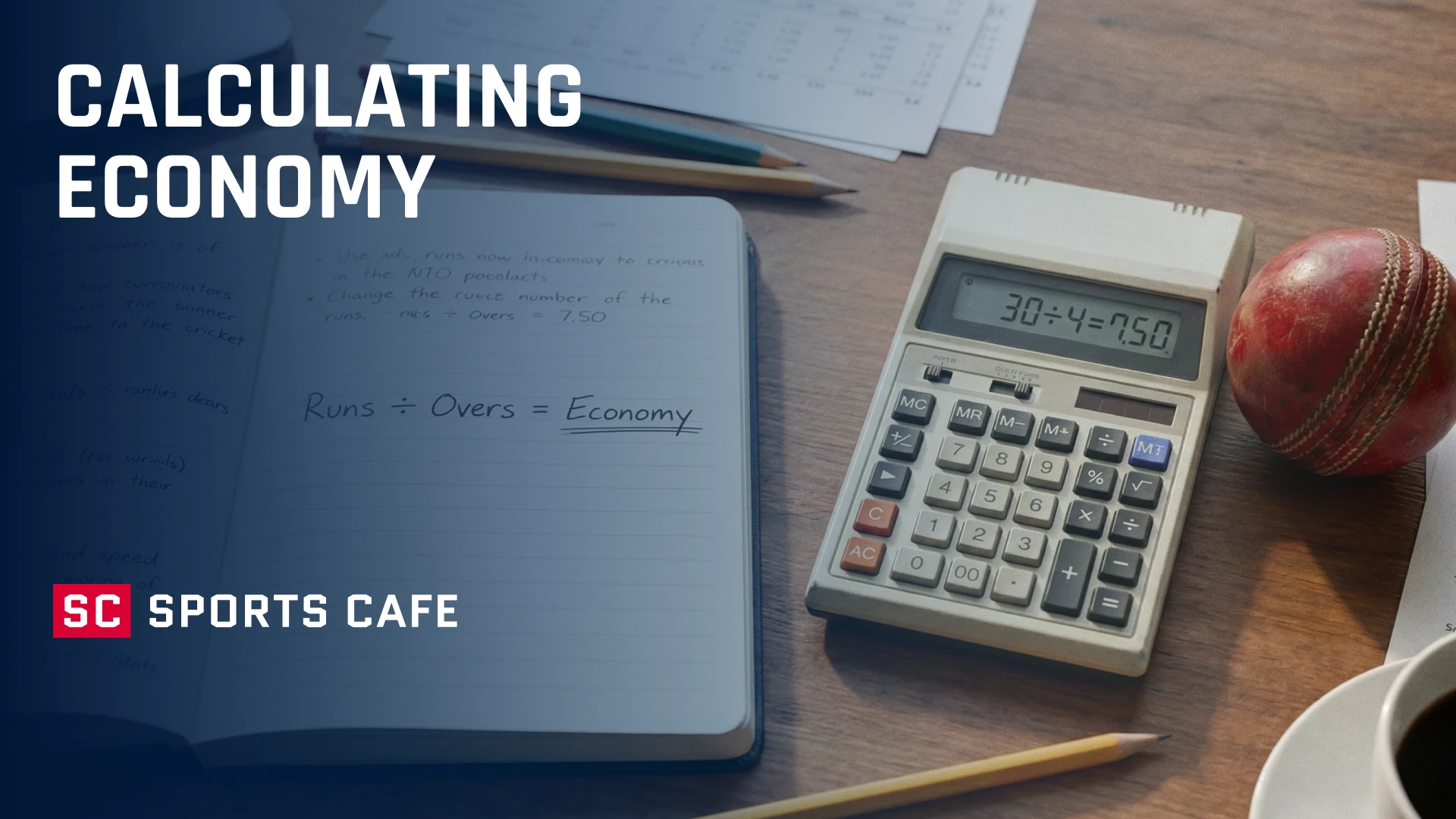
Economy Rate = Total Runs Conceded ÷ Total Overs Bowled
A clear example helps. If a bowler concedes 30 runs in 4 overs, the calculation reads 30 divided by 4, which equals 7.50. That figure represents the average runs allowed per over and allows fair comparison between different spells.
Handling Partial Overs and Fractional Calculations
Partial overs often cause mistakes. A spell written as 3.4 overs means three overs and four balls, not three point four overs. One over contains six balls, so four balls equal 4 divided by 6, which comes to 0.66. For correct calculation, the overs become 3.66. Using the wrong decimal inflates the economy rate and leads to misleading conclusions.
What Counts in Economy Rate? (Extras Explained)
Only certain extras affect a bowler’s economy. Wides and no balls count toward runs conceded because they come directly from bowling errors. Byes and leg byes follow a different rule. These runs result from fielding situations or deflections, so they do not damage the bowler’s economy rate. Clear separation of these extras keeps the statistics accurate.
What is a Good Economy Rate in Cricket? Benchmarks by Format
A good economy rate depends heavily on format, match situation, and bowling role. Numbers that look impressive in one format may feel ordinary in another. That context explains what is a good economy rate in cricket, since expectations shift with overs available, scoring patterns, and field restrictions.
Before breaking it down by format, the table below shows common benchmarks used by analysts and teams.
Format
Excellent
Acceptable
Expensive
Test
Below 3.00
3.00–3.50
Above 3.50
ODI
4.50–5.50
5.50–6.00
Above 6.00
T20
Below 7.00
7.00–9.00
Above 9.00
Test Match Economy Standards
Test cricket rewards patience and discipline. With no limit on overs, bowlers focus on restrictive bowling rather than quick results. An economy rate below 3.00 signals strong control, steady pressure, and long spells that drain scoring options. Maiden overs matter here because they build tension and force batters into mistakes over time.
ODI Economy Benchmarks
In One Day Internationals, balance becomes key. Bowlers must defend runs across fifty overs while still attacking. An economy rate between 4.50 and 5.50 usually marks a strong performance. Figures above 6.00 start to look costly unless the bowler offsets that with regular wickets or controls a difficult phase, such as the powerplay.
T20 Economy: The High-Scoring Reality
T20 cricket changes expectations completely. Batters attack from the first over, and bowlers face constant risk. An economy rate below 7.00 stands out as elite in this format. Rates between 8.00 and 9.00 often remain acceptable, especially for bowlers operating at the death, where boundaries come frequently, and control becomes harder to maintain.
Factors Influencing Economy Rate
Economy rate always depends on context and the phase of play. A single number at the end of the innings rarely tells the full story. Overs bowled early, late, or under restrictions carry very different risks, and judging a bowler without that context leads to wrong conclusions.
Powerplay Economy
Powerplay overs usually cover the first six overs in T20 and the first 10 overs in ODI. During this phase, only two fielders can stay outside the inner circle, which leaves large scoring areas open. Batters attack early, often targeting anything slightly overpitched or short.
Because of these restrictions, economy rate in the powerplay often rises by 1.0 to 1.5 runs per over compared to the middle overs. A T20 bowler conceding 7.5 to 8.5 runs per over in the powerplay can still perform well if boundaries stay limited and no single over exceeds 12 or 14 runs. Control matters more than chasing perfect figures.
Death Overs Economy
Death overs usually refer to the final 4 to 5 overs of an innings in T20 and the last 10 overs in ODI. Batters swing hard from ball one, often accepting dismissal in exchange for quick runs. Yorkers, wide lines, and slower balls dominate bowling plans, but execution stays difficult under pressure.
In this phase, raw numbers require context. A bowler with an economy rate of 10.00 in death overs can still succeed if other bowlers concede 15 to 20 runs per over. Preventing one explosive over often carries more value than chasing wickets. Teams judge death bowlers on damage control rather than absolute economy.
Dot Ball Percentage
Dot ball percentage shows how often a bowler delivers balls without conceding runs. In T20 cricket, a dot ball rate above 35 percent usually supports a strong economy. In ODI, anything above 45 percent reflects solid control.
Each dot ball increases pressure and forces batters to take risks later in the over. A sequence of three or four dots often leads to a boundary attempt or a mistimed shot. Higher dot ball percentages usually result in a lower economy rate and create mistakes without needing aggressive bowling.
Economy vs. Average vs. Strike Rate: Comparing Stats
Bowling performance rarely fits into a single number. Economy rate, bowling average, and strike rate each describe a different role on the field. Reading them together gives a clearer picture of how a bowler actually contributes during a match.
Metric
What it Measures
What it Shows
Economy Rate
Runs conceded per over
Control and run restriction
Bowling Average
Runs conceded per wicket
Cost of taking wickets
Strike Rate
Balls per wicket
Frequency of wickets
Economy vs. Bowling Average
Bowling average focuses on how many runs a bowler gives away for each wicket taken. A low average usually points to effective wicket-taking. The economy rate tells a different story. A bowler can keep scoring quiet for long spells but struggle to take wickets, which leads to a strong economy and a weaker average. Such bowlers often play a holding role, especially in Tests or middle overs.
On the other hand, wicket takers may accept extra runs in exchange for breakthroughs. Their averages stay low, but economy can suffer during aggressive spells.
Economy vs. Strike Rate
Strike rate measures how often a bowler takes wickets in terms of balls bowled. A lower strike rate means wickets arrive more frequently. Bowlers with strong strike rates often attack relentlessly, which brings success but also risk. Boundaries appear more often, and economy rises as a result.
Economy focused bowlers work differently. They limit runs, build pressure, and wait for errors rather than force them. Understanding the balance between these figures explains why teams need different types of bowlers for various situations.
Best Economy Records in History
Looking at the history of cricket helps show how rare great economy rates can be. Some bowlers stood out not just for wickets but for how few runs they allowed over long spells. Their figures show that control and discipline shape careers, not just the ability to surprise batters.
Bapu Nadkarni's Record
Bapu Nadkarni set one of the most unusual bowling records in Test history. In a match against England in Madras in 1964, he bowled 21.5 consecutive overs without conceding a single run, totaling 131 balls in a row with no runs scored off his bowling. His final figures in that spell read 32 overs, 27 maidens, five wickets for zero runs conceded, which gave him a career economy rate of less than 2.00 in Tests. That remarkable performance remains a benchmark for defensive bowling and shows how tight control can dominate an innings.
Modern T20 Masters (Rashid Khan, Sunil Narine)
In the shortest format of the game, certain bowlers have impressed with consistently low economy rates even when scoring rates stay high. West Indian spinner Sunil Narine has been among the most economical bowlers in Twenty20 international cricket, often finishing with figures around 6 runs per over across many matches. Around the world in various leagues, bowlers like Rashid Khan also maintain low economy figures, which helps their teams control scoring in phases where batters normally attack aggressively.
These records show how economy rate can highlight a bowler’s value beyond wickets and why teams often build plans around players who keep runs in check.
Economy Rate in Fantasy Cricket and Betting
Economy rate plays a practical role far beyond post-match analysis. Fantasy platforms and betting markets both rely on this stat to measure control, not just impact moments like wickets. Players who understand how economy shapes scoring rules and odds often avoid common traps and make more stable decisions over time.
Bowling roles matter here. Some bowlers exist to attack, others to restrict. Economy rate helps separate those roles clearly, which becomes important when points or payouts depend on consistency rather than highlights.
Calculating Fantasy Points
Fantasy cricket apps such as Dream11 place strong emphasis on economy rate. Most scoring systems set clear thresholds. When a bowler finishes below that line, bonus points apply, even if the wicket count stays low. These bonuses reward control across full spells rather than isolated moments.
High economy spells work in the opposite direction. Penalty points reduce the total score and can cancel out wickets entirely. A bowler who takes two wickets but concedes 11 runs per over often scores fewer fantasy points than a bowler who takes one wicket with tight figures. Because of that balance, selecting bowlers trusted with middle overs or powerplay control often brings safer returns than choosing pure strike options.
Betting Markets: Player Props
Economy rate also appears in betting through player-focused markets. Top Bowler bets usually favor wicket takers, but several bookmakers add lines tied to runs conceded. Over or Under markets on a bowler’s total runs reward those expected to bowl controlled spells rather than chase breakthroughs.
Understanding role assignment helps here. A death over specialist may take wickets but still concede heavy runs, while a middle-overs bowler may restrict scoring without dismissals. Identifying that difference improves prediction accuracy and helps find value in props that many bettors overlook.
FAQs about Economy Rate in Cricket
What is a good economy rate in T20 cricket?
In T20 matches, figures below 7.00 usually indicate strong control, while 7.00–8.50 stays acceptable depending on the role. Anything above 9.00 starts to look expensive, which helps explain what is a good economy rate in cricket in high-scoring formats.
Do byes and leg byes count in economy rate?
No. These runs go down as team extras and do not affect the bowler’s figures. Only wides and no balls damage the economy rate.
How do you calculate economy for partial overs?
Partial overs require ball conversion. Four balls equal 0.66 of an over, not 0.4. Using correct decimals keeps calculations accurate, which matters when tracking economy in cricket stats.
What is the difference between economy and net run rate?
Economy rate applies to an individual bowler and shows run control per over. Net run rate measures team performance across an entire match or tournament.
Is economy rate more important than wickets?
Importance depends on the match context. In T20 games with low targets, tight bowling often matters more. In Tests, wickets usually carry greater value, but control still supports pressure and mistakes.
0
0
0
0
0
0
Comments
0/1000
Sign up or log in to your account to leave comments and reactions




Comments
Sign up or log in to your account to leave comments and reactions
0 Comments