The Dark Side of Cricket: How Spot Fixing Manipulates the Game
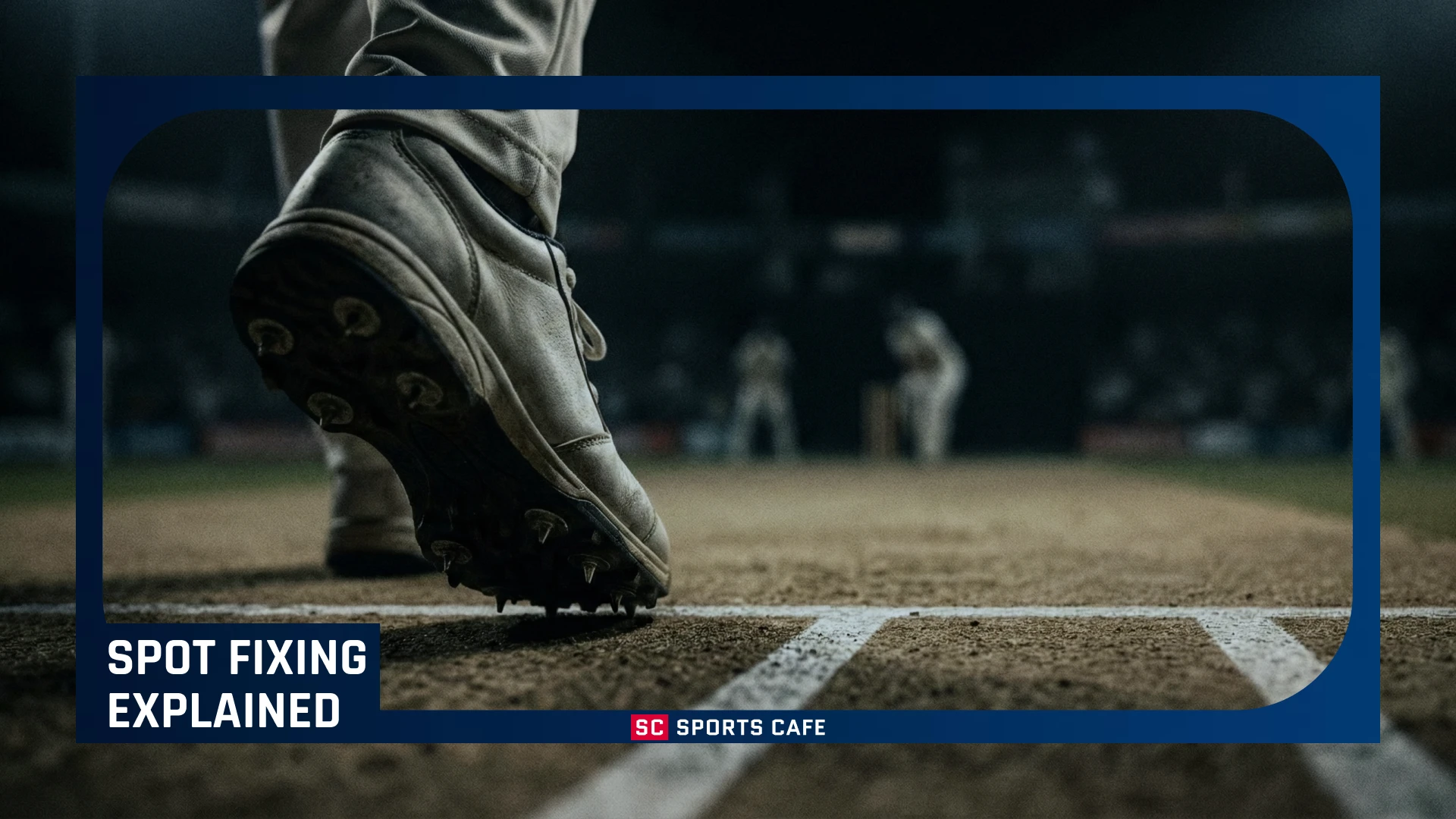
Cricket carries a reputation built on discipline and fairness, but corruption in cricket has repeatedly damaged that image. Behind packed stadiums and television coverage, illegal money often targets moments that look ordinary to viewers. The concept behind spot fixing meaning in cricket refers to an illegal practice where a very specific moment of play gets manipulated to produce a pre-determined outcome. That action rarely changes the final result of the match, which is exactly why it attracts criminals.
Many fans ask what is meant by spot fixing in cricket, and the distinction matters. Unlike fixing an entire match, spot fixing involves a single, agreed action performed at a set time. A bowler may intentionally bowl a no-ball in a particular over. A wide ball, a deliberate dot delivery, or a planned boundary concession can serve the same purpose. These moments look like routine errors, but money changes hands behind the scenes. For the player involved, the payment comes not for losing the match, but for executing one instruction at the right second.
Illegal bookmakers rely on this structure because it fits perfectly with micro-betting markets. Bets placed on single deliveries, sessions, or overs carry high certainty once a player confirms cooperation. That system allows an illegal bookmaker to protect profits without drawing attention to the match result itself. One manipulated moment can settle thousands of bets within seconds.
This investigation explains how spot fixing differs from match fixing, how these deals operate through micro-betting, and why detection proves so difficult. The article also revisits the most notorious arrests in modern cricket, including the Pakistan tour of England in 2010 and the IPL scandal of 2013, both of which exposed how deeply this practice can penetrate the sport.
Spot Fixing vs. Match Fixing: What is the Difference?
Confusion between spot fixing and match fixing remains common, even among long-time cricket followers. Both involve corruption, but the scale, intent, and visibility differ sharply. One targets the final result, while the other focuses on isolated moments that often pass unnoticed during live play. Understanding that gap explains why spot fixing spreads more quietly and proves harder to stop.
Aspect
Match Fixing
Spot Fixing
Scale of manipulation
Entire match or final result
Single delivery, over, or moment
Impact on outcome
Directly changes the win, loss, or draw
May not change the match result
People involved
Captain or multiple senior players
Often one player
Visibility
Unusual tactics or collapses draw attention
Looks like a normal mistake
Detection difficulty
Easier to spot patterns
Much harder to prove
Defining Match Fixing
Match fixing represents the most extreme form of corruption. Here, the agreement aims at the final match result or a draw. Such plans usually need cooperation from several players, often including the captain, since control over tactics and batting order matters. Sudden batting collapses, defensive chases with plenty of wickets in hand, or strange bowling rotations often raise suspicion. Because the outcome itself looks unnatural, investigations tend to follow more quickly.
Defining Spot Fixing
Spot fixing works on a smaller and quieter level. A fixer approaches one player, often a bowler, with a clear instruction tied to a precise moment. That action could involve a no-ball in a chosen over, a wide at a set delivery, or conceding a fixed number of runs. To spectators, the incident appears accidental. To betting markets focused on single events, it carries guaranteed value. That subtlety explains why spot fixing survives longer and attracts illegal betting networks worldwide.
How Spot Fixing Works: The Mechanics of Corruption
Spot fixing never comes out of nowhere. Every altered moment links back to planning, money, and quiet coordination behind the scenes. Nothing happens by chance. The key idea stays simple: change one small part of the game without drawing attention. Because the match still follows a normal pattern, the fix blends in. That invisibility creates the real danger, since fans, officials, and even teammates may notice nothing unusual.
The Role of Fancy and Session Betting
Fancy betting and session betting sit at the heart of most spot fixing cases. These markets operate outside regulated systems and focus on details instead of results. A bet may depend on a single delivery, a short spell inside an over, or a specific act such as a no ball on the second ball of the fourth over.
Illegal bookmakers often accept very high stakes on these narrow outcomes. Once that money enters the system, uncertainty becomes a problem for them. To remove risk, a player receives payment to control the agreed moment. One deliberate mistake settles the bet. After that, the game carries on as usual. The scoreboard looks normal, the result stays open, and the fix remains hidden from most eyes.
Signals and Codes
To understand what is spot fixing in cricket, it helps to look at how players confirm cooperation without speaking. Direct contact during a match brings obvious risk, so silent signals play a central role. These actions look harmless to fans and officials, but bookmakers know exactly what to watch for.
A player may spend extra time stretching before an over, switch a watch from one wrist to the other, wipe the ball or face with a towel at a set moment, or wear sunglasses under floodlights. Each gesture confirms that the deal remains active. Once the signal appears, bets lock in, and the agreed action follows on the field, often passing as an ordinary mistake.
The Fixer and The Syndicate
Behind most cases stands an organized network rather than a single gambler. A betting syndicate operates through fixers who act as the link between illegal bookmakers and players. These intermediaries study team environments, personal finances, and social circles to identify vulnerable targets. Contact often begins casually with gifts, meals, or favors that appear harmless at first.
The real pressure comes later, and that stage explains how spot fixing works in cricket at ground level. Once a player accepts anything of value, refusal becomes difficult. The fixer then asks for control over a single moment, not the match result, which lowers resistance. If hesitation appears,
The Most Infamous Spot Fixing Scandals in History
Real cases explain the danger better than theory. Each scandal below shows what is the meaning of spot fixing in cricket in practice, where one small act changes trust in the entire sport.
The 2010 Pakistan Tour of England (No-Ball Scandal)
One of cricket’s most damaging corruption cases emerged during Pakistan’s tour of England in 2010. An undercover investigation recorded agent Mazhar Majeed speaking openly about paid no-balls before they happened. He did not guess patterns after the fact. He named exact overs and exact deliveries in advance. During the Lord’s Test, those no-balls appeared exactly as described, which removed any doubt about intent.
Fast bowlers Mohammad Amir and Mohammad Asif delivered the agreed no-balls at the stated moments. Captain Salman Butt stood accused of involvement and awareness of the plan. Courts in England later ruled that the actions formed a conspiracy to cheat. Prison sentences followed. Butt received 30 months, Asif one year, and Amir six months. Cricket authorities also issued long bans. Amir faced a five-year ban, Asif a longer suspension, and Butt one of the harshest penalties of the era. The episode proved how one planned delivery can expose deep corruption and damage trust in the sport.
The 2013 IPL Spot-Fixing Scandal
Indian cricket faced a major shock in 2013 when police arrested players from the Rajasthan Royals during the Indian Premier League season. S. Sreesanth, Ajit Chandila, and Ankeet Chavan became central figures in the case. Investigators stated that the players agreed to concede a fixed number of runs during selected overs across several matches.
Signals played a key role. Before certain overs, players placed towels in pre-arranged ways to signal that they were ready. Once the signal appeared, the over unfolded exactly as planned, with runs flowing at a set pace. The case sent waves through the league. Suspensions followed, bans were issued, and administrators introduced tighter monitoring rules. Confidence in the league took a serious hit, and the incident forced cricket boards to rethink player oversight and betting controls.
Other Notable Cases (Mervyn Westfield, Lou Vincent)
Spot fixing did not stay limited to major international series or global leagues. In England, county bowler Mervyn Westfield admitted involvement in a fixing scheme during a domestic match. Courts handed down a prison sentence, which showed that even lower-profile games attract illegal betting attention.
Former New Zealand international Lou Vincent later confessed to participation in corrupt activity across several leagues worldwide. His admissions revealed how far betting networks can spread, crossing borders and formats. The pattern stayed consistent. One small action inside a match carried value for illegal markets, while long-term damage followed for players and for the game itself.
Fighting the Menace: Anti-Corruption Units and Detection
Cricket did not create anti-corruption systems overnight. Most of them appeared after damage was already done. Each major scandal showed how easy it was for fixers to reach players and how slow the response could be. Since then, the sport has focused less on reacting late and more on closing doors early. Trust in the game depends on that shift.
Role of the ICC Anti-Corruption Unit (ACU)
The ICC Anti-Corruption Unit plays a central role, but its work often stays out of public view. Long before a tournament begins, analysts study betting data from different regions. Unusual price movements or heavy action at strange moments raise early warnings.
During competitions, ACU officers remain close to teams. They watch who enters hotels, who spends time around players, and who tries to gain access behind the scenes. Education also forms a large part of their job. Players attend sessions where common fixing approaches are explained in plain terms. Younger cricketers receive extra attention, since early careers often bring pressure and poor advice. Reporting channels stay open, and players who speak up receive protection.
Why Spot Fixing is Harder to Detect?
Spot fixing hides in plain sight. A no-ball or a misfield rarely looks suspicious on its own. Such errors happen in almost every match, even from top professionals. One moment never tells the full story.
Clear evidence usually appears away from the field. Investigators depend on phone logs, financial records, or messages shared between players and fixers. Without that material, proving intent becomes extremely difficult. Many cases only surface years later, once someone talks or a trail finally connects.
Legal Consequences and Integrity
Cricket authorities no longer treat fixing as a minor offense. In countries like India and the United Kingdom, sports fraud can trigger criminal charges. Players face more than bans. Courts can impose fines or prison terms, and the damage often lasts far beyond a playing career.
That shift sends a strong warning. A suspension ends time on the field, but a criminal record affects life after cricket. Authorities rely on that reality to discourage involvement and protect the game from repeat damage.
FAQs about Spot Fixing in Cricket
What is the difference between spot fixing and match fixing?
Spot fixing focuses on one planned action inside a match, such as a no-ball, a wide, or runs conceded in a single over. Match fixing aims at the final result, like a loss, a win, or a draw. One changes a moment, while the other changes the destiny of the game.
Why do players get involved in spot fixing?
Financial stress often plays a role, especially for players outside the top tier. Lack of guidance, weak support systems, or pressure from criminal networks also contribute. Some players wrongly believe that one small act will pass unnoticed.
How do bookies signal players?
Signals remain discreet to avoid attention. Players may use gestures, clothing changes, accessories, or routine actions at pre-agreed times. These signals confirm that the plan stays active before the ball is delivered.
Was Mohammad Amir banned for life?
No. He received a five-year ban after the 2010 case and later returned to international cricket. Other figures from the same scandal faced longer or permanent exclusions.
Is betting on cricket legal?
Rules differ by country, with some regions permitting regulated betting. Spot fixing, however, always links to illegal markets and criminal conduct, regardless of local betting laws.
0
0
0
0
0
0
Comments
0/1000
Sign up or log in to your account to leave comments and reactions





Comments
Sign up or log in to your account to leave comments and reactions
0 Comments