Strike Rate Meaning Explained: Why Speed Matters More Than Average
Modern cricket lives on speed. Matches move faster, scoring rates climb higher, and patience no longer carries the same value it once did. At the center of that shift sits strike rate meaning, a statistic that tells two different stories depending on the role. For a batter, it shows how quickly runs arrive. For a bowler, it reflects how often wickets fall. Both versions point to impact rather than survival.
Short formats changed priorities. In T20 leagues and the IPL, a steady average without tempo often hurts more than it helps. Teams now favor players who can change a game within a few overs, even if consistency drops. A batter who scores 30 from 15 balls often shapes the result more than one who reaches 50 at a slower pace.
This guide breaks down strike rate formulas for batters and bowlers, explains why finishers differ from anchors, and shows how these cricket statistics guide smart choices in fantasy contests and match analysis.
What is Strike Rate in Cricket? Defining the Dual Metric
Strike rate confuses because it carries two different meanings, depending on who holds the ball or the bat. Fans often ask what is strike rate in cricket, and the answer always depends on the role. For batters, the number rewards speed. For bowlers, it rewards damage. The same term measures opposite goals, which explains why context matters so much.
Batting Strike Rate Meaning
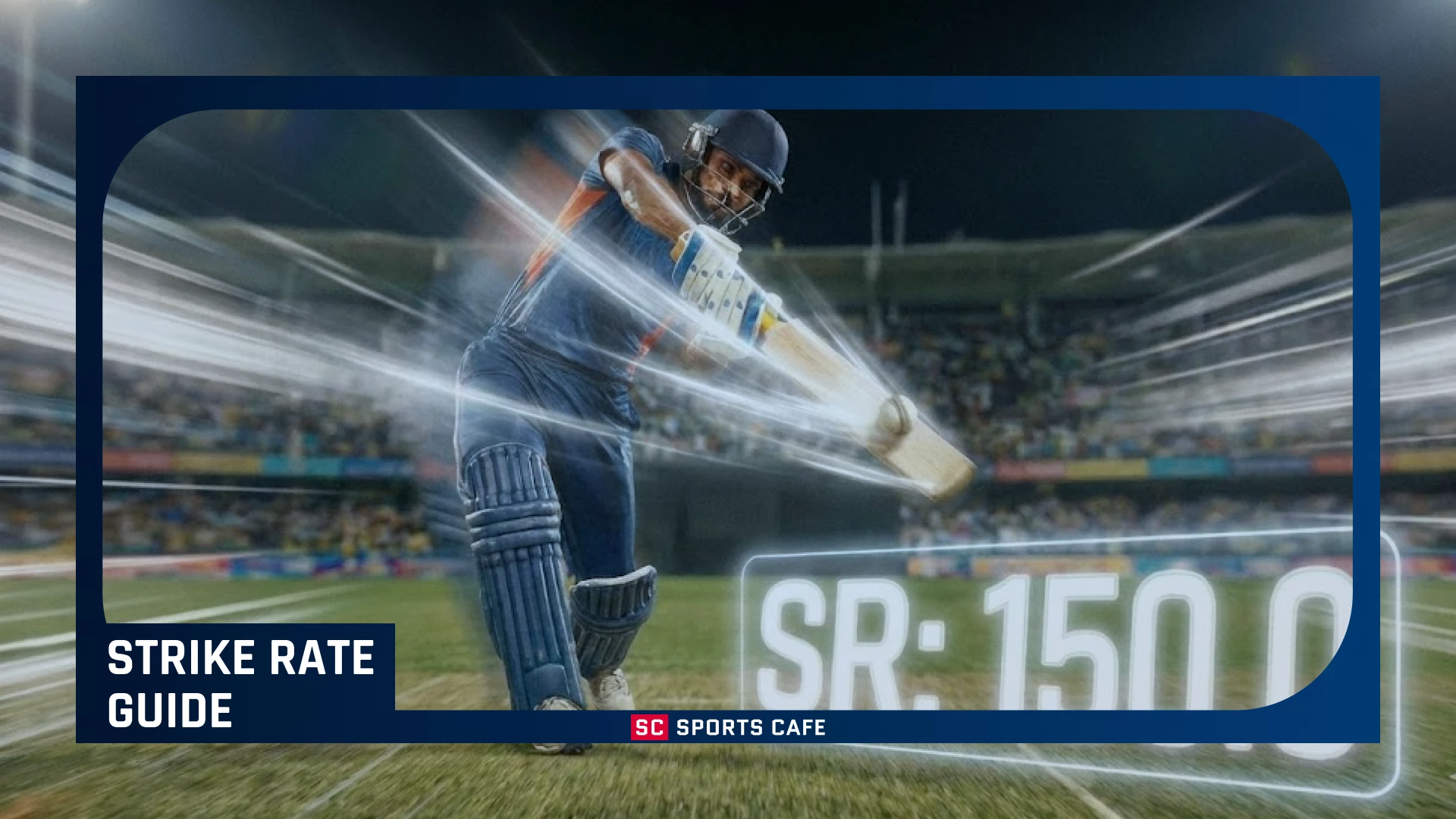
Batting strike rate shows how quickly a batter scores. The figure tells how many runs come from every 100 balls faced. A strike rate of 150 means the batter scores one and a half runs per ball on average. Higher numbers signal aggression and intent, which hold great value in limited-overs formats. Teams rely on this metric to judge impact, not just survival at the crease.
Bowling Strike Rate Meaning
Bowling strike rate flips the logic. Here, the number shows how many balls a bowler needs to take one wicket. A figure of 20 means a wicket arrives every 20 deliveries. Lower values point to danger and pressure, since batters rarely settle against such bowlers. When analysts talk about strike rate meaning in cricket, bowling figures often reveal who truly breaks partnerships rather than who simply contains runs.
How to Calculate Strike Rate: Formulas and Examples
Numbers explain intent better than opinions. Once you see the math, strike rate stops feeling abstract and starts guiding real decisions. Many readers search how to calculate strike rate because small differences in inputs can change how a performance looks on paper. The formulas stay fixed, but the context gives them meaning.
Calculating Batting Strike Rate
Batting strike rate measures scoring speed. The formula stays the same across formats:
Batting Strike Rate = (Total Runs ÷ Total Balls Faced) x 100
A short example clears it up.
A batter scores 45 runs from 30 balls. Divide 45 by 30 to get 1.5. Multiply by 100, and the strike rate becomes 150.00. In T20 cricket, that number signals a strong impact, even if the innings ends quickly.
Runs Scored
Balls Faced
Strike Rate
20
20
100.00
35
25
140.00
45
30
150.00
Each jump shows how much faster scoring lifts the figure without extra balls.
Calculating Bowling Strike Rate
Bowling strike rate looks at wicket frequency, not runs. The calculation uses balls, never overs:
Bowling Strike Rate = Total Balls Bowled ÷ Total Wickets Taken
Convert overs into balls before any math. Four overs equal 24 balls. If a bowler delivers those 24 balls and takes two wickets, divide 24 by 2. The result stands at 12.00, which points to a very sharp spell.
Overs Bowled
Balls Bowled
Wickets
Strike Rate
4.0
24
1
24.00
4.0
24
2
12.00
3.0
18
3
6.00
Lower numbers highlight bowlers who break partnerships quickly, even if they concede a few boundaries along the way.
Strike Rate Benchmarks: What is a Good Number?
A “good” strike rate never lives on its own. Format, role, and match situation all shape how the number gets judged. Speed that looks slow in one format can feel completely acceptable in another, while the same figure may hurt a team in shorter games. Context decides value more than the raw stat.
Test Cricket Benchmarks
Test cricket rewards patience and control. With no limit on overs, batters focus on survival, shot selection, and long spells at the crease. A batting strike rate between 40 and 60 fits the format and often signals solid technique rather than lack of intent. Players who score faster than that usually take risks, which can shorten an innings.
For bowlers, the picture flips. A bowling strike rate below 50 balls per wicket points to constant pressure and regular breakthroughs. That level usually belongs to top-class Test bowlers who combine discipline with the ability to force mistakes over long spells.
ODI Cricket Expectations
One Day Internationals sit between patience and urgency. Batters must rotate strike and still find boundaries. A strike rate around 85 to 100 meets modern expectations, especially for top-order players who face the new ball. Middle-order batters often push higher once the field spreads.
Bowling strike rates in ODIs tend to land between 30 and 40. Bowlers who break partnerships inside that range give their team control, even if the run rate stays moderate. Wickets at regular intervals matter more than dot balls alone in this format.
T20 and IPL Standards
T20 cricket shifts priorities sharply toward speed. A batter with a strike rate below 120 often slows momentum and puts pressure on partners. Strong finishers usually sit in the 150 to 180 range or higher, since short bursts of runs change games quickly.
For bowlers, economy rate often draws more attention, but strike rate still carries weight. A bowling strike rate of 15 to 18 balls per wicket signals frequent impact. Even with a few boundaries conceded, those wickets can swing matches, especially during powerplay or death overs.
Batting Metrics Deep Dive: Beyond the Basic Number
A single strike rate number rarely tells the full story. Context around when runs arrive often matters more than the final figure. Phase of play, risk level, and shot selection all change how speed at the crease should be judged.
Powerplay vs. Death Overs Strike Rate
Strike rate during the powerplay usually rises faster than in other phases. Fielding limits leave fewer defenders outside the circle, so well-timed shots travel for easy boundaries. Openers often post strong early numbers without extreme risk, since gaps exist by rule rather than by force.
Death overs create a different picture. Batters attack almost every ball, and strike rate spikes reflect urgency rather than comfort. Late acceleration can rescue an innings or push a strong total into an unreachable zone. A high figure here often carries more match impact than steady scoring earlier.
Dot Ball Frequency and Rotation
Dot balls directly drag strike rate down. A sequence of scoreless deliveries builds pressure and forces rushed shots later in the over. Skilled batters reduce that pressure through regular strike rotation, even when boundaries do not appear.
Singles and quick twos keep the scoreboard active and protect rhythm. Players who find gaps early in an over often free themselves for bigger shots later. That balance keeps strike rate healthy without reckless swings.
Boundary Percentage
Boundary percentage shapes strike rate more than any other factor. Fours and sixes lift numbers quickly, even across short stays at the crease. Power hitters naturally post higher strike rates since fewer balls produce more runs.
Batters who rely mainly on running between wickets need more deliveries to reach the same total. Their strike rate stays lower, but value still exists in partnerships and stability. Teams often need both styles, since speed alone cannot replace timing, placement, and awareness of the match situation.
Bowling Metrics: Strike Rate vs. Economy Rate
Bowling statistics only tell the truth when read side by side. Strike rate and economy rate point to different tasks, and mixing them often creates a false picture of performance. One number highlights control across overs, while the other shows how a bowler changes the game with a wicket.
The Difference Between SR and Economy
Economy rate answers a defensive question. It shows how many runs a bowler concedes per over and reflects discipline, accuracy, and patience. Bowlers with a low economy squeeze scoring options, force batters to wait, and keep totals under pressure.
Strike rate answers an attacking question. It focuses on how frequently wickets fall and how quickly a bowler removes batters. A strong strike rate signals danger, not restraint. Even if runs come, wickets reset the field, break rhythm, and stop partnerships from growing. Economy speaks about control, while strike rate speaks about disruption.
The "Expensive Wicket-Taker" Paradox
Some bowlers rarely look tidy on the scoreboard. Runs come quickly, boundaries appear, and the economy rate climbs. At the same time, wickets arrive at regular intervals, which changes how teams judge their value. A bowler who strikes every 12–15 balls can justify an economy of 9 or even 10, especially in limited-overs cricket.
Captains rely on this type during moments when partnerships grow dangerous. One breakthrough often matters more than two quiet overs. A set batter leaves, a new one arrives under pressure, and the field resets. Even if the spell looks costly, the impact shows in broken momentum and stalled scoring later in the innings.
Record Holders: The Fastest and the Deadliest
Strike rate becomes more meaningful when tied to real performances and real names from history. Some batters have rewritten how aggression looks, while certain bowlers have terrorized lineups by breaking partnerships early and often. Below are players whose strike rate numbers reflect serious impact across formats.
In T20s, a few batsmen sit at the top of career strike rate lists, and those names often shape how teams approach short formats. New Zealand’s Finn Allen leads the global T20 strike rate charts with a career figure well above many legends, reflecting his constant pressure on bowlers. Close behind, players like Faisal Khan, Abhishek Sharma, and Andre Russell sit among the top career strike rates in international T20 matches. Russell, in particular, has remained one of the best ever across leagues, blending raw power with timing to keep his rate high over thousands of balls faced.
In 50-over cricket, Glenn Maxwell ended his ODI career with one of the highest batting strike rates among players with more than 2,000 runs scored. His ability to score quickly at any stage of an innings put him near the very top of ODI strike rate charts, with only a few players like Andre Russell posting higher career marks over long periods of play.
Best Bowling Strike Rates (Dale Steyn, Kagiso Rabada)
Bowling strike rate shows how often a bowler takes wickets, and the list of all-time greats reflects a mix of eras. In Test cricket, Dale Steyn ranks among the best modern bowlers with a career strike rate that places him near the top of statistical lists compiled for the format, showing how often he provided breakthroughs over long spells.
In contemporary cricket, Kagiso Rabada also sits high on active strike rate charts, reflecting his knack for dismissing batters regularly across formats. His ability to bowl deliveries that produce wickets keeps his strike rate competitive with the best in international cricket. It marks him as a bowler who changes games by removing key players frequently.
Strike Rate in Betting and Fantasy Cricket
Strike rate no longer belongs only to scorecards and post-match debates. Modern fantasy games and betting markets actively use this number to judge impact, not just volume. Players who understand how speed shapes points and odds usually read contests more accurately than those who chase runs alone.
Fantasy Cricket Points System
Fantasy cricket platforms place real importance on strike rate, not only on the number of runs. On Dream11, batters receive bonus points once their strike rate moves beyond set limits, which often start around 130 or 150 in T20 matches. Slow scoring can trigger point deductions, even if the total runs look respectable. A short, quick innings of 30 from 15 balls may score better than 45 from 40 because speed drives the scoring model. Captain and vice-captain picks often rely on strike rate trends, since bonuses apply with multipliers. Batters known for rapid starts or late-over hitting usually provide more stable fantasy returns.
Betting Markets: Player Props
Strike rate also shapes many player performance markets. Bookmakers set Over or Under lines on a batter’s strike rate, especially in T20 and IPL games, where tempo decides matches. A top-order hitter facing the powerplay often attracts higher SR lines, while anchors receive lower thresholds. Late-order hitters draw attention in live betting once death overs approach, since a few boundaries can push the number past the line quickly. Strike rate trends also influence Man of the Match bets, as short, explosive innings often stand out more than steady scores when awards are decided.
FAQs about Strike Rate in Cricket
What is a good strike rate in T20 cricket?
For batters, numbers above 130 usually signal healthy scoring speed. Finishers operate under different pressure and expectations, so values beyond 150 show a strong impact in short bursts. Context still matters, since powerplay and death overs naturally push rates higher.
How is batting strike rate calculated?
The calculation divides total runs by balls faced and then multiplies the result by 100. A score of 40 from 25 balls, for example, produces a strike rate of 160, which reflects fast scoring rather than volume alone.
Is strike rate more important than average?
In T20 formats, speed often outweighs stability, so strike rate takes priority. Test cricket follows a different logic, where time at the crease and average carry more weight than scoring pace.
What is bowling strike rate?
Bowling strike rate shows how many deliveries a bowler needs to take one wicket. Lower numbers point to frequent breakthroughs, even if the bowler concedes runs along the way.
Can a strike rate be over 100?
For batters, values above 100 signal scoring faster than one run per ball and usually indicate positive impact. For bowlers, a figure above 100 suggests wickets come very rarely, which hurts team balance in any format.
0
0
0
0
0
0
Comments
0/1000
Sign up or log in to your account to leave comments and reactions





Comments
Sign up or log in to your account to leave comments and reactions
0 Comments