What is a Century in Cricket? The Milestone Every Batter Dreams Of
Cricket lovers know that one achievement stands above most others for an individual player: scoring a century. Fans, teammates, and opponents all pause when a batter reaches three figures because that moment signals excellence built on discipline and control. Players value it deeply, stadiums respond with noise and applause, and commentators shift their tone immediately.
Many people new to the sport ask what is century in cricket. The explanation stays clear. A century appears when a batter scores at least 100 runs in a single innings. That number marks a threshold that proves a player can survive long spells, adapt to bowlers, and handle pressure. The century meaning in cricket extends beyond numbers. It reflects patience, technical strength, and the mental ability to stay focused while conditions change.
Across cricketing nations, centuries carry a strong tradition. Players often refer to a hundred as a ton, and commentators mention three figures to underline the moment. Those expressions connect modern cricket with its past. This guide explains traditions around centuries, larger scores beyond a hundred, legends who built careers on big innings, the fastest hundreds ever recorded, and how betting markets treat individual milestones.
Defining the Cricket Century: More Than Just 100 Runs
A century never feels like an ordinary score. A batter can reach fifty, and the game keeps moving, but once the score climbs toward a hundred, everything changes. The crowd reacts more to every run, bowlers start talking more between balls, and captains spend extra time adjusting the field. Reaching three figures shows that a batter did more than survive. It shows control over the match and over the pressure that comes with time at the crease.
People inside the game value centuries because they show reliability. One strong innings can come from good timing or conditions, but scoring hundreds again and again tells a different story. It means the batter knows how to build an innings and stay composed. Fans also lean on centuries when they compare players from different generations, even when rules and formats look very different from the past.
The Tradition of Raising the Bat
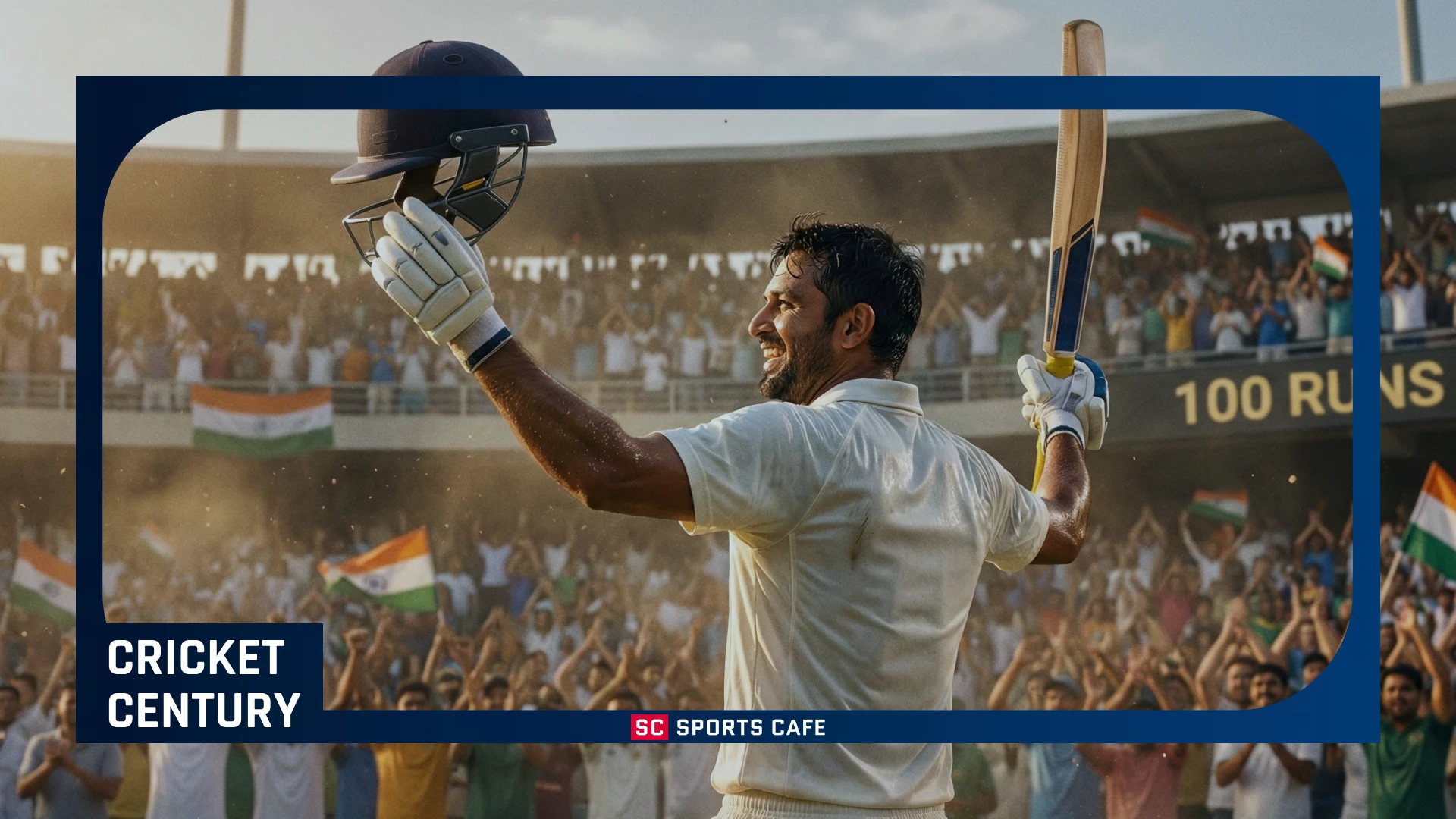
When the scoreboard turns to 100, almost every batter follows the same quiet habit. The helmet comes off, the bat goes up, and the player looks toward the stands. It isn’t a loud celebration. It’s more of a thank you. The moment belongs as much to the crowd and teammates as it does to the batter.
You can see the same gesture in old black and white photos and in modern stadiums with giant screens. Some players add small personal touches, but the meaning stays unchanged. That brief pause connects today’s game with cricket played decades ago.
The Psychology of the "Nervous Nineties"
Batting in the nineties feels different from any other phase. Runs from 90 to 99 bring tension that doesn’t appear earlier in an innings. Bowlers sense that the batter wants the milestone, and fielders close in. Every ball feels heavier than the last.
Some batters slow down too much and lose rhythm. Others try to finish the job quickly and pick the wrong moment. Many famous innings ended in this range. Once the score finally ticks past 99, you can often see relief straight away. Shoulders relax, shots open up, and the pressure lifts.
What is a Maiden Century?
A maiden century is the first international hundred of a batter’s career. That innings often changes everything. Selection feels more secure, teammates trust the player more, and confidence grows quickly.
Many cricketers say their first hundred stays with them longer than any other. It proves that they can handle top-level bowling and big moments. From that point on, the batter no longer feels like a newcomer.
Beyond the Hundred: Doubles, Triples and Daddy Hundreds
While a hundred earns recognition, cricket allows batters to aim much higher, especially in longer formats.
Type of Score
Runs
Rarity
Century
100–199
Regular
Double Century
200–299
Rare
Triple Century
300–399
Very rare
Quadruple Century
400
Unique
Double and Triple Centuries
Reaching 200 runs requires exceptional focus and stamina. Batters must adapt across sessions, respond to fresh bowlers, and maintain concentration. Triple centuries demand even more. Only a few players in history have achieved them, and each such innings becomes part of cricket folklore.
Brian Lara’s 400 not out remains the highest individual Test score. That innings combined patience, authority, and complete control over bowlers and conditions.
Discussions around double centuries in cricket often focus on endurance and dominance. These scores highlight players who can stay at the crease long after others fade.
The Concept of a "Daddy Hundred"
A daddy hundred refers to a score far beyond the basic hundred, usually above 150. Such innings show command rather than survival. Bowlers tire, captains spread fields, and pressure shifts firmly toward the opposition.
Teams benefit greatly from these efforts. Partners play with confidence, declarations become possible, and match outcomes often tilt heavily toward the batting side.
The Kings of Centuries: Most Hundreds in History
Centuries shape how cricket remembers its greatest batters. Some players score hundreds occasionally, while others build entire careers around them. When discussions turn to most centuries, names repeat across eras because consistency at that level separates good players from legends. These batters did not rely on one style or one format. They adapted, survived changes in bowling attacks, and kept producing big scores year after year.
Sachin Tendulkar: The God of Cricket
Sachin Tendulkar stands alone when it comes to centuries. He remains the only player in history to score 100 international hundreds across Test and One Day International cricket. That number reflects longevity, adaptability, and unmatched consistency. Tendulkar faced fast bowlers in the 1990s, dominant spinners in the 2000s, and new formats later in his career, all without losing control of his technique.
His hundreds came in every major cricket nation and on every type of surface. Swinging conditions in England, turning pitches in India, fast tracks in Australia, and slow wickets in the subcontinent never stopped him. Tendulkar adjusted stance, footwork, and shot selection rather than forcing one method everywhere.
Beyond statistics, many of his centuries arrived when his team needed stability. He often walked in early after a collapse and rebuilt innings from scratch. In chases, he carried responsibility without rushing. Those hundreds became a benchmark for run scoring and a reference point for discussions around who is the highest century in cricket, since no other batter has reached a similar total across formats.
Virat Kohli: The Modern Chase Master
Virat Kohli represents a different generation, but his hunger for centuries mirrors Tendulkar’s intensity. Kohli built his reputation as one of the best chase batters cricket has seen. Target-based situations suit his mindset, and his awareness of required run rates helps him pace innings with precision.
One reason Kohli scores so many hundreds lies in his conversion ability. When he reaches fifty, he rarely settles for that mark. His discipline keeps risk low in early phases, while confidence grows as the innings progress. That balance explains his high conversion rate from half-centuries to hundreds.
Kohli also thrives in One Day Internationals, where he controls tempo better than most. Running between the wickets adds constant pressure, and bowlers struggle to contain him once he settles. Fitness plays a major role in his success, since long innings demand physical strength as much as technique. His pursuit of Tendulkar’s record keeps attention on modern batting standards and shows how consistency still defines greatness.
Format Leaders: Rohit Sharma and Chris Gayle
Limited-overs cricket produces its own century specialists, and Rohit Sharma stands at the top in One Day Internationals. He holds multiple double hundreds in ODIs, a rare achievement that highlights patience combined with acceleration. Rohit often starts calmly, preserves his wicket, and expands his range once set. That approach allows him to reach massive scores without reckless shot selection.
His timing, rather than power, defines his big innings. Once settled, bowlers find it difficult to adjust lengths, and fielding sides struggle to contain scoring across all areas. Those long ODI hundreds underline his comfort during extended stays at the crease.
Chris Gayle, on the other hand, changed how centuries appear in the shortest format. T20 cricket offers limited deliveries, which makes reaching a hundred extremely difficult. Gayle overcame that barrier through confidence, strength, and clean hitting. His T20 centuries arrived quickly and often dominated matches before opponents could recover.
Gayle’s presence alone altered bowling plans. Captains moved fielders early, bowlers missed lengths under pressure, and matches shifted rapidly. His dominance in T20 centuries proved that even time-restricted formats can produce monumental individual scores when timing and intent align.
Together, these players show that centuries take different forms across formats. Some rely on patience and accumulation, others on controlled aggression. All of them, however, share the same ability to turn long stays at the crease into defining moments that shape cricket history.
Speed Demons: The Fastest Centuries in Cricket History
Not every century comes through long hours at the crease. Some batters chase speed rather than survival and change the match in a matter of minutes. When fans ask what is the fastest century in cricket history, they usually look for moments where strike rate mattered more than time spent batting. These innings show confidence, sharp decision-making, and complete control over scoring areas. Bowlers have little room to recover, and captains often run out of answers quickly.
AB de Villiers' 31-Ball Miracle (ODI)
AB de Villiers produced one of the most astonishing innings the sport has seen when he scored a hundred in just 31 balls in a One Day International against the West Indies. From the first few deliveries, it became clear that containment would not work. He found gaps with ease, used unconventional shots without forcing them, and punished even slight errors in length.
What set this innings apart was balance. De Villiers did not rely only on power. Placement, timing, and awareness allowed him to score all around the field. Fielders shifted constantly, but the scoring never slowed. That hundred reset expectations for how quickly runs could arrive in the ODI format and remains a reference point whenever explosive batting gets discussed.
Chris Gayle and Brendan McCullum (T20 and Test)
Chris Gayle reached a century in just 30 balls during a T20 match. In a format with limited deliveries, such a score demands constant intent from the opening ball. Gayle trusted his timing, stayed balanced, and forced bowlers into defensive plans early. The innings showed that even short formats can produce landmark scores.
Brendon McCullum achieved something just as striking in Test cricket. During his final international appearance, he reached a hundred in 54 balls. In the longest format, where patience usually defines success, that approach stood out sharply. McCullum attacked from the start and turned his farewell innings into a bold statement.
Fastest Centuries Across Formats
Player
Format
Balls Faced
Sahil Chauhan
T20 International
27
Chris Gayle
T20
30
AB de Villiers
ODI
31
Corey Anderson
ODI
36
Shahid Afridi
ODI
37
Glenn Maxwell
ODI
40
Brendan McCullum
Test
54
These innings prove that centuries do not follow one path. Some grow through patience, others through constant scoring. In each case, speed reshaped the match and left a lasting mark on cricket history.
Betting on Centuries: Player Milestone Markets
Centuries matter not only to fans and players but also within betting markets. Many sportsbooks include options that focus on individual achievements rather than team results. These markets attract attention because they depend on one player’s performance across an entire innings. Conditions, batting order, and match format all influence how these bets play out.
To Score a Century Market
The To Score a Century market centers on one clear outcome. You bet on a specific batter reaching 100 runs in a match. Odds usually stay high because centuries remain difficult to achieve, even for top players. Openers often receive lower prices since they face more deliveries, while middle order batters carry a higher risk due to limited time at the crease. Match format also matters, since longer games give more opportunity to build an innings.
Over/Under Player Runs
Another common option focuses on individual run totals. Bookmakers set a line that the batter must exceed or stay below. These lines often fall between 30 and 50 runs, reflecting a typical contribution rather than a major milestone. To target a hundred, you need to look for special milestone markets rather than standard totals. Understanding a player’s role, recent form, and batting position helps when comparing these options and assessing potential value.
FAQs about Cricket Centuries
Who has the most centuries in cricket?
Sachin Tendulkar leads with 100 international centuries.
What is the fastest century in ODI history?
AB de Villiers reached a hundred in 31 balls.
What is a nervous ninety?
It describes the pressure felt by a batter when the score sits between 90 and 99 runs.
Has anyone scored a quadruple century?
Yes. Brian Lara scored 400 not out in a Test match.
0
0
0
0
0
0
Comments
0/1000
Sign up or log in to your account to leave comments and reactions





Comments
Sign up or log in to your account to leave comments and reactions
0 Comments