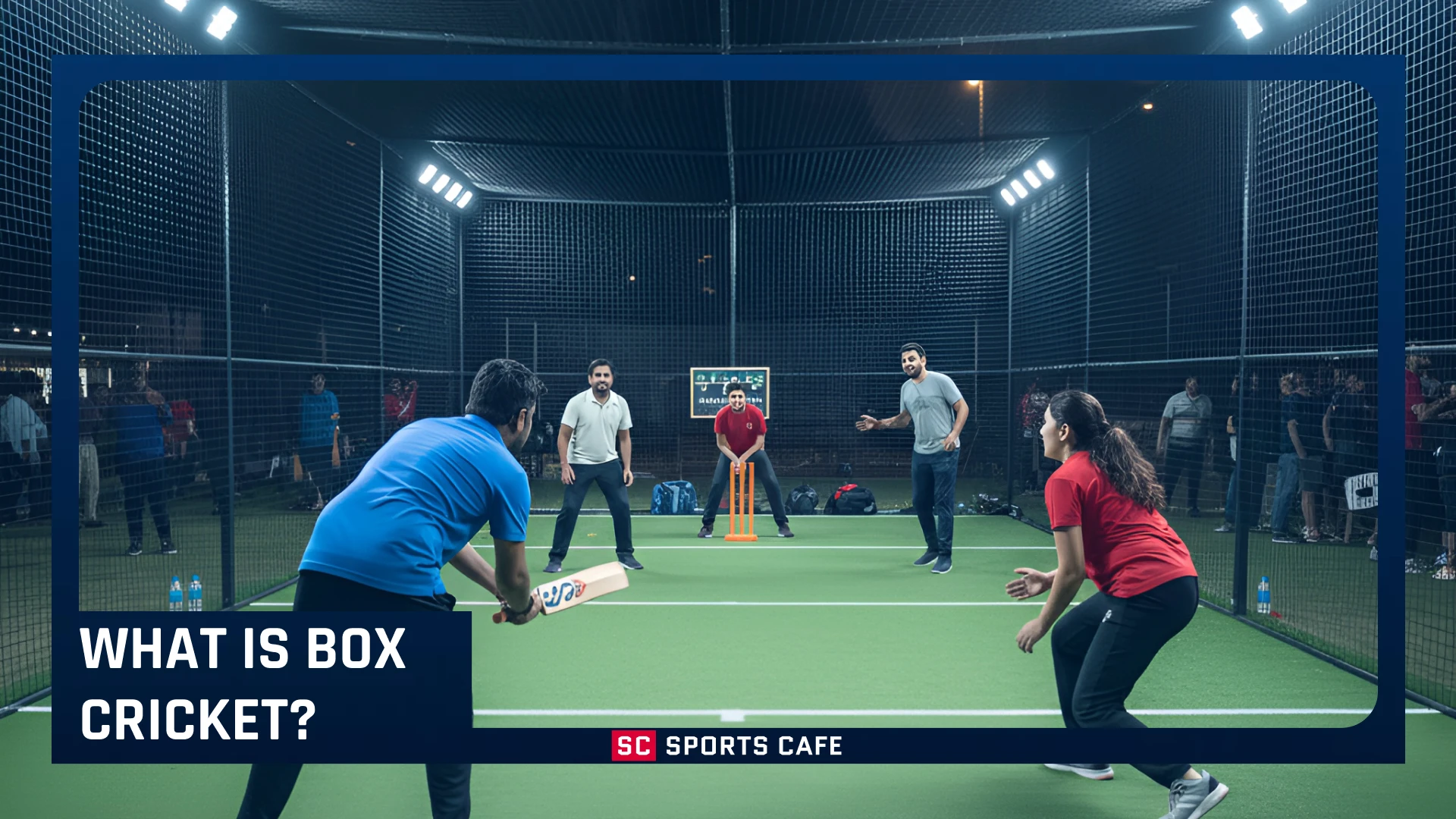
Gully cricket shaped the early sporting habits of many urban neighbourhoods, and the tight lanes of those areas created a distinctive playing style that later evolved into what people now recognise as box cricket. Cities grew, open spaces disappeared, and informal cricket shifted into compact arenas that suited the rhythm of modern life. The idea behind what is box cricket stays clear: a recreational, shortened version of cricket played on artificial turf inside a netted enclosure. This fast-paced format has also gained traction in online cricket betting circles due to its growing popularity in local leagues. Teams enjoy the lighter tennis ball, the relaxed atmosphere, and the compact format. The article explains its structure, its rules, and the reasons behind its rise in many cities.
What is Box Cricket? (A Deeper Look)
Box cricket developed around the concept of the “box”, a compact playing area surrounded completely by netting on the sides and overhead. The enclosure keeps the ball in continuous play and pushes the match forward with far fewer interruptions than traditional cricket. The set-up creates a direct, lively form of cricket that welcomes players with different skill levels. Social groups find it appealing because mixed-gender teams can participate without concern for large distances or long-running commitments. Recreational leagues rely on it because the smaller space creates a controlled environment with predictable conditions. Fans often look for expert predictions to understand which team strategies work best in such restricted playing areas.
Origins of Box Cricket
Urban density shaped the rise of box cricket. Many cities, especially in cricket-focused countries such as India, lacked open spaces as populations grew and development filled available land. Gully cricket thrived on roads, alleys, and parking areas, yet those spots rarely offered consistent surfaces or reliable boundaries. Turf operators responded by creating netted spaces where people could play a fast version of cricket without needing a full ground. The enclosed model offered predictable conditions, clear lines, fixed team sizes, and shorter game durations. Weekend leagues and corporate groups adopted the format quickly because it solved the space issue and allowed friends or colleagues to book a slot without long-term commitments. Over time, the format gained a distinct identity and separated itself from both street cricket and formal indoor cricket.
Box Cricket vs Traditional Cricket: Key Differences
A comparison of the compact format with traditional cricket highlights several structural contrasts:
Aspect
Box Cricket
Traditional Cricket
Field
Netted enclosure on artificial turf
Open stadium with natural grass
Ball
Tennis ball or soft ball
Leather cricket ball
Team Size
6-a-side or 8-a-side
11-a-side
Rules
Modified rules with zone scoring and negative points
Standard MCC laws
Atmosphere
Recreational, social setting
Highly competitive and formal
The contrast shows how the compact version suits busy urban lifestyles, while traditional cricket follows long-established laws and structures. The differences do not reduce the value of either format; they simply accommodate different needs and settings.
Box Cricket vs Indoor Cricket: Are They the Same?
Both formats take place in a netted enclosure and fall under the broader term indoor cricket. Their similarities end once the structure and purpose of each format come into focus. The contrast becomes clear when the main features appear side by side:
Formality: Indoor Cricket follows a recognised set of international rules with fixed team sizes, structured overs, and defined dismissal systems. Many leagues around the world treat it as a competitive sport. Box cricket is a recreational sport, and organisers often adjust the rules to suit their venue or group.
Match Structure: Indoor Cricket often uses an 8-a-side layout with two outs per batter, and matches follow a uniform format. Box cricket keeps the flexibility of local rules, shorter innings, and social gameplay suited to corporate tournaments and casual groups.
Ball Type: Box cricket relies on a tennis ball in nearly every setting to match the enclosed space and reduce impact. Indoor Cricket may use a firmer, specially designed soft ball to support higher-intensity play in a controlled arena.
How to Play Box Cricket (The Core Rules)
Box cricket starts with a simple goal: create a match that fits into a short window and allows players to enjoy cricket without large teams or long commitments. A typical game lasts under an hour, and the smaller arena keeps all players engaged. Balls remain in play through contact with walls or netting, which keeps the pace high and reduces downtime that traditional cricket often includes.
Team Composition and Basic Setup
Teams usually appear in either 6-a-side or 8-a-side formats. Organisers often use a six-over or eight-over innings where each bowler delivers one or two overs. The rapid nature of these overs makes it a favorite for users of cricket betting apps who enjoy quick match updates. Field placement shifts depending on the size of the arena, yet most teams build a balanced mix of close-fielders and players guarding the back net.
Scoring Rules: The Zone System
Scoring works differently from traditional cricket. The zone system underpins most arenas. A ball struck directly into the back of the net often earns the highest reward, such as six runs. Shots reaching the back net after one bounce may earn four runs. Side nets may award one or two runs depending on the arena’s local rules. Some arenas add special bonus regions or penalise shots that hit the roof at certain angles. Touches on the ground within the front zone near the batter often deliver a single run. Because the ball never leaves the enclosure, fielders remain under constant pressure, and batters must read angles as much as pace. The system produces a fast-moving scoreboard and encourages innovation in shot placement.
Dismissals (Outs) and Penalties
Run-outs and catches remain standard dismissals in the compact format, yet many arenas introduce a unique system of negative points. A batter who gets out may stay on the field as part of the rotation, but the team loses a fixed number of runs to reflect the dismissal. An arena may deduct five runs for a catch, or a different value for a run-out, depending on local rules. The penalties maintain competitive balance despite the small field, because batters cannot rely solely on boundary shots; they must protect the total with careful shot selection. Direct catches off rebounds from the net also count in many arenas, though the specifics depend on the organiser.
Common Bowling Rules (Underarm and Overarm)
Bowling varies by venue. Some organisers permit only underarm bowling to reduce the risk of high, dangerous deliveries in the enclosed space. Others allow overarm bowling with strict height restrictions. A full toss above a defined waist-level mark often counts as a no-ball. A ball drifting outside the permitted side line earns a wide. Because accurate placement is so vital, the cricket odds for these matches often reflect the skill level of the individual bowlers. Variations in grip, spin, and angle matter more than raw speed, and the controlled environment rewards bowlers who can repeatedly place the ball on the ideal line.
Conclusion
Box cricket grew from gully cricket culture and turned into a familiar part of life in many cities. The format changed how people approach the sport by removing the need for large fields and long matches. Box cricket meaning reflects more than a compact version of the game; it represents a social space where friends, colleagues, and mixed groups come together for short, energetic sessions. The enclosed arena, light ball, and flexible rules shaped a form of cricket that fits easily into urban routines and keeps the game accessible to anyone who wants a quick, engaging way to play.
FAQ
What is box cricket?
A compact form of cricket played in a netted enclosure with modified rules, smaller teams, and a tennis ball. The enclosed field creates quick play and suits short matches.
How many players are in a box cricket team?
Most teams play in either a 6-a-side or an 8-a-side format. Organisers choose based on the arena's size.
Do you use a hard ball in box cricket?
A tennis ball or a soft ball remains the main choice. Neither the surface nor the enclosed space is suitable for a leather ball.
What are the negative points in box cricket?
Several arenas deduct runs from the team score after a dismissal. The deduction keeps the match competitive and balances the strong scoring opportunities created by the zone system.
0
0
0
0
0
0
Comments
0/1000
Sign up or log in to your account to leave comments and reactions





Comments
Sign up or log in to your account to leave comments and reactions
0 Comments