A free hit in cricket stands as one of the clearest examples of how modern white-ball rules can shift control from the bowler to the batter in an instant. A free hit is awarded after a no-ball and gives the striker protection from almost every form of dismissal on the next delivery. The batter gains a rare moment with near-complete safety, while the bowler faces immediate pressure because any mistake can turn into quick runs.
The rule fits limited-overs formats such as ODIs and T20s, where every ball shapes the rhythm of an innings, and a free hit often feels like a turning point. Once the umpire signals the no-ball and then circles an arm above the head, the entire field knows the next delivery places the bowling side at a disadvantage.
In this guide you will learn what is a free hit in cricket, what is the meaning of free hit in cricket, what does free hit mean in cricket, and why it stands apart from other laws. You will also see when free hit is given in cricket, whether a batter can be dismissed, when was free hit introduced in cricket, and can you be out on a free hit in cricket according to ICC regulations.
What is the Meaning of Free Hit in Cricket?
A free hit carries a clear purpose inside limited-overs formats. Once a no-ball occurs, the next delivery transforms into a chance for the batter to play without the usual threat of dismissal. The rule adds weight to discipline for the bowler and encourages aggressive cricket, since the striker can attempt powerful strokes with far less downside.
Definition and Purpose
A free hit is the delivery that follows a no-ball, and it places the batting side in a strong position. The idea behind the rule is direct: punish the bowling side for an illegal delivery and reward attacking intent. A batter approaches this ball with confidence, knowing the stumps cannot remove them, and a catch offers no danger.
The Umpire Signal
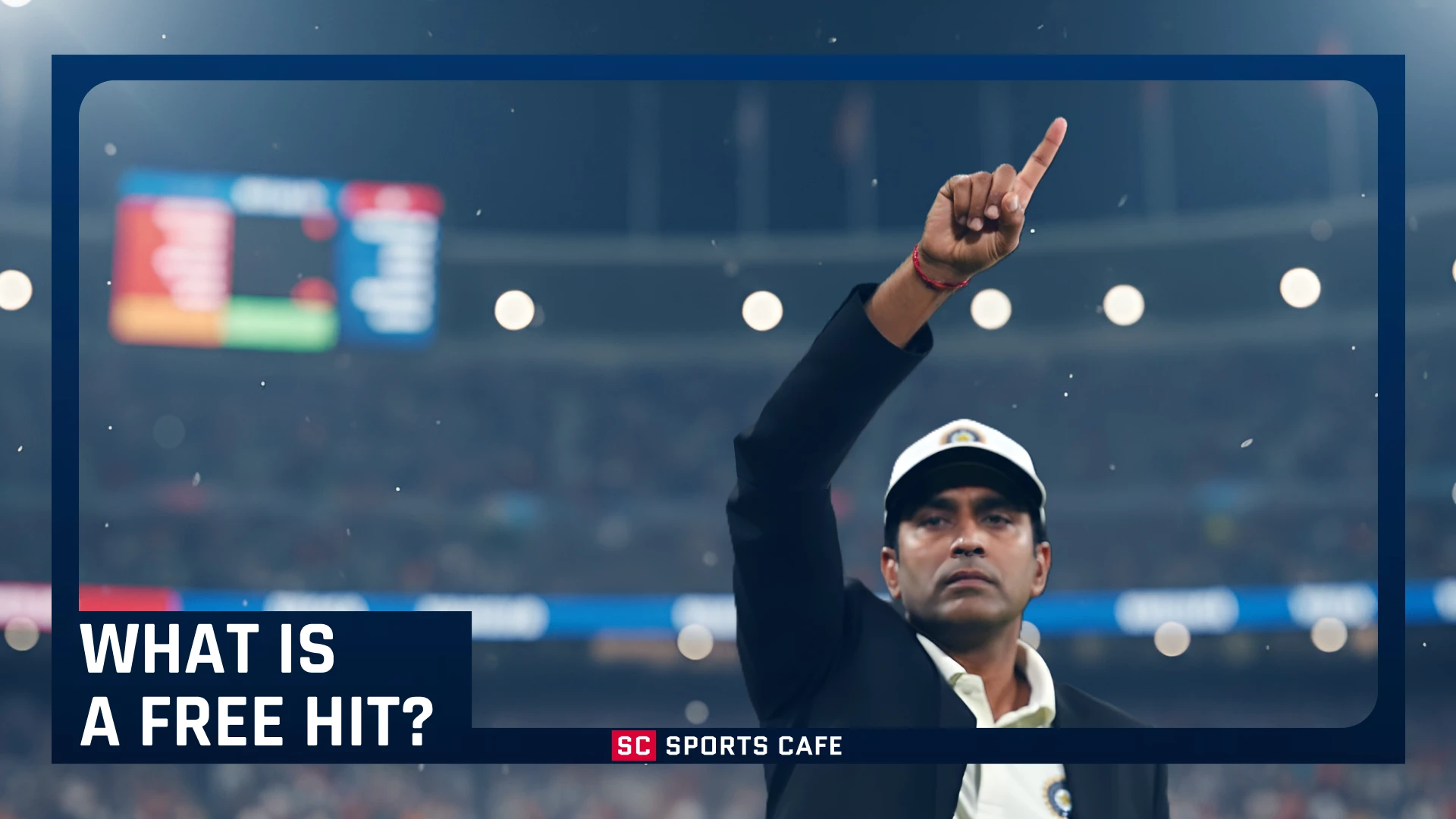
The signal for a free hit is easy to recognise on the field. After indicating the no-ball with an outstretched arm, the umpire rotates an arm in a circular motion above the head. The gesture tells both teams and everyone watching that the following ball grants special protection to the striker.
Format Availability: ODI and T20 Rules
The rule belongs only to white-ball cricket. ODIs and T20s rely on fixed overs and faster scoring patterns, so the free hit fits naturally into these formats. In Test cricket, no such rule exists, even when a bowler oversteps or delivers an illegal ball, because the traditional format manages discipline in other ways without using free-hit penalties.
When is a Free Hit Given?
A free hit enters the game only after an illegal delivery, and the list of situations that trigger it has grown with time. The original rule applied only to front-foot overstepping, but modern limited-overs cricket expanded it to cover several types of no-ball. Each one reflects a different form of error or unsafe delivery from the bowler or the fielding side.
Front Foot No-Ball (Overstepping)
The most frequent cause is a front-foot no-ball. A bowler must land the front foot with some part behind the popping crease at the moment it touches the ground. If the foot lands entirely beyond the line, the delivery counts as illegal, and the next ball becomes a free hit. Umpires use slow-motion replays in many competitions to confirm the call.
Height No-Ball (Waist-High Full Toss)
A waist-high full toss, which travels above the striker’s waist without bouncing, also triggers a free hit. Such a ball is classified as dangerous play because it gives the batter little time to react. The rule aims to protect the striker while keeping the bowler accountable for control.
Fielding Restriction Violations
Some formats award a free hit when the fielding side breaches fielding restrictions. An example from modern white-ball regulations is the presence of too many fielders outside the circle during a Powerplay. Once the umpire confirms the violation, the next ball turns into a free hit, reinforcing the need for discipline from both the bowler and the captain.
Can You Be Out on a Free Hit?
A free hit gives the striker strong protection but not complete safety. Some dismissals lose all force for that one delivery, while a few remain active. The rule creates a clear divide between safe and unsafe outcomes, and players adjust their decisions based on this short window of advantage.
Dismissal Type
Allowed / Not Allowed
Bowled
Not Allowed
Caught
Not Allowed
LBW
Not Allowed
Stumped
Not Allowed
Hit Wicket
Not Allowed
Run Out
Allowed
Obstructing the Field
Allowed
Hitting the Ball Twice
Allowed
The Safe Zone: Bowled, Caught, and LBW
A free hit protects the striker from the three most common dismissals. A ball that crashes into the stumps does not remove the batter, and a catch taken in the field also carries no dismissal. The LBW route loses its force even if the ball strikes the pad in line. The striker stays in place, and play continues as usual. The rule gives the batter a rare moment to swing with confidence because the key threats are temporarily off the table.
The Danger Zone: Run Out Rule
Run out remains active, and it is the main danger the striker faces on a free hit. If the batter leaves the crease and cannot reach the other end before the fielding side breaks the stumps, the dismissal stands. Confusion between partners or hesitation mid-pitch can create trouble. This single risk prevents a free hit from turning into a moment with no consequences at all.
Rare Dismissals: Obstructing the Field and Hitting the Ball Twice
A few unusual dismissals continue to apply even during a free hit. If the striker blocks a fielder’s movement on purpose, the umpire may call obstructing the field. Another rare case involves intentionally striking the ball a second time, which also leads to removal. These situations appear rarely, but the law keeps them active to protect fairness.
What Happens if the Ball Hits the Stumps?
When a delivery on a free hit touches the stumps, the batter stays despite the impact. The ball does not turn dead at that moment. It remains in play, and the batting pair may run if the ball rolls away or deflects into space. Any such runs count as byes or leg byes, depending on the contact. The bowler gains no dismissal, and the batting side may still add to the score from the same ball.
Fielding Restrictions During a Free Hit Delivery
A free hit shifts the balance sharply toward the batter, and the laws prevent the fielding side from neutralizing that advantage through sudden changes in placement. The field must stay almost identical to the one used for the no-ball, which forces the bowler and captain to work with the same setup while the striker swings with freedom. Only a few narrow exceptions allow adjustments, and even those stay tightly controlled.
Can the Captain Change the Field?
The captain cannot redesign the field for a free hit when the same striker remains on strike. The laws restrict movement because the no-ball already punishes the bowler’s side, and further tactical reshaping would remove the advantage the rule intends to give the batter. The fielding unit must keep every fielder in the same position they occupied for the no-ball delivery, so the striker faces a layout that cannot react to the threat of a power shot.
Exceptions for Field Changes
A few limited circumstances create room for adjustments. If the batters cross during the no-ball and a strike rotation occurs, the field may shift to match the usual off-side and leg-side balance for the new striker. A second exception appears when an injury or removal of a fielder forces the captain to reposition players to maintain a legal formation. Outside of those two situations, movement is not permitted, and the original pattern stays in place.
Wicketkeeper Position Adjustments
The wicketkeeper has a small degree of flexibility. The keeper may move a few steps back for personal safety if a strong hit is expected, particularly in formats where big swings are common. The movement cannot change angles or create a fresh tactical trap, and the keeper must remain in line with standard positioning guidelines. The adjustment focuses on safety rather than strategy.
History of the Free Hit Rule in International Cricket
The free hit rule did not exist for most of cricket’s long history. It arrived during a period when limited-overs matches became faster, louder, and more aggressive, and the game’s lawmakers looked for ways to reward attacking batting while punishing poor discipline from bowlers. The rule changed how teams approach short formats, and its evolution explains why it now plays such an important role in ODI and T20 cricket.
Introduction in 2007 (T20)
The free hit entered international cricket in 2007 when it was introduced specifically for T20 Internationals. At the start, it applied only to front-foot no-balls, where the bowler’s lead foot landed beyond the popping crease. The idea was to reduce careless overstepping and force bowlers to control their run-up. Once the rule appeared, T20 cricket saw a noticeable rise in bold strokes because strikers knew they had full protection from most dismissals.
Expansion to ODIs and All No-Balls (2015)
In 2015, the ICC expanded the rule to One Day Internationals and broadened its scope to include every type of no-ball. A waist-high full toss, a bowler delivering with an illegal action, or fielders positioned outside the allowed limits could all trigger a free hit. The update aimed to keep batters safe from dangerous balls, protect the structure of the fielding rules, and increase fairness by treating all no-balls with the same level of penalty.
Why No Free Hit in Test Cricket?
Test cricket plays at a slower and more strategic rhythm, and each delivery carries less immediate pressure compared to the shorter formats. The traditional penalty for a no-ball, which is one extra run and one extra legal delivery, has always been seen as sufficient inside the long and methodical structure of a Test match. A free hit would shift the balance too sharply toward the batting side and change the tactical rhythm that defines the format, so the ICC kept the rule out of Test cricket.
Strategies for Free Hit Deliveries
A free hit gives the striker freedom and puts the bowler under pressure. The batter looks for maximum runs, while the bowler tries to avoid a mistake that turns the delivery into a big scoring shot.
Batter’s Advantage: The License to Slog
A free hit removes the fear of most dismissals, so the striker can swing with full confidence. Bold shots like scoops, reverse sweeps, and heavy slogs become realistic options. The batter may step across the crease or advance down the pitch, knowing only a run-out can end the innings.
Bowler’s Pressure: Defensive Options
The bowler must limit clean hitting, and the safest plan often involves a wide yorker that forces a difficult reach. A slower bouncer can break timing and stop a free swing. Changes of pace and angle help, but the bowler must stay disciplined, since another no-ball gives away another free hit.
FAQs about Free Hit Rules
What is the meaning of free hit in cricket?
A free hit in cricket gives the striker full protection from most forms of dismissal after a no-ball. The batter can attack without the threat of being bowled, caught, or trapped LBW.
Can a batsman be stumped on a free hit?
No, a stumping cannot occur on a free hit. A run-out remains possible, so careless running still carries risk.
Does a free hit apply to wide balls?
Yes. If the delivery for the free hit is wide, the batting side receives the run for the wide, and the next ball again becomes a free hit. The penalty continues until a legal ball is bowled.
Can you change the field on a free hit?
No, the field cannot be adjusted when the same batter stays on strike. Yes, changes are allowed once the strikers switch ends or if substitutions due to injury occur.
Is there a free hit in Test matches?
No. Free hits do not form part of Test cricket regulations.
0
0
0
0
0
0
Comments
0/1000
Sign up or log in to your account to leave comments and reactions





Comments
Sign up or log in to your account to leave comments and reactions
0 Comments