What is Handicap in Cricket Betting? Complete Guide to Runs and Wickets
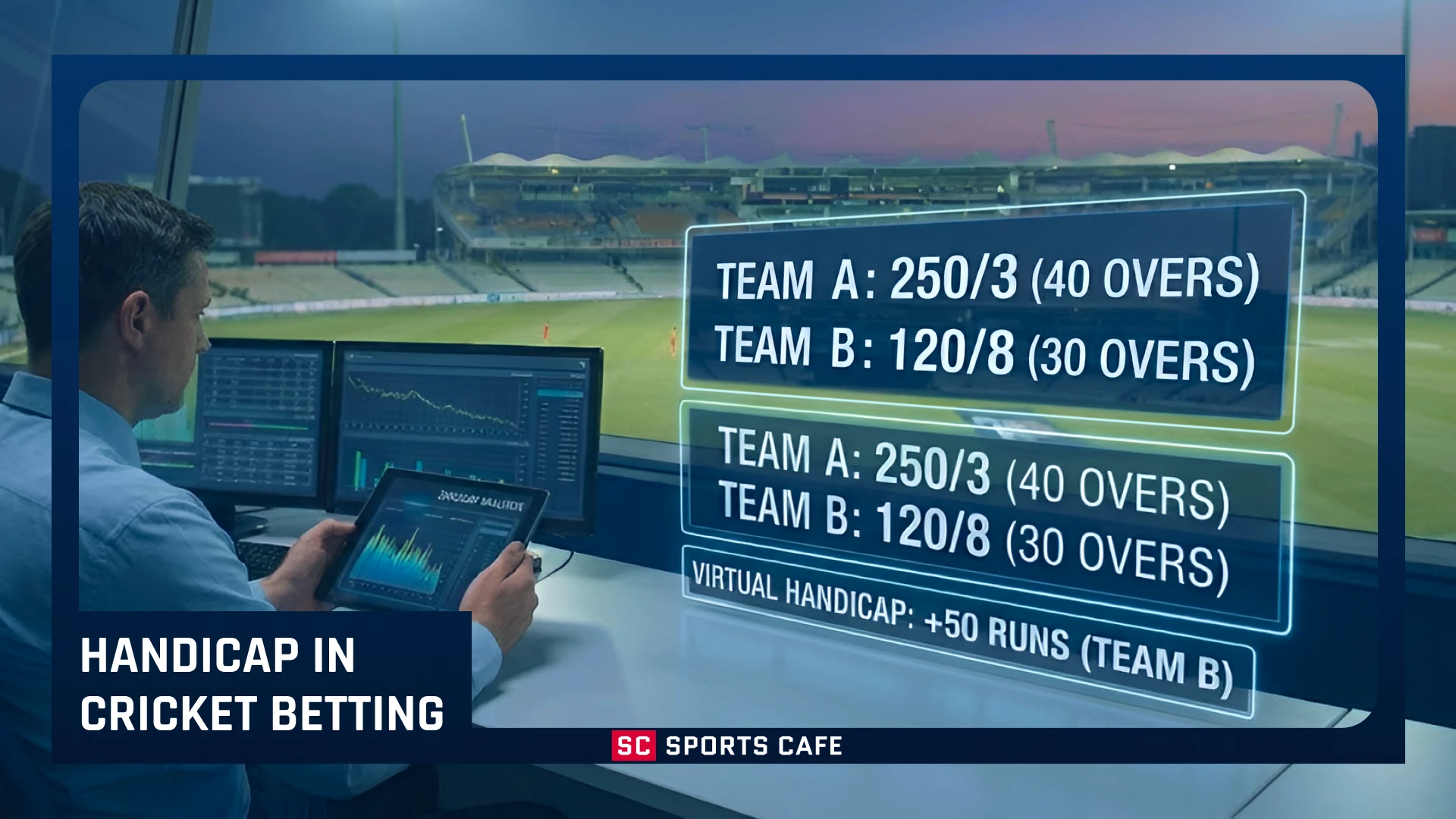
A one-sided cricket match can feel dull from a betting point of view: odds on the favourite are tiny, and backing the underdog looks more like hope than logic. In that kind of fixture, a cricket handicap market steps in and creates a more balanced contest on the betting slip. The handicap meaning in cricket betting is a virtual head start or a virtual deficit that the bookmaker adds to a team before the first ball is bowled. One side begins “on paper” with extra runs or extra wickets, while the other starts from behind, and your bet settles according to the adjusted margin rather than the raw score. In this guide, we will break down how runs handicaps and wickets handicaps work, what the plus and minus signs in the line really mean, and why some lines can result in a push where the stake comes back instead of a win or a loss.
What is Handicap Betting in Cricket?
Handicap betting changes the way a match is viewed because the focus shifts from who wins to how much they win by. In standard match-winner markets, odds on the favourite often sit so low that the bet brings little value. The bookmaker adjusts this through a handicap line and creates a fresh contest inside the real one. A virtual margin appears before the match begins, and the team you back must perform above or below that margin for your bet to settle as a win. The goal of the bookmaker is to bring both sides closer to even-money territory, so the punter must judge whether the stronger team can clear the assigned gap or if the weaker team can stay within it.
How Cricket Handicap Works: Runs vs. Wickets
Handicap markets in cricket depend on who bats first because the path to victory changes once the match format is set. A side that posts a total creates a target, while a side that chases measures success by wickets in hand. Bookmakers build handicap lines around these two different match states, so a punter must read the line with care and understand how it adjusts once the toss result is known.
Runs Handicap (Batting First)
A runs handicap applies when the team you back bats first. The bookmaker subtracts the handicap figure from that team’s final total. The bet wins only if the adjusted score still stays above the opponent’s real total. For example, if a team carries a –18.5 runs handicap, they must win by at least 19 runs. Any margin smaller than that settles the bet as a loss, even if the team wins the match itself. The idea is to judge how strong a first-innings total the side can set and how much pressure they can put on the chase.
Wickets Handicap (Chasing)
A wicket's handicap applies when the team you back bats second. The bookmaker gives a target expressed through wickets remaining. A team with a –3.5 wickets handicap must win while keeping at least 4 wickets in hand. If they scrape home with only one or two wickets left, the bet loses, even though the real match result is a win. A punter must judge the depth of the batting order and the likelihood of a controlled chase rather than a tense finish.
The Flip-Flop Rule
Handicap lines often appear in a dual form, such as “Team A –20.5 runs OR –3.5 wickets”. This line adjusts itself based on who bats first. Below is a short table that shows how the handicap shifts once the toss decides the order of innings:
Toss Outcome
Team Bats First
Handicap Applied
Team A wins the toss and bats
Team A
Runs handicap (e.g., –20.5 runs)
Team A wins the toss and bowls
Team A chases
Wickets handicap (e.g., –3.5 wickets)
Team B wins the toss and bats
Team A chases
Wickets handicap
Team B wins the toss and bowls
Team A bats
Runs handicap
The flip-flop structure keeps the handicap relevant under any match script, so the core question stays the same: can the favourite win with enough control, or can the underdog resist beyond the line?
Reading the Line: Understanding Plus and Minus Handicaps
Handicap lines look simple at first glance, yet each sign carries a clear message about how the market views both teams. The bookmaker sets the line to pull the favourite back and push the underdog forward, so the punter must read the number and the sign together before deciding where the value sits.
The Minus (-) Handicap: Backing the Favorite
A minus sign always sits next to the stronger side. It signals a virtual deficit. Backing the favourite with a –line means you expect them to win by a margin greater than the handicap. If the handicap is –22.5 runs, the favourite must win by at least 23 runs. If it is –3.5 wickets, they must finish the chase with at least 4 wickets in hand. A small victory on the field can still mean a losing bet on the handicap line.
The Plus (+) Handicap: Backing the Underdog
A plus sign marks the underdog and gives a virtual advantage before the match even starts. A bet on a team with +18.5 runs can win even if the side loses the real match, as long as they stay within that margin. It rewards teams that compete strongly without needing to pull off an upset. Many punters use the plus handicap when they expect a close contest or when conditions may help the weaker side.
The Half Point Handicap (0.5)
Bookmakers often add a decimal, such as +5.5 or –10.5, to avoid a push. A push is a situation where the real margin matches the handicap exactly, which forces the bookmaker to return the stake. Cricket scores never land on half-runs or half-wickets, so adding 0.5 ensures every bet ends with a clear win or loss. This keeps the market cleaner and prevents disputes about tied outcomes.
Types of Handicap Markets in Cricket
Handicap betting spreads across several formats, and each type serves a slightly different purpose. Some focus on a single match, while others stretch across an entire tour. Understanding these options helps the punter read long-term trends and short-term conditions with the same confidence.
Match Handicap
A match handicap applies to one game, whether it is a T20, ODI, or Test. The bookmaker assigns a virtual lead or deficit before the first ball. In white-ball cricket, the margins stay moderate, often around 6–30 runs or 1.5–4.5 wickets. Test match handicap lines can be far bigger because the gap between teams may reach hundreds of runs or even an innings. A favourite might be listed at –150.5 runs, while the weaker side receives +150.5. The idea stays the same: the favourite must win by enough to clear the line, while the underdog earns protection through the extra runs.
Series Handicap
A series handicap stretches across multiple matches. The line might look like Australia –1.5 or England +1.5 in a five-match Ashes series. A team priced at –1.5 must win the series by at least two matches. A team at +1.5 can lose the series but still win the handicap bet if they stay close across the tour. Such markets reward a broader reading of form, squad depth, and conditions across several venues.
Asian Handicap in Cricket
Asian handicap entered cricket from football but adapted to the sport’s scoring style. It usually removes the chance of a drawn outcome in the bet. When the handicap uses whole numbers, such as –20 or +40, a push becomes possible and the stake returns. When the bookmaker sets half-lines like –15.5, the confusion disappears, and the bet always settles outright. The structure aims to balance both sides and create a more competitive market, especially in formats where large scoring swings are common.
Practical Examples of Handicap Betting Calculation
Handicap markets become clearer when the numbers are applied to real matches. Two examples below show how runs and wickets handicaps turn an ordinary result into a winning or losing bet.
Scenario 1: T20 Match (Run Chase)
Match Setup:
Team A is chasing a target of 170. The bookmaker's line states:
Team A –3.5 wickets or Team B +3.5 wickets.
Your Bet: Team A –3.5 wickets.
Real Outcome: Team A reaches 170 with a score of 170/7.
Handicap Requirement:
A bet on Team A –3.5 wickets needs the team to win with at least 4 wickets in hand.
Comparison:
Team A lost 7 wickets.
Team A lost 7 wickets, meaning they had only 3 wickets in hand.
The handicap (-3.5) required a winning margin of at least 4 wickets.
Match
Bet
Real Result
Result After Handicap
Status
T20: Team A vs Team B
Team A –3.5 wickets
Team A 170/7 (won)
Won by 3 wickets
Loss
The example shows that wicket handicaps focus on how convincing the win was, not only on who won the match.
Scenario 2: ODI Match (Setting a Target)
Match Setup:
Team C bats first and posts 285 runs. The bookmaker line is:
Team C –20.5 runs or Team D +20.5 runs.
Your Bet: Team C –20.5 runs.
Real Outcome: Team D is bowled out for 250 runs. Team C wins by 35 runs.
Handicap Calculation:
Adjusted score for Team C:
285 minus 20.5 gives 264.5.
Now compare 264.5 with Team D’s real total of 250.
The adjusted score remains higher.
Bet Result: Win, because Team C covered the handicap.
Match
Bet
Real Result
Result After Handicap
Status
ODI: Team C vs Team D
Team C –20.5 runs
Team C won by 35
285 − 20.5 = 264.5 vs 250
Win
The ODI example shows that once the handicap is subtracted from the favourite’s score, the adjusted number still needs to stay ahead of the opponent for the bet to succeed.
Handicap Betting Strategies and Tips
Handicap lines reward careful reading of form, pitch behaviour, and match flow. A short review of these factors can shape stronger decisions.
Analyzing Team Strength and Form
Teams that dominate regularly are more likely to clear a minus handicap, while sides that win narrow matches rarely do so. Checking past margins helps you see if a favourite genuinely pulls ahead or only survives close finishes.
The Impact of Pitch Conditions
Dry pitches with true bounce often lead to bigger gaps in totals, so minus handicaps fit the pattern. Slow or green surfaces keep scores tight, which strengthens the case for a plus handicap on the underdog.
In-Play Opportunities
Live lines shift sharply when a favourite loses early wickets or an underdog starts well. Quick reaction during these swings can uncover better numbers than those available before the match.
FAQs about Cricket Handicap Betting
What does handicap mean in cricket betting?
It is a way of balancing the contest through a virtual lead or deficit in runs or wickets before the match begins.
How does a wicket handicap work?
The team must win while keeping more wickets in hand than the handicap number demands, or the bet loses.
What is a spread in cricket betting?
It is another name for the handicap line and shows the margin that separates the two sides in the market.
Can a handicap bet end in a draw?
A draw is possible only when the line uses whole numbers, but most bookmakers use half-points to prevent that outcome.
0
0
0
0
0
0
Comments
0/1000
Sign up or log in to your account to leave comments and reactions




Comments
Sign up or log in to your account to leave comments and reactions
0 Comments