What is a Duck in Cricket? From Golden to Titanium
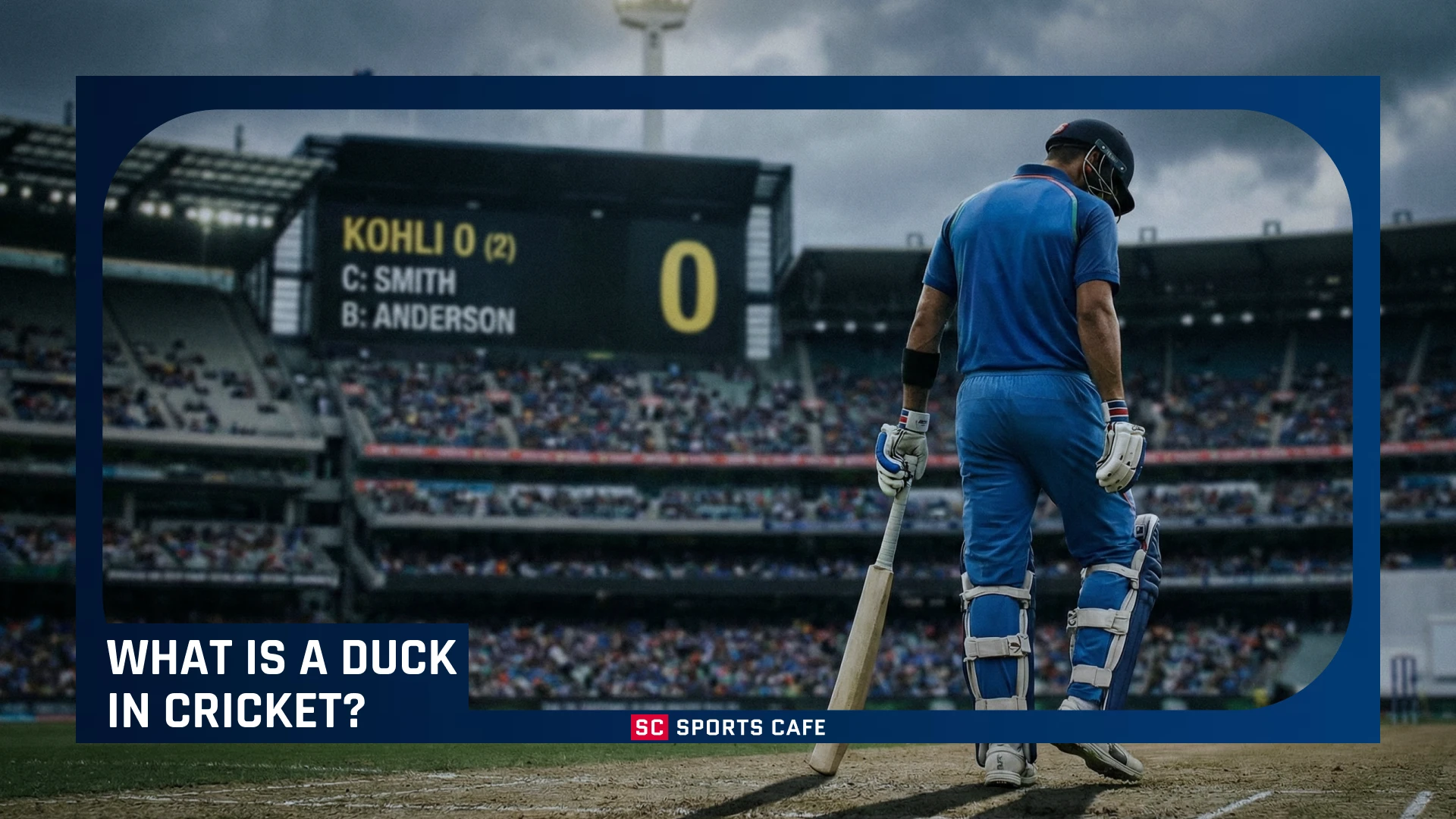
Every cricket fan knows the sound of a stadium falling quiet when a batter walks back without opening their account. That moment — quick, sharp, and usually painful — is called a duck. The idea is simple: a player is dismissed for zero, but the emotion behind it is often far from simple. A duck can change momentum, break confidence, and even shift the direction of an entire match. For a batter, it means returning to the pavilion almost as soon as the innings begin.
As the sport grew, fans created their own terminology for different types of zeros. A first-ball dismissal became a golden duck, a wicket without facing a ball turned into a diamond duck, and deeper down the list, you find platinum, palladium, and even the dramatic titanium duck. In this guide, we explore what is duck in cricket, trace the history of the term, break down every unique variation, and look at the players and moments that shaped its meaning.
Duck Meaning in Cricket: History and Etymology
The word may sound playful, but the history behind it stretches back more than a century. It started as a casual expression in England and, with help from newspapers and humour, became part of cricket’s everyday language.
The “Duck’s Egg” Connection
Early scoreboards displayed numbers in large shapes, and the zero resembled an egg. When a batter failed to score, spectators joked that he had “laid a duck’s egg”. The phrase later shortened naturally to just “duck” because everyone already understood what the round shape meant.
The Prince of Wales Incident (1866)
A moment in 1866 turned the slang into an established term. The Prince of Wales, who later became King Edward VII, played a match, faced a delivery, and fell for zero. Newspapers commented that he “departed with a duck’s egg”, and the line spread quickly, sticking to cricket ever since.
The Complete Hierarchy of Ducks: From Golden to Titanium
Cricket fans love classification, and ducks received their own ranking over time. Each type focuses not on the score — always zero — but on how soon or under what circumstances the dismissal occurs.
Duck Type
Ball Faced
Details
Duck
Any
Out for 0
Golden Duck
1st ball
Out first ball faced
Diamond Duck
0 balls
Dismissed without facing a legal ball
Silver Duck
2nd ball
Out on the second ball
Bronze Duck
3rd ball
Out on the third ball
Royal Duck
1st ball of innings
Opener out on the first ball of the innings
Platinum Duck
Varies
Often the first ball of the match or the captain’s first-ball dismissal
Palladium Duck
Varies
Humorous term for unusual or unlucky dismissals
Titanium Duck
Both openers
Both openers fall for golden ducks in the same innings
What is a Golden Duck?
A golden duck cricket moment happens when a batter receives one ball and is gone immediately. The shock around the ground is instant — commentators barely finish their introduction before the replay appears. It is one of the most widely known forms of duck because it catches even elite players off guard.
What is a Diamond Duck?
A diamond duck happens when a batter is dismissed without facing a single legal delivery. Confusion during a run, a non-striker run out, or a dismissal on a wide ball often leads to it. Many followers of the game view it as the harshest type of duck because the batter walks back without any opportunity to play a proper shot.
Silver and Bronze Ducks
Silver ducks occur on the second ball faced, bronze ducks on the third. They are less dramatic than golden or diamond ducks, yet they capture the same frustration — the player barely gets started before the innings end.
Royal Duck
A royal duck happens when an opener falls on the first ball of the innings. The atmosphere can swing instantly. Bowlers celebrate wildly while the batting side feels an early jolt.
Platinum Duck
A platinum duck varies slightly depending on location. Some use it for the first ball of the match, others apply it specifically to captains dismissed on the first ball they face. The shared theme is a first-ball collapse with added significance.
Palladium Duck
Few fans outside the most dedicated circles know this one. A palladium duck is a quirky term used for highly unlucky dismissals — often involving strange bounces, miscommunication, or bizarre incidents. It is part of cricket’s humorous vocabulary rather than an official statistic.
Titanium Duck
Among all duck types, the titanium duck stands out. It refers to both openers getting golden ducks in the same innings. Teams dread this scenario, as it places enormous pressure on the middle order before the game has even settled.
Ducks in Test Cricket: The Pair and King Pair
Test cricket gives each batter two innings, so the sport needed terms to describe poor results across both innings.
What is a Pair?
A pair happens when a player scores 0 in both innings. The two zeros resemble a pair of spectacles, and fans often use the phrase “he bagged a pair of glasses”.
What is a King Pair?
A king pair is even harsher: out on the first ball in both innings. Few players suffer this fate, but whenever it happens, it quickly becomes part of match folklore.
Famous Historical Ducks That Changed Cricket History
Some ducks are amusing, others embarrassing, but a few have shaped the sport’s history. These moments show how a single zero can shift an entire storyline.
The Tied Test Drama: India vs Australia
One of the most dramatic ties between India and Australia featured a late dismissal on zero that helped drag the match to a razor-thin finish. Every run mattered, and the duck became one of the defining moments that led to the rare result.
World Cup Ducks That Hurt
World Cups have seen several match-defining ducks:
South Africa suffered collapses at crucial stages in knockout games, often after early ducks
England experienced similar moments, where the early loss of star batters sent the innings into trouble
In tournament cricket, one duck can control the direction of the entire chase.
Ajit Agarkar and the “Bombay Duck”
Agarkar’s streak of ducks against Australia became so famous that fans jokingly named him “Bombay Duck”. Even though the batter later produced match-winning innings in ODIs, the nickname followed him for years.
Courtney Walsh: The Record Holder
Walsh, a legendary West Indian fast bowler, holds the record for the most ducks in Test cricket. His batting struggles never affected his bowling greatness, yet his duck tally remains one of the sport’s most quoted statistics.
Heartbreak at the End: Ducks in Final Test Innings
A player’s final Test innings carries a weight unlike any other moment in a cricket career. Years of work, milestones, failures, and victories build toward a last walk to the crease. Many hope to finish with a boundary or a steady knock, something that feels like a proper farewell. Yet cricket has a harsh way of denying sentimental endings. Some careers close with a duck, and these moments often stay in public memory as long as centuries do. Fans search this topic usually because it remains one of the most emotional storylines in the sport: has any legendary player stepped away after scoring zero? The answer is yes — and in some cases, the final-innings duck became a part of cricket folklore.
Don Bradman's Farewell Zero
Among all final-innings ducks, Don Bradman’s stands alone. He entered his last Test in 1948 needing only four runs to finish with a perfect batting average of 100. Crowds understood the weight of the moment. Journalists wrote that the scene felt more like a ceremony than a regular innings, since Bradman was already regarded as the greatest batter the sport had produced.
What followed was unexpected. After walking in to warm applause, he faced Eric Hollies, a leg-spinner with a sharp googly. Hollies delivered a ball that drifted slightly, dipped, and turned just enough to beat Bradman’s defence. The stumps rattled, and the ground fell silent. Bradman had scored a duck from his second ball. The moment deeply moved the spectators, and even the fielding side paused in respect. Bradman himself smiled gently as he walked away, later saying that perhaps the emotion of the occasion made it harder to focus. His average settled at 99.94, a number repeated almost as often as his name. Many fans consider this duck as monumental as any of his records because it reflected the human side of a sporting giant.
Other Legends Who Left on a Duck
Bradman is not the only great player whose career ended with a zero. Several well-known figures across generations had their final Test innings cut short before scoring.
Jack Hobbs, one of cricket’s most influential batters, finished his last Test innings with a duck. His career was filled with elegance and consistency, yet the final chapter closed quietly. The contrast between his legacy and his last score often surprises new fans who look through his statistics.
Other players experienced similar endings for different reasons. Some faced high-quality bowling in challenging conditions, where a new ball moved just enough to cause trouble. Others misread length or attempted ambitious shots early in the innings, hoping to finish confidently.
A few modern players also ended on a duck, including batters who represented their sides for more than a decade. Their final dismissals often carry a sense of emotional weight, especially when the crowd realises it will be the last time that player walks back to the pavilion. These moments remind fans that cricket’s script is not always gentle toward its heroes.
Across eras and countries, a final-innings duck remains a rare yet powerful symbol. It shows that even the greatest can face a delivery that arrives with perfect precision at exactly the wrong time. That mixture of skill, timing, and unpredictability is why the game keeps its grip on the imagination of millions.
The Zero Club: Players Who Never Scored a Duck
Some cricket records surprise even dedicated followers, and the Zero Club belongs to that group. It includes players who completed long careers without a single dismissal for zero. Avoiding a duck is extremely hard because every innings begins with risk, and even the finest batters face sharp swing, tight spin, or early pressure. Only a small number of cricketers have managed to stay out of the scorebook’s most unwanted entry.
Is it Possible to Avoid a Duck?
Staying duck-free across many innings is rare. A batter can fall early to a good delivery, misjudge length, or get caught in a moment of hesitation. New-ball spells, turning pitches, and unpredictable match situations all increase the chance of ending on zero. Players who keep this statistic clean usually defend well at the start of each innings and stay patient under pressure. Even then, luck plays a part, as one mistake can break the streak.
Dave Nourse and Historical Records
The strongest example of a duck-free career is Dave Nourse, the South African all-rounder who played 45 Test matches from 1902 to 1924 without a single duck. His record stands out because early 20th-century pitches often behaved unevenly, and batters had limited protection. Nourse’s careful technique and calm approach allowed him to avoid zero throughout his career, and no Test player has matched this record since.
Modern Players and Duck-Free Streaks
Modern cricket makes duck-free streaks even harder due to aggressive batting styles in T20 and ODI formats. Some players manage long stretches without a duck early in their careers, especially in domestic leagues or shorter formats. These streaks typically reach 20 to 30 innings before a mistake, a sharp delivery, or pressure from the situation ends the run. A full duck-free career, like Nourse’s, remains almost impossible in today’s environment.
Player
Format
Duck-Free Innings
Notes
Dave Nourse (South Africa)
Test
45 innings
Only man in Test history to play 45 innings without a single duck. The record stands since 1924.
Younis Khan (Pakistan)
Test
27 consecutive innings
His longest duck-free run is verified through Test scorecards. Known for strong defensive starts.
Jonathan Trott (England)
Test
23 consecutive innings
Built one of England’s most consistent early-career streaks without a duck.
Michael Hussey (Australia)
ODI
43 consecutive innings
One of the longest verified ODI streaks without a duck in modern cricket.
Virat Kohli (India)
ODI
26 consecutive innings
Verified streak early in his career before his first ODI duck.
Hashim Amla (South Africa)
ODI
27 consecutive innings
Known for disciplined starts; confirmed streak before a duck finally appeared.
Faf du Plessis (South Africa)
T20I
19 consecutive innings
One of the longest verified T20I streaks before his first duck.
Kane Williamson (New Zealand)
T20I
17 consecutive innings
Verified streak at the start of his T20I career.
FAQs about Types of Duck in Cricket
What is a duck in cricket terms?
A duck means in cricket that the batter finishes with zero runs. It signals a dismissal without scoring.
What is the difference between a Golden and Diamond duck?
A golden duck comes from a dismissal on the first ball faced. A diamond duck happens when the batter is out without facing a legal delivery, often through a run-out at the non-striker’s end.
What is a King Pair in Test cricket?
A king pair appears when a player falls for a first-ball duck in both innings of the same Test match. It stands as one of the harshest outcomes for any top-order batter.
Who holds the record for the most consecutive ducks?
Among famous cases, Ajit Agarkar reached a long streak of ducks in Test cricket against Australia, which led to the well-known nickname “Bombay Duck”.
Which famous player scored a duck in his last match?
The most iconic example is Don Bradman, who ended his final Test innings with a duck and closed his career with an average of 99.94, a number that became part of cricket folklore.
0
0
0
0
0
0
Comments
0/1000
Sign up or log in to your account to leave comments and reactions




Comments
Sign up or log in to your account to leave comments and reactions
0 Comments