DLS Full Form in Cricket: The Complete Guide to Duckworth Lewis Stern Method
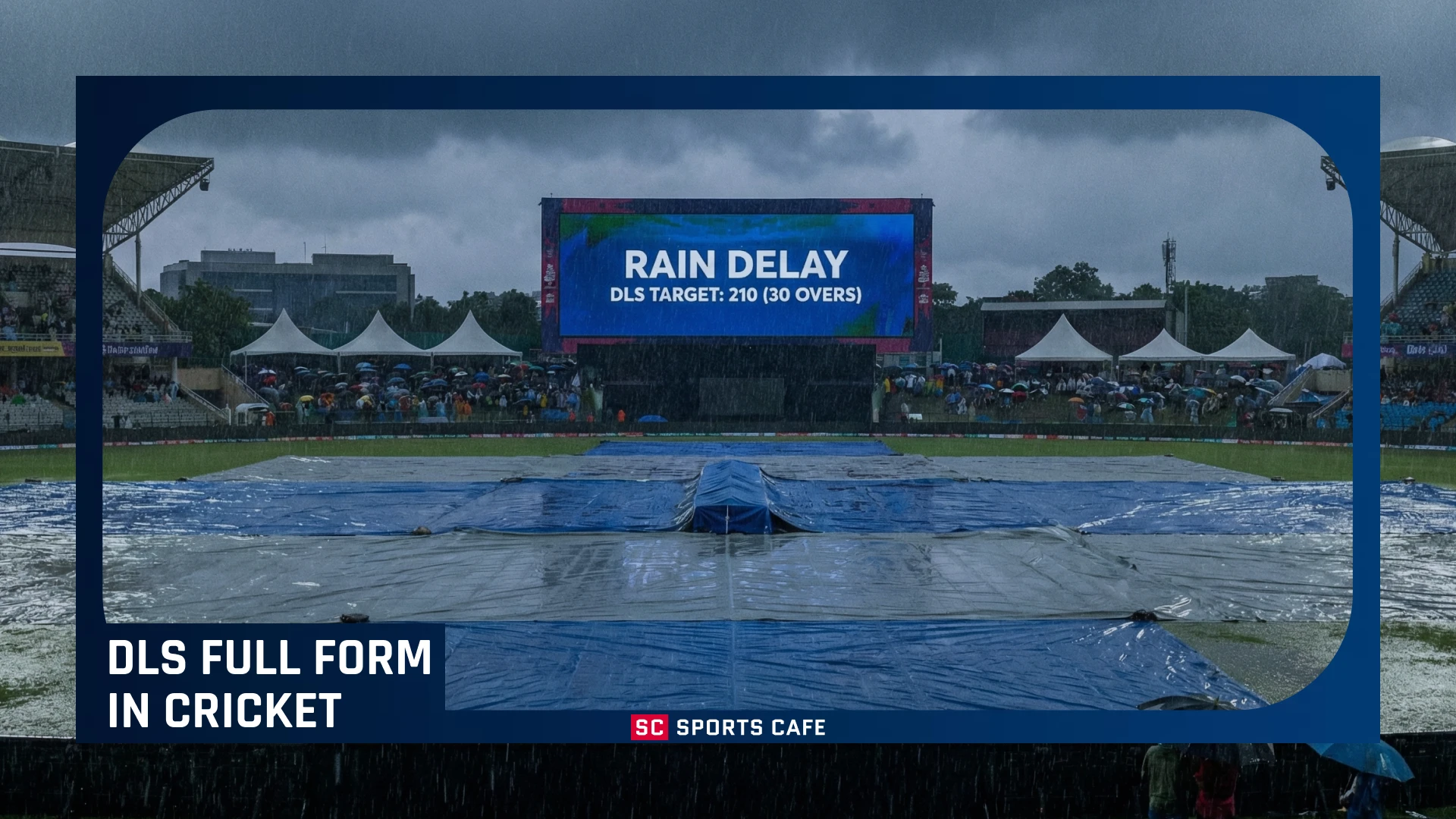
Many fans hear the term DLS during rain-affected matches, yet only a few understand how deep the logic goes behind that calculation. The dls full form in cricket is Duckworth-Lewis-Stern, and it represents the official method used across international and major domestic matches to produce a fair target when play stops due to rain or other interruptions in limited-overs cricket. The technique carries mathematical roots, yet its purpose remains simple at heart: both teams must face an adjusted challenge that reflects the time and resources lost. The ICC approves the DLS system, and it has replaced the older rain rules that created chaos in past tournaments. A viewer who understands DLS gains more clarity while watching matches shift under cloud cover, and a bettor gains a better read of live markets because the DLS par score and revised target decide tight contests. This guide covers the logic behind the method, the role of wickets, the idea of resource percentage, and the history behind its creation.
Understanding the DLS Method Logic
The entire method rests on one idea: a cricket innings uses up resources that influence scoring potential. A team uses two resources during a chase or a first innings — overs remaining and wickets in hand. A team that has many overs but only a few wickets holds far less scoring potential than a team with the same number of overs but many wickets available. DLS places value on these resources and compares both teams through those values. When rain cuts overs or delays play, the DLS calculation adjusts the second team’s target to match the portion of resources still left for them.
Why Wickets are as Important as Overs
Overs decide how much time remains, yet wickets decide how freely a batting side can attack. A team with ten wickets on hand can use aggressive shots and chase a high run rate, while a team with two or three wickets left must slow down. The resource percentage falls sharply as wickets drop, even if the number of overs stays the same. A team with 20 overs and 10 wickets has far greater scoring potential than a team with 20 overs and 2 wickets because the first team can take risks without fear. DLS treats this difference as a measurable value and uses it to judge fairness when revising targets.
The Resource Percentage Table
A central element within the method is the resource percentage table, where every combination of overs and wickets carries a specific value. A full 50-over innings with ten wickets counts as 100 percent of resources. If a team starts with 50 overs and loses early wickets, its percentage drops even before any rain interruption. A team with 25 overs and ten wickets has more resources than a team with 25 overs and six wickets, even though the overs remain equal. Below is an example of how values shift:
Overs Left
Wickets in Hand
Resource %
50
10
100
40
10
83.8
30
7
52.6
20
5
34.6
10
8
26.1
5
2
7.7
These numbers show how quickly scoring potential changes. The method converts the two resources into a single figure, and that figure shapes the revised target.
The Mathematical Formula
A viewer often sees the DLS number appear on television without any explanation, yet the foundation follows a clear pattern. An adjusted target uses the formula:
Revised Target = Team 1 Score × (Team 2 Resources / Team 1 Resources)
If Team 1 used all its resources and scored 280, and rain leaves Team 2 with only 80 percent of those resources, the target adjusts in proportion. Modern DLS software performs this calculation instantly and includes updated values for modern strike rates. Analysts, captains, and coaches read the printout or the digital sheet to track changes during the match.
Decoding DLS for Fans and Bettors: Par Score vs Target
Rain brings confusion because the rule shifts once the interruption takes place. A fan must separate two ideas: par score and revised target. Par score applies only if the match cannot continue, while the revised target appears if play restarts. Many matches changed direction because a team misunderstood the difference between the two.
Live Tracking with Par Score
Par score defines the number of runs the second team must be above to win if play stops permanently. It changes after every ball because resource values update constantly. If the second team stays one run above par when the umpires call off the match, that side wins. A par score sheet forms a reference point for captains who want to stay ahead during a rain-threatened chase.
Setting the Revised Target
A revised target applies only when the match resumes after overs are lost. The DLS method calculates a new challenge that reflects the reduced resource pool. If Team 2 loses ten overs, they lose both time and a chunk of potential scoring, so the revised target shrinks accordingly. A revised target often transforms the rhythm of the chase because batters know the exact number they must reach.
Reading the DLS Sheet
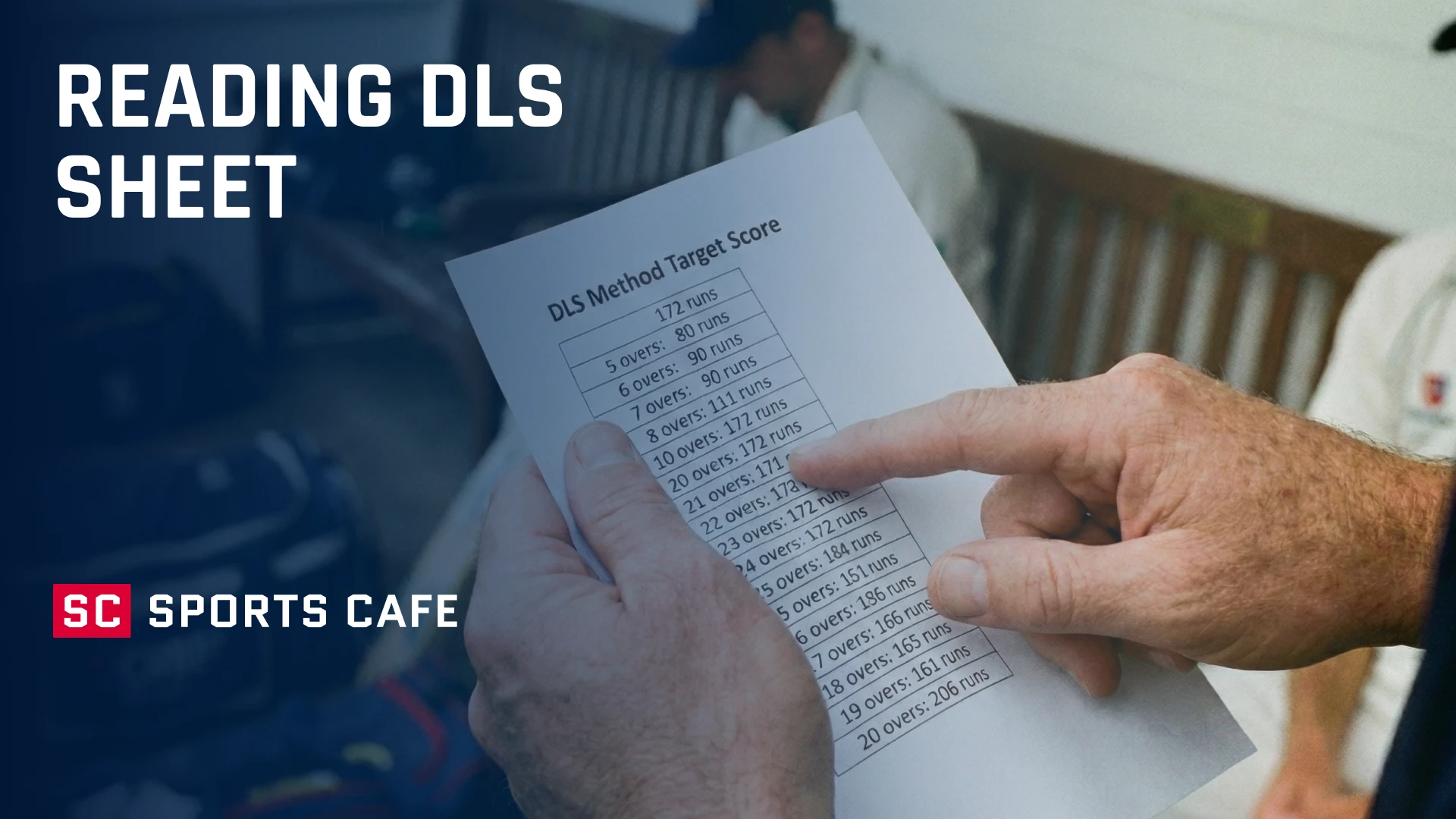
A DLS sheet shows resource percentages in rows for every remaining wicket and columns for each remaining over. Teams keep printed versions in the dressing room or access digital ones on tablets. During rain or tactical breaks, analysts check where the team stands relative to the par score, and the captain adjusts risk levels as needed. Bettors also watch these sheets on broadcasts to understand early shifts in live odds.
The Evolution of Rain Rules: Why DLS was Invented
Limited-overs cricket grew through the 1970s, and rain rules struggled to keep pace. Several old systems created unfair targets that punished teams without reason. A series of high-profile incidents forced the sport to seek a better approach.
The Failure of Average Run Rate
Average Run Rate (ARR) looked simple on paper. The method divided a team’s score by the overs used and set that pace as the chase rate. The flaw came from the total ignorance of wickets. A team with nine wickets lost does not match a team with ten wickets intact, even if the scoring rate stays the same. Matches under ARR often turned unfair once batters lost early wickets, but had their target judged solely by overs.
The Most Productive Overs Disaster
The Most Productive Overs (MPO) method attempted to fix ARR by using the best scoring overs from the first innings to create a chase for the second. This method failed even harder. The most famous example took place in the 1992 World Cup semi-final between South Africa and England. Rain changed the calculation and produced the absurd target of “22 runs from 1 ball”. Critics across the world called for a correction, and this moment signaled the need for a structured system.
Enter Duckworth, Lewis, and Stern
Statisticians Frank Duckworth and Tony Lewis responded to this demand by building a model that used mathematical curves to represent scoring potential across an innings. Their method entered official play in 1997 and earned wide respect for its fairness. Steven Stern later updated the model to reflect the faster scoring patterns in modern ODI and T20 cricket, which added the “S” to the method’s name. His updates kept the formula relevant as batting styles changed.
Famous Matches Decided by the DLS Method
Several modern matches show how DLS shapes strategy and results. Teams that understand resource percentages often gain an edge during rain-threatened chases.
The Tactical Masterclass: Pakistan vs New Zealand (2023)
During a limited-overs match in 2023, Pakistan tracked the par score closely as clouds gathered. Their batters pushed the scoring rate higher before the rain arrived, knowing that a narrow lead could settle the match. Once the rain halted play, the calculation placed Pakistan ahead of the par score. The umpires ended the game, and Pakistan secured a win based on the DLS reading.
The Thrilling Finish: IPL 2023 Final (CSK vs GT)
The IPL 2023 final between Chennai Super Kings and Gujarat Titans needed DLS after rain delayed the chase. The revised target reduced the overs and turned the match into a sprint. Chennai adjusted instantly by attacking from the first ball because every run carried a heavier weight under the reduced-over scenario. The chase went down to the final delivery, and DLS shaped the entire strategy of the innings.
The Heartbreak: South Africa vs Sri Lanka (2003)
In the 2003 World Cup, South Africa faced a must-win match and misread the par score. They believed they needed only to match the par figure, yet they needed to score one run more than the par to stay ahead. The rain ended the match shortly afterward. Their failure to cross the required number resulted in elimination from the tournament. The incident remains one of the most painful examples of misinterpreting the DLS sheet.
FAQ on DLS Method and Rules
What is the full form of DLS in cricket?
The full form of DLS is Duckworth Lewis Stern. The name comes from the three statisticians who created and later updated the method. Duckworth and Lewis designed the original model in the 1990s, and Steven Stern adjusted it for the high-scoring nature of modern white-ball cricket. The technique calculates fair targets in rain-affected limited-overs matches and forms the official ICC standard today.
Why is DLS not used in Test cricket?
Test cricket follows a format without strict limits on overs, so teams are not bound by a fixed number of deliveries the same way they are in ODI or T20 matches. Interruptions caused by rain or bad light do not change the structure of a Test, since the game can be extended, rescheduled, or carried into reserve days. Because the result does not depend on chasing a revised target, the DLS system simply has no role in this format.
Is the DLS method fair to the chasing team?
DLS is widely accepted as the fairest balance between mathematics and cricket strategy. The method measures a team’s scoring potential through overs and wickets, which reflects real match situations better than older rain rules. Critics still argue about certain outcomes, especially in unusual innings, yet most analysts agree that DLS treats both sides with more accuracy and logic than any system used in the past.
How is the DLS par score calculated in T20?
Par score in T20 follows the same logic used for ODIs, but the values change faster because teams burn through their resources more quickly. A T20 innings has far fewer overs, so every ball carries greater influence on scoring potential. The DLS table assigns resource percentages to each combination of overs and wickets, and the par score updates after every delivery. Broadcasters often show it during rain delays so that fans can follow the chase in real time.
0
0
0
0
0
0
Comments
0/1000
Sign up or log in to your account to leave comments and reactions




Comments
Sign up or log in to your account to leave comments and reactions
0 Comments