


Cricket Session Betting: Markets and Strategies Guide
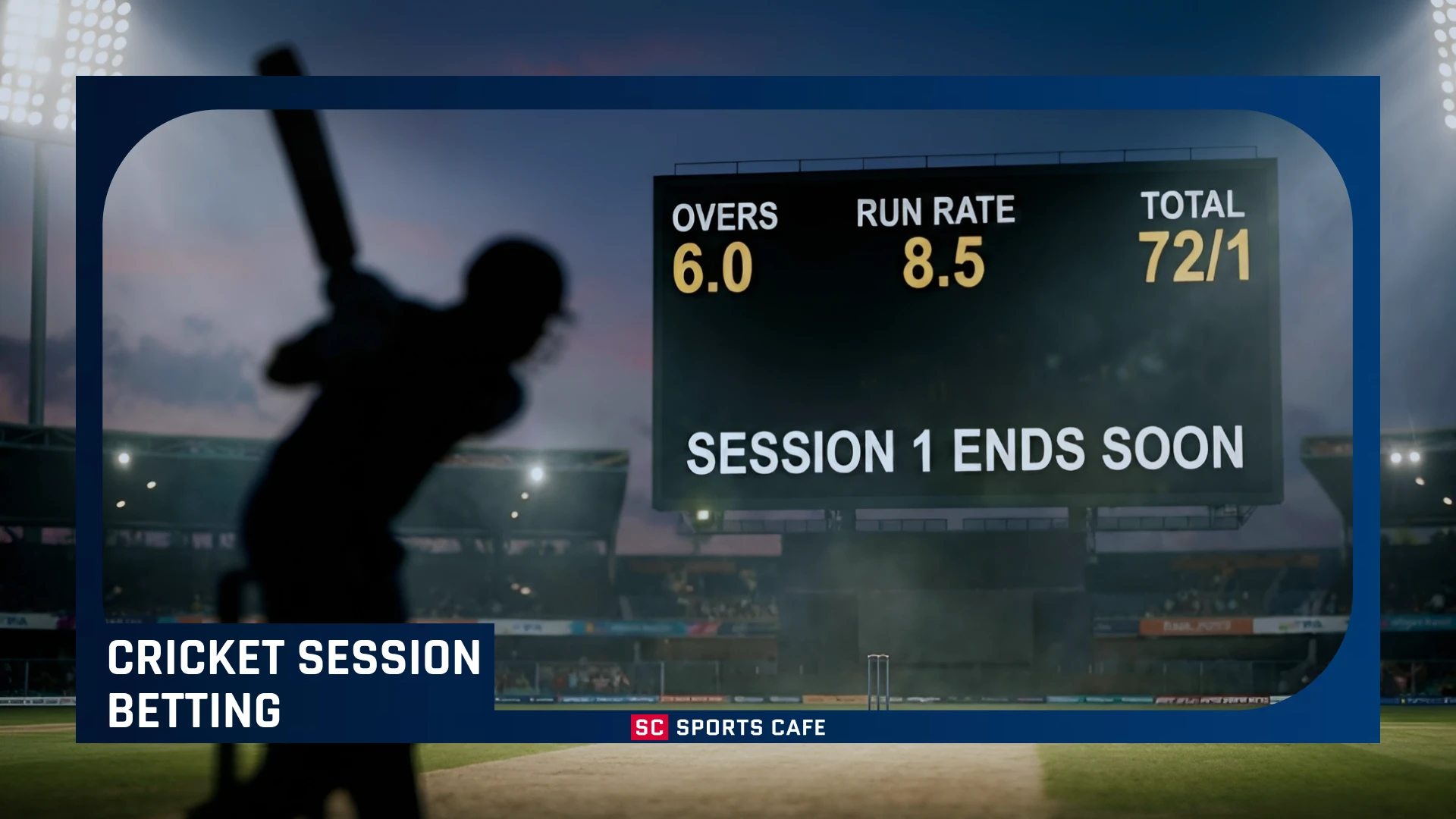
A cricket fan hears the word session often, yet its meaning changes with the situation. In the sport, a session is a block of time in a Test match, but in betting, it describes a scoring segment measured in overs. A bookmaker posts a projected total for a set number of overs, and the punter predicts if the batting side will go above or below that line. The idea stays simple, but the scoring pace and pressure in each segment turn session betting into a fast-moving market. The 6-over Powerplay, the 10- and 15-over phases, and the full 20-over stretch in T20 cricket shape the main markets. Each of these blocks reflects a natural shift in run rate, risk, and intent. In this guide, we look at how the markets operate, how odds move from ball to ball, and why a single moment can tilt a session.
What is a Session in Cricket Betting?
A session in betting refers to a market built around a fixed number of overs rather than the full innings. A bookmaker sets a projected total for that block. For example, the line may read “40–42 runs in 10 overs”. The punter then chooses one of two options: “Yes”, meaning the batting side will score more than the line, or “No”, meaning the team will finish below it.
The mechanics stay clear and direct. The stake represents the amount placed on the prediction. The payout depends on the live odds, which move constantly during the match. A strong over with two boundaries can push the odds downward for the “Yes” side, while a maiden over or the fall of a wicket can move the market sharply in the opposite direction.
Session betting is available in two forms. An advanced session opens before the match starts, based on pitch reports, past scores, and team strength. A live session stays active during play, and the bookmaker adjusts the numbers from ball to ball. That flexibility keeps the market active through the entire innings and allows punters to react to the flow of the game.
Difference Between Match Sessions and Betting Sessions
Match sessions and betting sessions sound similar, but they refer to two different ideas. In traditional cricket terms, a match session is a time-based segment of play. Test matches follow this pattern: morning session, afternoon session, and evening session, with breaks such as lunch and tea dividing the day. These sessions reflect the rhythm of long-format cricket and have nothing to do with betting markets.
A betting session, on the other hand, focuses only on overs. It does not depend on the time of day or scheduled breaks. The bookmaker links each betting session to a block of overs: 6, 10, 15, or 20 overs. The market tracks how many runs the batting side will score during that block, and punters pick “Yes” or “No” based on the projected total.
|
Type |
Match Session |
Betting Session |
|---|---|---|
|
Basis |
Time of day |
Number of overs |
|
Examples |
Morning, Afternoon, Evening |
6 overs, 10 overs, 15 overs, 20 overs |
|
Purpose |
Structure of play in Tests |
Market for predicting runs |
|
Affected by Breaks |
Yes (lunch, tea) |
No |
|
Used In |
Longer formats (mainly Tests) |
All formats (T20, ODI, Test live betting) |
Match sessions mark the flow of the game, while betting sessions give punters a chance to analyse scoring patterns within short, measurable blocks of overs.
Popular Session Betting Markets: 6 to 20 Overs
Session odds move fast because every ball adds new information that shifts the expected total. Bookmakers update the line instantly, and punters watch these movements to judge the right moment to act. A boundary, a dot ball, or a wicket can change the projection within seconds and push the market in a new direction.
- 6-Over Session (Powerplay Phase): The 6-over session matches the Powerplay, where only two fielders stand outside the circle, and scoring rises quickly. Early wickets can slow the run rate, so the line shifts fast in these first overs.
- 10-Over Session: The 10-over session blends Powerplay tempo with early middle-overs control. Teams that keep wickets often lift the pace, and bookmakers adjust the line based on strike rotation and matchup changes.
- 15-Over Session: The 15-over mark shows if the batting side has built a platform for a late push. A single wicket here can drop projections sharply even if boundaries arrive.
- 20-Over Session (Full T20 Innings): The 20-over session predicts the final total of a T20 innings. Death overs add uncertainty because one over can swing from a low score to a high one, depending on execution.
- Lambi Market and Session Call: Lambi forecasts the final score, and the line moves after every over. The session call depends on run-rate trends, bowling changes, and the frequency of boundaries.
- Session Betting in Test Matches: Test-match sessions follow the natural structure: morning, afternoon, and evening, roughly 30 overs each. Bettors judge runs or wickets before the scheduled break, guided by pitch behaviour and the state of the innings.
Across formats, session betting remains popular because it breaks the match into smaller, predictable units. Every block of overs creates new chances for disciplined punters who understand scoring patterns, wicket impact, and over-by-over trends.
Understanding Session Odds and Market Fluctuations
Session odds shift quickly because every ball changes the expected scoring pattern. Bookmakers update the line instantly, and punters track these movements to judge the right moment to enter the market. A boundary, a dot ball, or a wicket can tilt the projection in seconds and push the odds in a new direction. These rapid swings show how tightly session betting follows the flow of an innings. The main factors that drive session odds include:
- Boundaries (Fours and Sixes): A boundary can cause a sudden jump in projected totals. If two or three boundaries arrive in quick succession, the bookmaker typically raises the line because the expected run rate increases.
- Dot Balls: Dot balls create pressure. A sequence of quiet overs reduces the projected total and forces downward movement in the session line. When bowlers deliver multiple dot balls in a row, odds shift in favour of the “Under” side.
- Fall of Wicket: Nothing changes session odds more than a wicket. A fall of wickets often slows the run rate, especially if the dismissed batter was in form or had scored quickly. New batters need time to settle, so bookmakers usually lower the session projection by a noticeable margin.
- Bowling Changes: A strike bowler entering or leaving the attack can alter expectations. A swing bowler returning for a short spell, or a spinner operating with a new field, creates shifts in the projected scoring pattern.
- Pitch and Weather Impact During Play: Bright sunlight, cloud cover, grip for spinners, or sudden moisture can change how the ball behaves. Markets adjust to reflect the new scoring potential.
Betting exchanges add another layer to this system. Instead of betting only against the bookmaker, punters can trade outcomes with each other through back and lay positions. A back bet supports an outcome, while a lay bet argues against it. When session odds move quickly, experienced exchange users trade both sides to secure small gains before the end of the session.
Top Strategies for Winning Session Bets

Before placing a session bet, it helps to review a short list of key factors:
- Run rate trends: Compare the current scoring rate with the required rate for the session line.
- Batter profiles: Some batters score freely from the start, while others settle before accelerating.
- Bowling matchups: A swing bowler in good rhythm, or a spinner on a turning surface, can restrict runs.
- Pitch report: A dry, firm pitch often speeds up scoring; a damp or slow surface usually pulls it back.
- Stadium history: Grounds with short boundaries or high-scoring records often push session totals upward.
- Current score: Early momentum can lift later sessions, while regular wickets lower projections.
- Weather and light: Cloud cover, wind, and fading light can influence ball movement and run flow.
These factors work together to show if the session line looks too high, too low, or fairly set, and they help shape a more confident call before placing the wager.
FAQ about Cricket Session Betting
What is a session in cricket betting?
How many overs are in a session bet?
The common ranges are 6-over, 10-over, 15-over, and 20-over sessions, along with the Lambi market, which predicts the full-innings score. Each segment follows a different rhythm based on field settings and batting intent.
What happens to session bets if it rains?
If rain shortens the innings before the chosen block of overs is completed, most bookmakers treat the session as void and return the stake. Some may settle the bet if the minimum overs for that market have already been bowled.
How does a wicket affect the session runs?
A wicket normally lowers the projected total because a new batter needs time to settle. Oddsmakers react at once, and the session line usually drops to reflect the reduced scoring threat.
 0
0 0
0 0
0 0
0 0
0 0
0
Comments
Sign up or log in to your account to leave comments and reactions
0 Comments