Professional cricket betting is not just about guessing the winner of a match; it is about controlling risk on every position you take. Many traders treat an in-play market like a financial chart, watching prices move ball by ball and adjusting their exposure. In this context, people often ask what is loss cut in betting, because long-term survival depends on how you react when the market goes against you.
In trading cricket, loss cut is the defensive side of your plan, while profit locking and so-called “green book” situations form the attacking side. You are not only placing a bet and waiting for the result; you open a position, watch how odds move, then decide if you want to hold, reduce, or close that position before the last ball. A clear loss-cut plan turns a chaotic guessing game into a controlled process with predefined exit rules.
The phrase loss cut meaning in betting refers to a very specific idea: accept a small and controlled loss now instead of risking the full stake later. In practice, it often works together with the idea of a book set, where you place an opposite bet and fix a guaranteed win or reduce your damage across all outcomes. Both concepts grow out of the same logic that guides financial traders who use stop-loss and hedging on stock or currency markets.
A full guide to this topic has to connect several elements. You need to understand what traders mean by loss cut in betting, how a cricket loss cut book set works on a betting exchange, why Back and Lay prices matter more than team names, and how in-play incidents influence the market. On top of that, the question of what is lost ball in cricket belongs to the Laws of the game, not to betting slang, so it deserves a short explanation as well, to avoid confusion between field events and trading vocabulary.
Understanding the Core Terms: Loss Cut vs. Book Set
Effective cricket trading requires a clear understanding of two core techniques used by professional bettors: loss cut and book set. Even though both relate to risk control and market positioning, they serve opposite purposes. One protects your bankroll when odds move against you, while the other locks in profit when your bet is already in a winning zone.
What is Loss Cut in Betting?
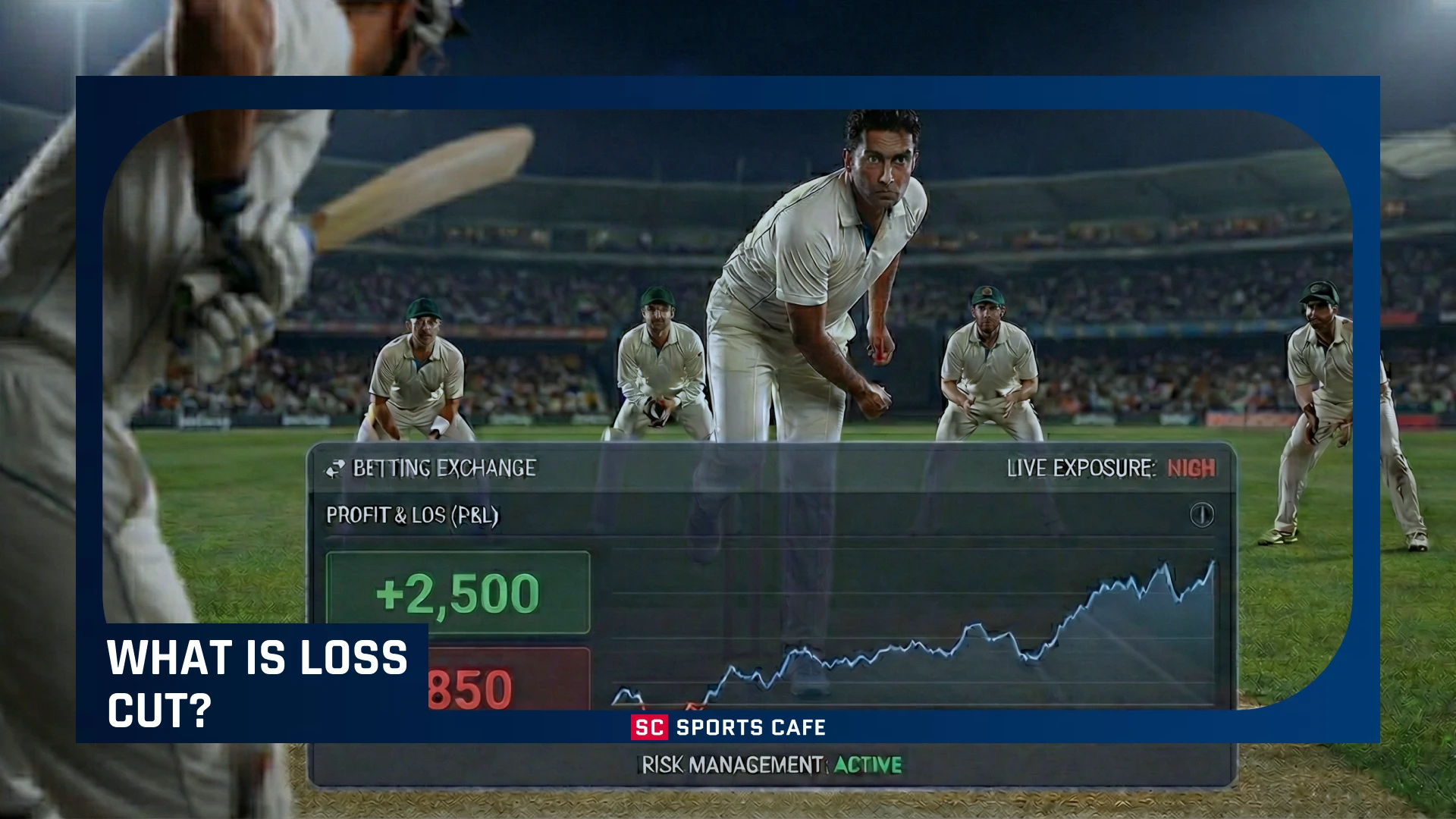
A loss cut meaning refers to a controlled exit from a losing position when market odds turn against your initial prediction. Instead of waiting for the full settlement and losing the entire stake, a bettor manually adjusts the position using a reverse bet on the exchange. The aim is not to win, but to protect capital by accepting a smaller loss early rather than a complete wipeout later. This method mirrors a stop-loss order used in traditional financial trading and helps manage a red book, where liabilities grow as the match moves in an unfavorable direction.
What is a Book Set in Cricket?
The term cricket loss cut book set explains a scenario where a bettor already has a winning position and takes a reverse bet to distribute guaranteed profit across all possible outcomes. Instead of chasing maximum upside, the trader chooses stability and converts a favorable position into a green book, where profit remains locked regardless of whether Team A or Team B wins. Book setting is widely used during high-volatility moments, where odds constantly fluctuate, and punters want mathematical certainty rather than emotional decisions.
How Loss Cut Works: The Mechanics of Back and Lay
In cricket trading, loss control is impossible without understanding how betting exchanges function. Traditional bookmakers allow only one direction — backing a team to win. Betting exchanges introduce a second direction, letting you bet against a team as well. This flexibility is what makes a loss cut in betting possible.
The Concept of Back and Lay
A Back bet means you wager for a team to win. If your prediction is correct, you receive a profit based on the odds. A Lay bet is the opposite: you wager against a team to win, which turns you into the “bookmaker”. When the market moves against your initial prediction, you can place a Lay bet to reduce your liability and avoid a full loss. The entire idea depends on tracking how odds fluctuate ball by ball or over by over, which creates opportunities to exit a position early.
A Practical Example of Loss Cut
Imagine backing India to win a T20 match with a $100 stake at odds of 1.80. India suddenly loses early wickets, market confidence drops, and the odds increase to 3.00. If the match continues this way, you will probably lose the full $100. Instead of waiting for the outcome, you Lay India at 3.00. This second bet covers part of your liability and allows you to accept a controlled loss intentionally, for example $30, while saving $70 from the original $100 stake. The modest loss protects your bankroll and avoids catastrophic damage.
Action
Odds
Stake
Resulting Position
Back India
1.80
$100
Potential win $80 / potential loss $100
Lay India
3.00
$60
Controlled loss of about $30 instead of $100
Cash Out vs. Manual Loss Cut
Cash Out is a simplified version of this mechanism offered by many sportsbooks. You press a single button, and the bookmaker automatically closes your position, taking a bigger margin to secure its own profit. Odds movement is less favorable because the house adds extra commission to protect itself. A manual loss cut strategy on a betting exchange is usually more efficient, as you adjust Back and Lay yourself at market prices instead of relying on a bookmaker’s preset payout. This lets you respond to market volatility more accurately and capture more value.
Strategies for Effective Risk Management
A loss cut strategy only works when you follow a clear plan instead of reacting emotionally to every fluctuation in odds. Risk control is not about predicting every ball correctly, but about staying alive long enough to profit from the right opportunities. Trading cricket matches without discipline almost always leads to a drained bankroll, so your approach must feel closer to investing than ordinary gambling.
Setting a Stop-Loss Limit
A stop-loss level defines the moment when you exit a bad position before it becomes a full disaster. You decide the exit rule before placing the initial bet and follow it without debate. For example, if you back a team at 2.00 and the price jumps to 2.60, you can trigger a small controlled loss rather than risking the whole stake. A fixed limit forces you to treat each trade without emotion and protects capital during volatile games. Consistent stop-loss rules are the main reason professional traders survive long losing streaks.
Analyzing Market Volatility
Cricket, especially in the T20 format, has extremely sharp price movements. Two quick wickets can send odds flying, and two boundaries in reply can stabilize them again. You do not want to exit every time there is a small fluctuation; otherwise, your strategy becomes pure panic. A skilled trader waits for confirmation: if momentum clearly shifts and the situation will not recover, reducing exposure is rational. Understanding volatility is what separates loss-cut management from impulsive exits that damage long-term profitability.
Hedging Bets for Profit Lock
Hedging allows you to turn a strong position into guaranteed profit. When your original back bet becomes the favorite, you can place a lay bet at lower odds and convert part of the potential winnings into a stable return regardless of the match result. This is where loss cut in betting and book-set techniques complement each other: one protects the downside, and the other secures the upside. Hedging may reduce the maximum possible gain, but it transforms unpredictable outcomes into a controlled result and adds consistency to your long-term trading model.
Distinguishing Betting Terms from Playing Rules: The Lost Ball
Many beginners confuse betting terminology with on-field cricket rules because both use similar words. A loss cut in betting is a financial action used to protect a bankroll, while a lost ball is a completely different match situation that has nothing to do with staking or trading outcomes. Clarifying this difference prevents misunderstanding when you analyse odds, match conditions, or commentary updates during live games.
What is a Lost Ball in Cricket Rules?
A lost ball occurs when the ball goes out of the field of play and cannot be retrieved safely or within a reasonable time. According to Law 20 of the MCC Laws, umpires immediately call “lost ball” and replace the ball with a similar one. The batting side usually receives penalty runs (often six) because the fielding team failed to keep the ball in play. This situation is not financial; it is simply a match rule that keeps the game moving and ensures fairness.
How Lost Ball Affects Betting Markets?
A lost ball can briefly influence in-play betting markets because the scoreboard may change without a regular delivery taking place. Extra runs can lift totals, affect projected run rate, and shift session betting or first-innings lines. Bettors track this event only for statistical impact, not because it is part of a system or strategy. The question of what is lost ball in cricket refers strictly to gameplay, not to financial protection or trading decisions.
Pros and Cons of Loss Cut Strategy
Effective use of a loss cut creates a more controlled betting approach. Instead of relying on luck, you treat every market as a managed position. That mindset helps you stay active for longer periods and avoid emotional collapses during volatile matches. The method is valuable only when applied with patience, planning, and consistent discipline rather than impulsive exits.
Advantages: Longevity and Control
Loss cut protects your bankroll by reducing full-stake losses. When you cut risk early, you retain capital for future trades, which improves longevity across an entire betting season. Many punters value the calmer mindset: fewer moments of panic and fewer desperate decisions. A controlled red book today is often better than losing the entire stake tomorrow. Successful traders view betting not as a lottery, but as a managed investment where the primary goal is capital preservation and consistent market participation.
Disadvantages: Reduced Potential Returns
Risk protection has a downside: smaller profits when your original bet eventually turns out to be correct. If you exit too early, you miss the maximum upside. A single quick revival in the match could cancel the need for a loss cut, and your early exit may feel unnecessary. You also must consider the exchange commission when calculating hedged positions or book sets because fees reduce the final profit. Traders must find a balance between rational exit timing and patience, avoiding exits based only on fear rather than real market evidence.
FAQ
What is the meaning of a loss cut in cricket betting?
Loss cut in betting is a risk-control technique that reduces exposure when odds move against your original position. Instead of waiting for a full loss at settlement, you close the position early through a counter bet, keeping most of your bankroll intact.
Is a loss cut the same as cash out?
Both ideas aim to exit a losing position, although they operate differently. Cash out on bookmaker sites is automated and often costly, while a manual loss cut on an exchange uses Back/Lay and normally gives better pricing if you react quickly to market movement.
How do you calculate a book set?
A book set distributes profit across all possible match outcomes through opposite positions. The most precise way is using a green-book calculator or applying a simple allocation formula, where liability and profit are balanced until every result gives a positive figure.
Can I use the loss cut strategy on any betting site?
The strategy works best on betting exchanges where you can Back and Lay any team and react to live odds. Traditional bookmakers limit flexibility unless they provide a reliable Cash Out feature, so full execution is only practical where market liquidity is high.
0
0
0
0
0
0
Comments
0/1000
Sign up or log in to your account to leave comments and reactions





Comments
Sign up or log in to your account to leave comments and reactions
0 Comments