How to Check Market Load in Cricket: A Simple Guide to Betting Volume
Professional cricket betting is not a random activity based on excitement or gut instinct. Successful bettors study information, monitor price shifts, and understand how money moves on the market. The volume of cash on each outcome is called market load. In other words, market load represents the amount of money placed on a team, player, or in-play line at any moment. Answering the intent behind how to check market load in cricket betting, market load analysis helps predict odds movement and shows where smart money goes compared to public money. Professional communities follow these signals to understand when a bookmaker begins to react to financial pressure from bettors.
Market load analysis also explains why the price on India may suddenly fall or why the line for total runs may climb during the same over. Every shift reflects a new balance between risk and money distribution. In this guide, we will explore the meaning of market load, tools for tracking live flows, how betting exchanges reveal hidden patterns, and why steaming odds differ from drifting odds. When readers understand these indicators, they learn how to avoid impulsive predictions and base decisions on market sentiment instead of assumptions.
What is Cricket Market Load?
Market load shows how money is distributed between outcomes on a cricket match. If thousands of bettors place funds on the winning market, each rupee creates pressure on the price. Bookmakers and market makers monitor load because their primary task is to balance risk. When too much money lands on India to win, the bookmaker reduces the odds to keep the exposure under control. Lower odds protect the bookmaker and encourage bettors to consider alternative outcomes. High market load is a clear signal of market sentiment and can express confidence on one side.
Cricket markets with stronger liquidity often show gradual and slow price movement. Smaller events or weak competitions react more aggressively because a single large bet causes an instant shift. Market load also influences totals and session lines and shows the direction of smart money long before a match begins. Market load forces bookmakers to adjust lines before the toss or during live play when money accelerates in one direction.
How Market Load Influences Odds: The Mechanics
Money and odds always move together. Bookmakers set initial prices using statistical models, injury reports, historical performance, and expected demand. After opening, market load and customer volume start shaping the line. If the money on India accumulates faster than expected, the bookmaker reduces the price because exposure grows too quickly. If the funds on Pakistan remain minimal, the bookmaker increases the price because exposure on that side becomes safer.
Odds come from a basic financial principle. Markets behave like supply and demand, where price stabilizes only when both sides have an acceptable balance. When the demand for one outcome dominates the market, odds drop. When interest in an outcome vanishes, odds rise. Liquidity defines how fast movement happens and how much capital is needed for a significant shift.
Supply and Demand: Liquidity Explained
Liquidity is the total amount of money circulating on a market. A high liquidity match has a massive number of bettors, and price movement occurs gradually. Large tournaments with intense fan attention display steady lines because every side receives enough money to soften risk. A small market, such as a youth tournament or a local league with limited attention, reacts differently. One influential bettor with a large stake pushes the price instantly and creates a sudden market load shift.
Bettors must understand these conditions when choosing markets to follow. Larger markets allow a more accurate reading of true demand because thousands of bettors contribute to the price. Low liquidity markets give fewer signals because a single transaction may distort the direction.
Steaming Odds vs. Drifting Odds
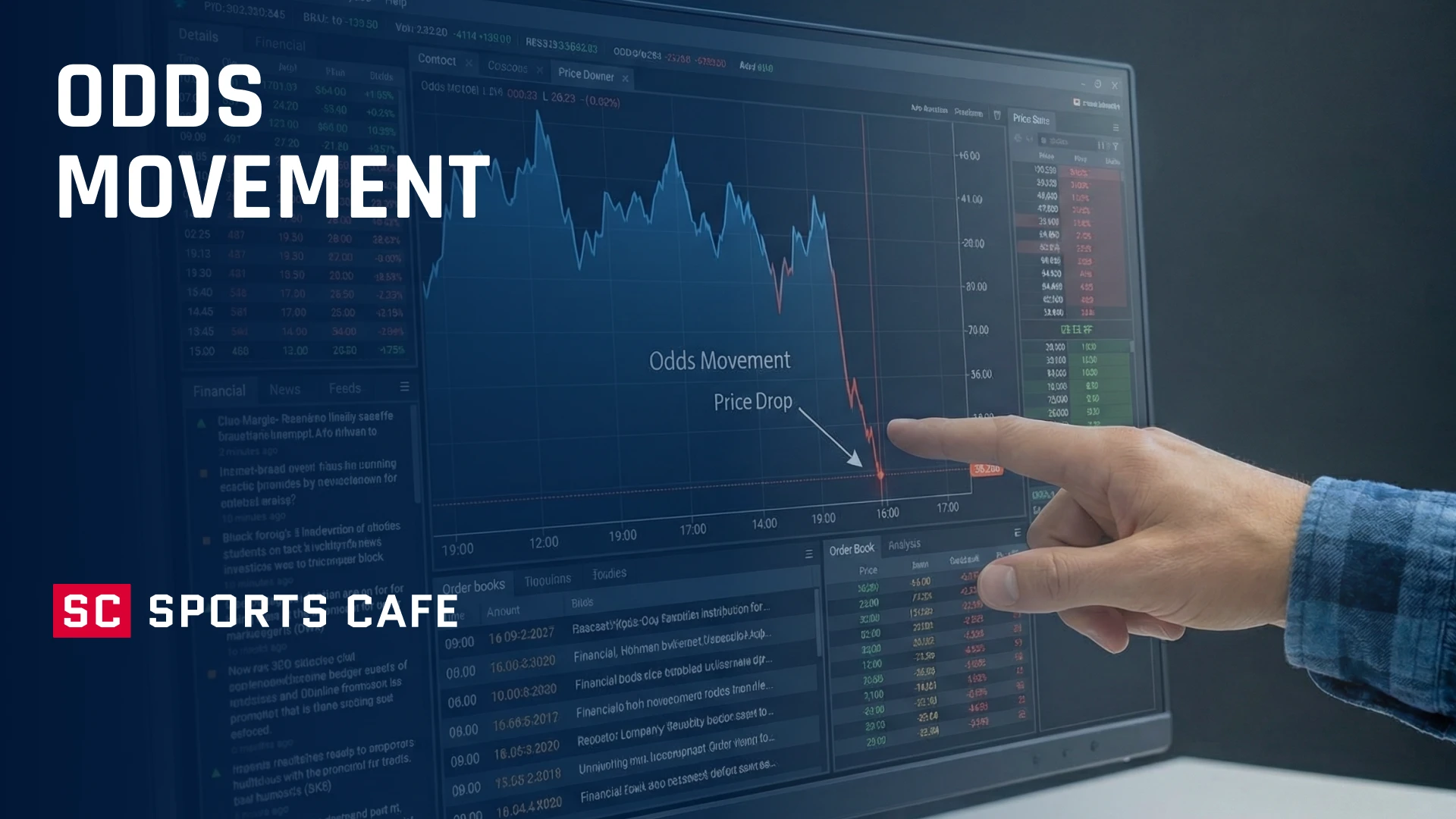
Steaming odds appear when money on one side increases rapidly. The line moves down because bookmakers need to defend against rising risk. Drifting odds reflect the opposite situation. When a market receives no meaningful attention, bookmakers increase the price because demand vanishes and risk decreases.
A comparison helps understand the difference:
Indicator
Steaming Odds
Drifting Odds
Direction
Odds fall quickly
Odds increase gradually
Cause
Heavy betting volume
Weak interest or declining demand
Sentiment
Market confidence in one outcome
Market rejection or fading interest
Risk Level
Bookmaker exposure increases
Bookmaker exposure decreases
Interpretation
Smart money or public surge
Value may appear on the ignored side
Steaming is not always a sign of correct prediction. Sometimes, public money inflates the trend without deeper information. Drifting does not always indicate weakness. Skilled bettors search for value on drifting lines when the market overheats on the favorite.
How to Check Market Load in Cricket Betting: Tools and Methods
Understanding how to check the cricket market load requires access to reliable data. Bettors need to observe money flow, price changes, and order depth on betting platforms. Even basic monitoring reveals how capital accumulates.
Using Betting Exchanges
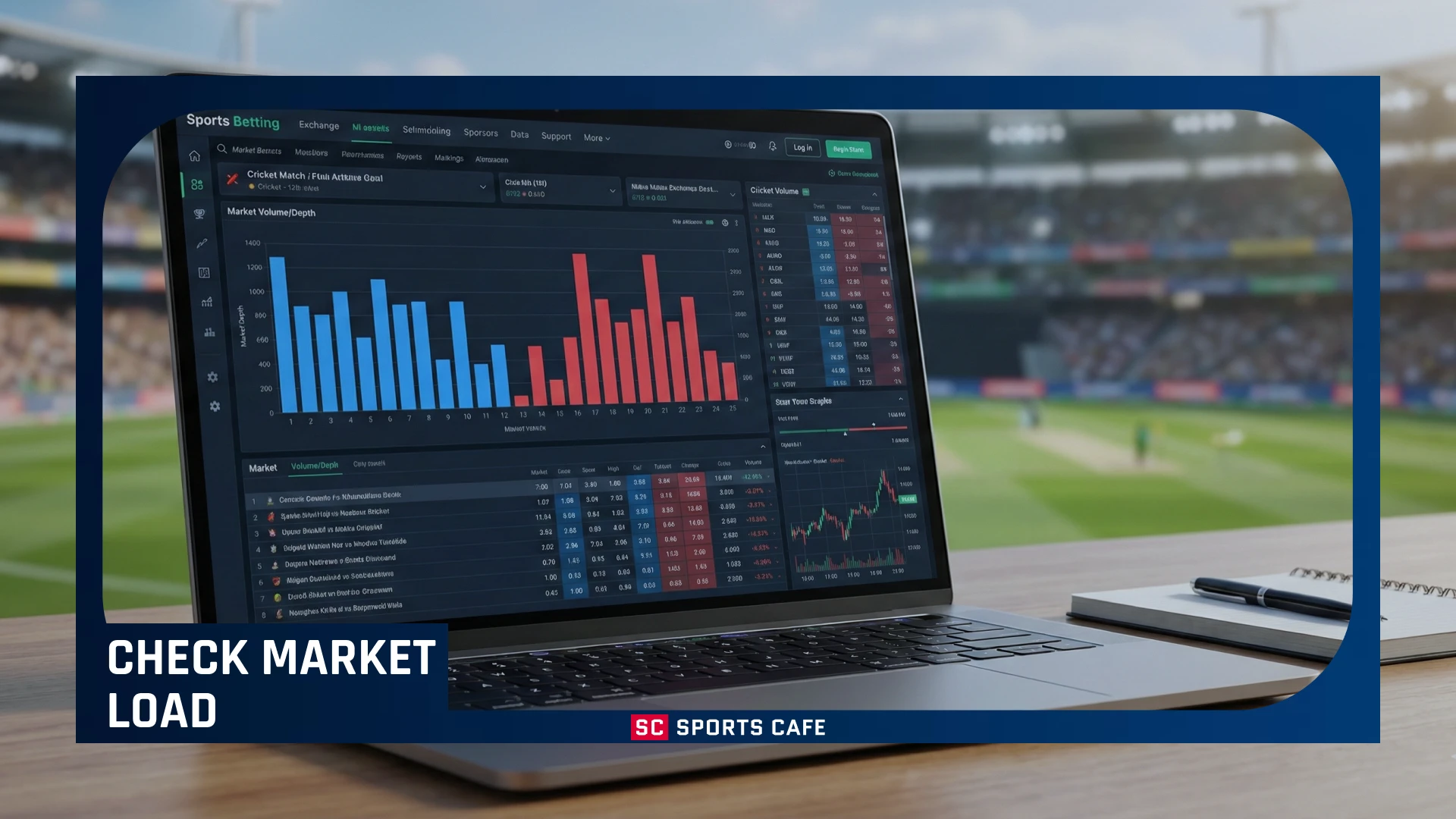
Betting exchanges such as Betfair display market volume transparently. Unlike traditional bookmakers who hide internal exposure, exchanges show matched bets in real time. Matched bets are completed transactions between two sides. The volume under each price tells how much money passed through that exact price point.
Market depth also shows how much capital waits to be matched. When a team attracts serious demand, orders accumulate near the current price and form a noticeable layer of liquidity. Large matched volume often appears when professional groups enter the market.
Exchange markets provide the cleanest access to raw data because every transaction is visible. Bettors do not guess, and they see whether the price shortens due to real demand or thin liquidity.
Analyzing Matched vs. Unmatched Bets
Unmatched bets represent pending interest. If a massive amount waits to back a specific outcome, market load is growing even before matching happens. Bettors watch the ladder of unmatched orders to predict directional flow. A wall of unmatched orders on the back side means strong confidence in that outcome and indicates momentum.
Professional groups sometimes place unmatched orders strategically to test liquidity. When the market absorbs these orders, real demand confirms the direction. If unmatched orders stay untouched, momentum weakens. Reading this relationship gives a clear advantage.
Tracking Line Movement on Sportsbooks
Readers who do not have access to exchanges can still understand how to know the market load on cricket through sportsbook monitoring. Odds comparison websites collect lines from multiple bookmakers and show synchronous changes. When almost every major bookmaker reduces the price on Australia within minutes, the shift indicates that money pressure is strong enough to trigger adjustments across platforms.
Monitoring these websites gives insight into market sentiment without exchange data. Sudden drops across many sportsbooks are rarely random. They often show professional money or mass movement, hitting the same outcome.
Bookmakers also use visual indicators. Many websites mark dropping prices with a different color. When the indicator appears repeatedly, the load direction becomes obvious.
Analyzing Load on Specific Cricket Markets
Market load applies to each category differently. Some markets attract stable volume from the start, while others react faster during live play.
Market Load on Match Winner
Match winner markets are usually the most liquid category in cricket. Many bettors focus only on who wins, which increases the steady load. Market behavior must differentiate between public money and smart money. Public money often generates a load on the obvious favorite. A smaller price on India might come from thousands of casual fans rather than analytical bettors.
Smart money behaves differently. Large movements without public interest or media news can indicate an early advantage known only to insiders or syndicates. Match-winner markets often generate signals before the toss. When odds adjust early without an apparent reason, sharp bettors read it as valuable information.
Market Load on Session and Total Runs
Session lines on overs, balls, and totals react instantly during play. Heavy volume on total runs over triggers immediate adjustment. When money accelerates in one direction, bookmakers lift the line from 45 to 48 runs or more. Market load becomes an in-play indicator because it moves faster than match commentary.
Session analysis requires attention to how bookmakers react to sudden spikes. Smaller tournaments or youth competitions have thinner liquidity, so even one large stake causes aggressive movement. When bettors understand in-play load, they can read market expectation without waiting for commentary.
Interpreting the Data: Smart Money vs. Public Money
Market load is useful but not a guaranteed path to winning results. A knowledgeable bettor studies context, compares signals, and avoids reacting to every price shift. The key is understanding how to see market load in cricket and separating genuine professional activity from emotional crowd movement.
Identifying Smart Money Trends
Smart money often moves silently before media news or public attention. Sudden movement in odds shortly before the toss, without any injury report, is usually interpreted as a sign of insider confidence. Analytical bettors observe such movement and act before the majority reacts. Another sign of smart money arrives when totals or session lines move sharply without aggressive live action. That pattern indicates knowledge about pitch, weather, or injury conditions that have not yet reached casual bettors.
Smart money can also enter markets late, just before the start, which causes rapid but short-lived price acceleration.
The Trap of Public Money
Public money usually concentrates on the visible favorite. When India or Pakistan play, casual fans often overload the market on the favorite because they trust reputation more than numbers. Such pressure creates artificial odds on the favorite because bookmakers reduce the price aggressively.
When public volume overheats the market, value often appears on the underdog. Skilled bettors recognize inflated prices and understand why market sentiment does not equal true probability. The underdog becomes attractive not because it is stronger but because price stimulation from the crowd distorts balance.
Advantages and Disadvantages of Following Market Load
Market load tracking is a useful analytical tool, but it also carries risks when used without confirmation. Below is a summary of both sides.
Factor
Advantages
Disadvantages
Accuracy
Confirms the direction of large capital and protects against betting against strong trends
Heavy load can be manipulated without true information
Insight
Helps align decisions with financial momentum
Big players on exchanges sometimes build spoofing orders to mislead markets
Strategy
Supports advanced prediction models and risk reduction
Blind tracking without personal analysis may produce losses
Market load is a strong analytical indicator, but it does not replace personal understanding of pitch conditions, batting order, injury status, or live rhythm.
FAQs about Checking Cricket Market Load
What is the best tool to check market load?
Betting exchanges such as Betfair and Orbit, along with odds comparison websites, give reliable information.
Does high market load guarantee a win?
No, public pressure can distort lines and create misleading direction, especially during tournaments with strong fan interest.
How do I know if the odds are dropping?
Use odds comparison websites or monitor color indicators on sportsbook pages that highlight dropping prices.
Is checking market load legal?
Yes, market load analysis uses open data and helps bettors make responsible decisions.
0
0
0
0
1
4
Comments
0/1000
Sign up or log in to your account to leave comments and reactions




Comments
Sign up or log in to your account to leave comments and reactions
0 Comments