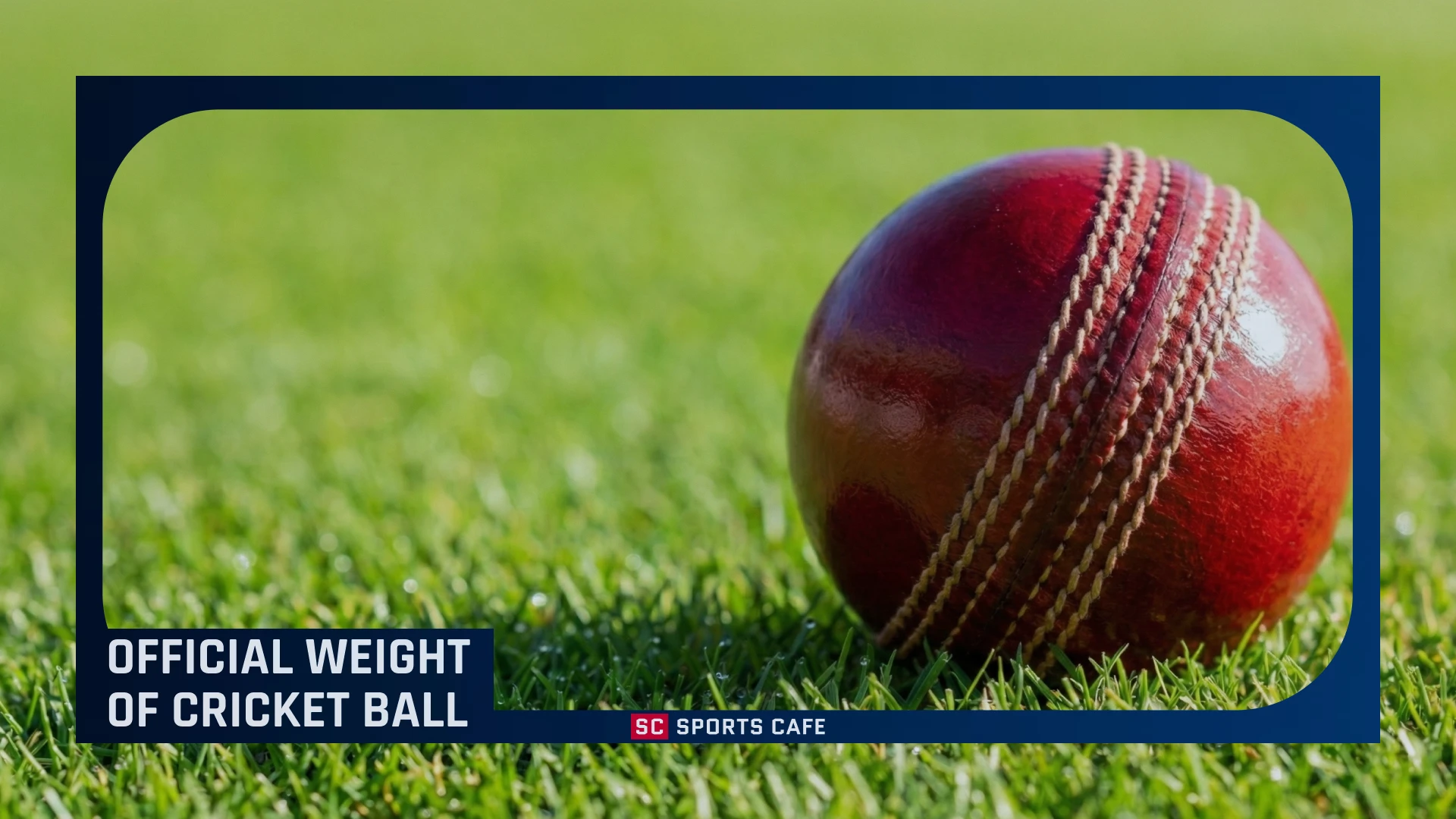
A cricket match often looks simple from the outside: bat, ball, field, and players. Yet the game relies on strict technical standards, and the ball sits at the centre of those standards. Many new fans wonder how much a cricket ball weighs and how the number is chosen. The weight of cricket ball is not random. It follows a tightly controlled range that every manufacturer must follow. The Laws of Cricket describe the exact limits in grams, ounces, and even circumference, and the figures vary only slightly between the men’s, women’s, and junior categories. A quick overview gives a clear picture: the ball stays within a narrow band that keeps the game consistent across formats, countries, and playing conditions. The details behind those numbers explain why the sport treats ball specifications with such precision, making it a key factor for accuracy in betting on cricket.
Official Weight and Size Standards
The Laws of Cricket define the exact numbers. According to the current Law covering the cricket ball, the official range for adults lies between 155.9 grams (5.5 ounces) and 163 grams (5.75 ounces). Manufacturers must meet this range for every ball used in recognised matches. The standard also applies to circumference. A legal ball, when measured around its widest point, must fall between 22.4 cm and 22.9 cm (224 mm to 229 mm). The range leaves almost no room for variation, which means two balls from different brands should feel nearly identical in hand. The narrow gap prevents one team from gaining an advantage through ball weight or size. A heavier ball would behave differently in the air, while a lighter one would bounce and swing in a different way, which is why ball condition is vital for reliable predictions on cricket match.
Weight Variations by Cricket Category
Different categories of cricket use slightly different ball specifications. Men’s cricket follows the original weight range set out in the Laws. Women’s cricket and junior levels use lighter balls, designed for comfort, skill development, and appropriate match balance. The next sections explain how each level differs and why.
Men’s Cricket
Men’s cricket uses the full adult standard: 155.9 g to 163 g. The figure stays the same in Test cricket, One Day Internationals, T20 Internationals, and domestic adult competitions. Manufacturers cannot modify the weight for pitch type, weather, or ground size, which keeps the game's fundamentals stable and directly affects the formation of cricket odds. Red, white, and pink balls all follow the same mass range. Although each colour needs a different finishing process, the weight limit stays constant, so no format gains an advantage through ball heaviness.
Women’s Cricket
Women’s cricket uses slightly lighter balls. The Laws specify a weight range between 140 grams and 151 grams, with a circumference between 21 cm and 22.5 cm. The lighter ball matches the average strength levels within the women’s game and supports balanced contests across formats. It also helps bowlers generate adequate speed and swing while keeping batting and fielding performance consistent.
Junior Cricket
Junior cricket uses smaller and lighter balls to match the age and physical development of young players. The exact numbers vary by country, but common weights fall around:
Under-13 to Under-15: roughly 133–144 g
Under-11 to Under-12: approximately 113–127 g
Under-10 and below: specialised soft or training balls
Lighter balls protect younger players from injury and give them enough control to build technique safely. As players move up age groups, the ball weight gradually approaches the adult standard, preparing them for competitive levels.
Category
Weight Range (Grams)
Weight (Ounces)
Circumference
Men’s Cricket
155.9–163 g
5.5–5.75 oz
22.4–22.9 cm
Women’s Cricket
140–151 g
4.94–5.31 oz
21–22.5 cm
Junior Cricket
approx. 113–144 g
varies
smaller sizes
Construction and Materials: Why Does It Weigh That Much?
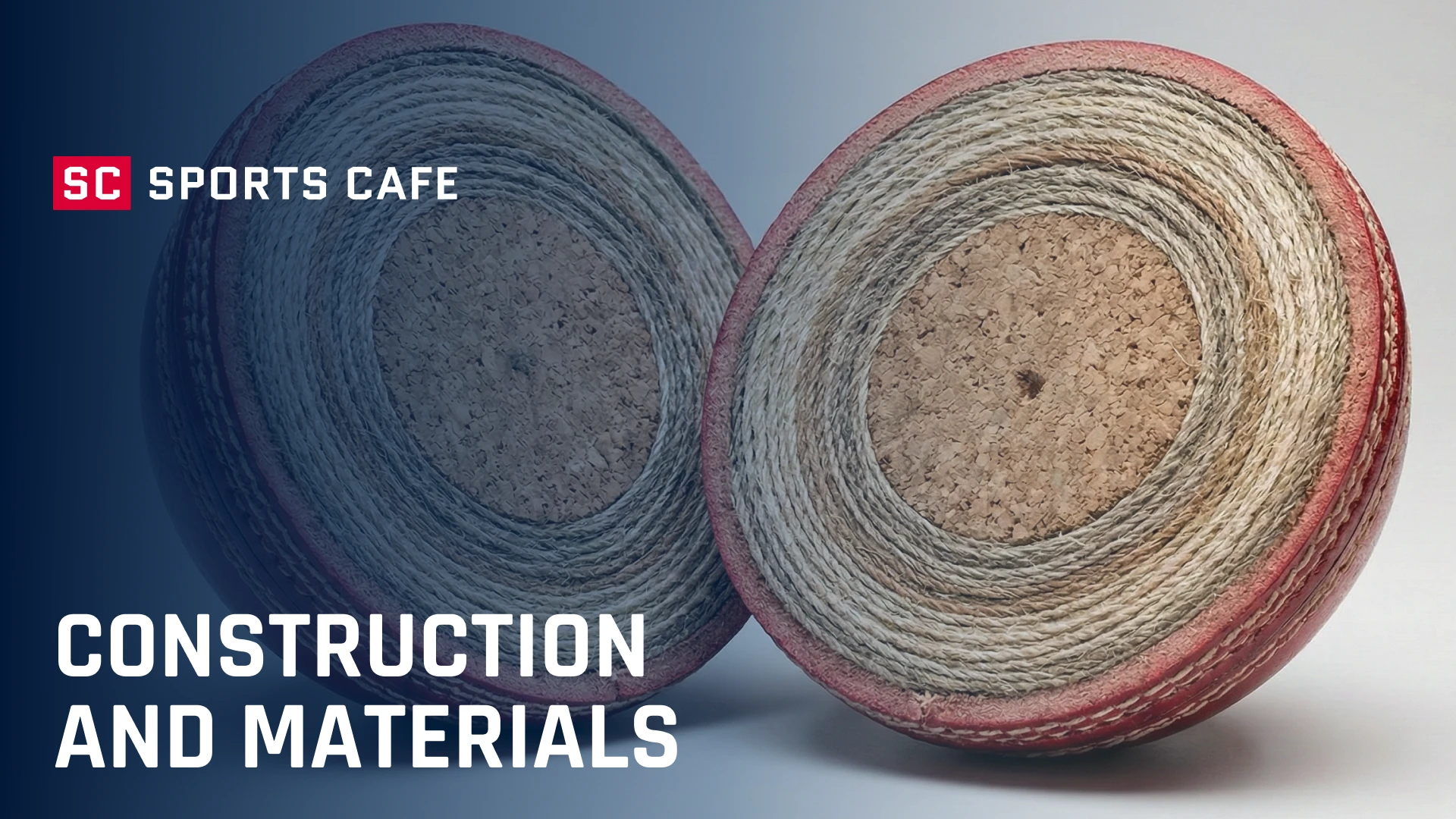
The internal design of the cricket ball determines its weight and behaviour. A traditional ball begins with a cork core, which forms the central structure. The cork gets wrapped in multiple layers of tightly wound twine. Each layer adds density and firmness, and the number of layers affects how the ball bounces and moves in the air. Around the twine sits a four-piece leather shell, shaped and stitched to create the final form. A raised seam holds the leather pieces together. The seam is vital for swing, grip, and spin, and its height can vary slightly depending on the manufacturer. The total mass of cork, twine, leather, polish, and stitching controls the final weight. Manufacturers must design the internal parts to meet the required grams while keeping the ball durable enough to last long spells. A ball that drifts outside the weight limit fails quality checks and cannot enter professional use.
Types of Cricket Balls and Their Use Cases
Cricket uses three primary colours of balls across formats: red, white, and pink. All follow the same weight range in the men’s game and the same reduced ranges in women’s and junior categories. The main differences involve leather processing, colouring, visibility, and surface durability.
Red Ball
The red ball is used in Test matches and first-class cricket. The leather gets dyed red and finished with wax or lacquer to control shine retention. Red balls often swing for longer periods and develop distinct wear patterns across long innings. The weight standard remains the same as every adult ball.
White Ball
White balls appear in One Day Internationals and T20 matches, and their unique behavior under lights is a frequent topic of discussion on betting apps.
Pink Ball
Pink balls serve for day/night Test cricket. The colour improves visibility under artificial lighting, and the surface coating helps retain brightness over long sessions. Pink balls behave differently at times because of the finish used to protect the colour, yet the weight remains the same.
Ball Type
Primary Use
Key Features
Red Ball
Test & First-Class
Durable shine, strong seam visibility
White Ball
ODI & T20
High visibility under lights, harder finish
Pink Ball
Day/Night Tests
Enhanced visibility, specialised coating
Governing Bodies and Official Regulations
Cricket ball standards come from long-established institutions that regulate the sport worldwide.
The MCC and the “Laws of Cricket”
Marylebone Cricket Club (MCC) maintains the official Laws of Cricket. The weight, circumference, materials, and other specifications appear in these Laws. MCC’s role involves writing, updating, and interpreting the rules for every level of organised cricket. Their guidelines form the foundation for all international and domestic standards.
The ICC and International Standards
The International Cricket Council (ICC) oversees global competitions and ensures that all balls used in official matches comply with the Laws. Match officials and tournament committees receive detailed guidance to guarantee that every ball used in an international game fits the required standards, ensuring a level playing field for users of cricket betting websites.
British Standard BS 5993: The Technical Specification
British Standard BS 5993 describes the full technical requirements for cricket balls sold in the United Kingdom and used in competitions involving Dukes balls. The standard covers leather quality, stitching method, durability, seam construction, and testing procedures. Manufacturers whose balls meet BS 5993 must follow strict guidelines that match the Laws but add deeper technical detail. The standard supports consistent production across large batches and helps maintain reliability in high-level cricket.
Conclusion
The official weight of the cricket ball sits at the heart of the sport’s structure. Small changes in mass can alter swing, bounce, and control, which is why the weight stays tightly regulated by MCC, ICC, and national boards. The standard weight of cricket ball contributes to balanced play in every format, from long Test matches with red balls to short white-ball games at night. The strict range applies worldwide, so players know exactly how the ball should behave. Women’s and junior cricket follow their own reduced standards, but the commitment to consistency remains the same. No matter the colour or format, each ball must fall within the defined limits to protect the fairness and continuity of the sport.
FAQ
What is the exact weight of a cricket ball in grams?
The official range for adult men’s cricket is 155.9–163 grams, which also appears in the Laws of Cricket as 5.5–5.75 ounces.
Is a white cricket ball heavier than a red one?
No. Both colours must fit the same weight range, although they differ in leather treatment and coating.
What is the weight of the ball used in women’s cricket?
Women’s cricket uses balls between 140 and 151 grams, along with slightly smaller circumference limits.
What is the weight of the ball used in junior cricket?
Junior categories use lighter balls. Exact numbers vary by age, but many fall between 113 and 144 grams.
How is the average weight of a cricket ball measured?
Manufacturers measure each ball with calibrated equipment. The average weight of cricket ball in adult men’s play falls near the midpoint of the official range.
0
0
0
0
0
0
Comments
0/1000
Sign up or log in to your account to leave comments and reactions




Comments
Sign up or log in to your account to leave comments and reactions
0 Comments