Length of Cricket Pitch: Dimensions and Markings Guide
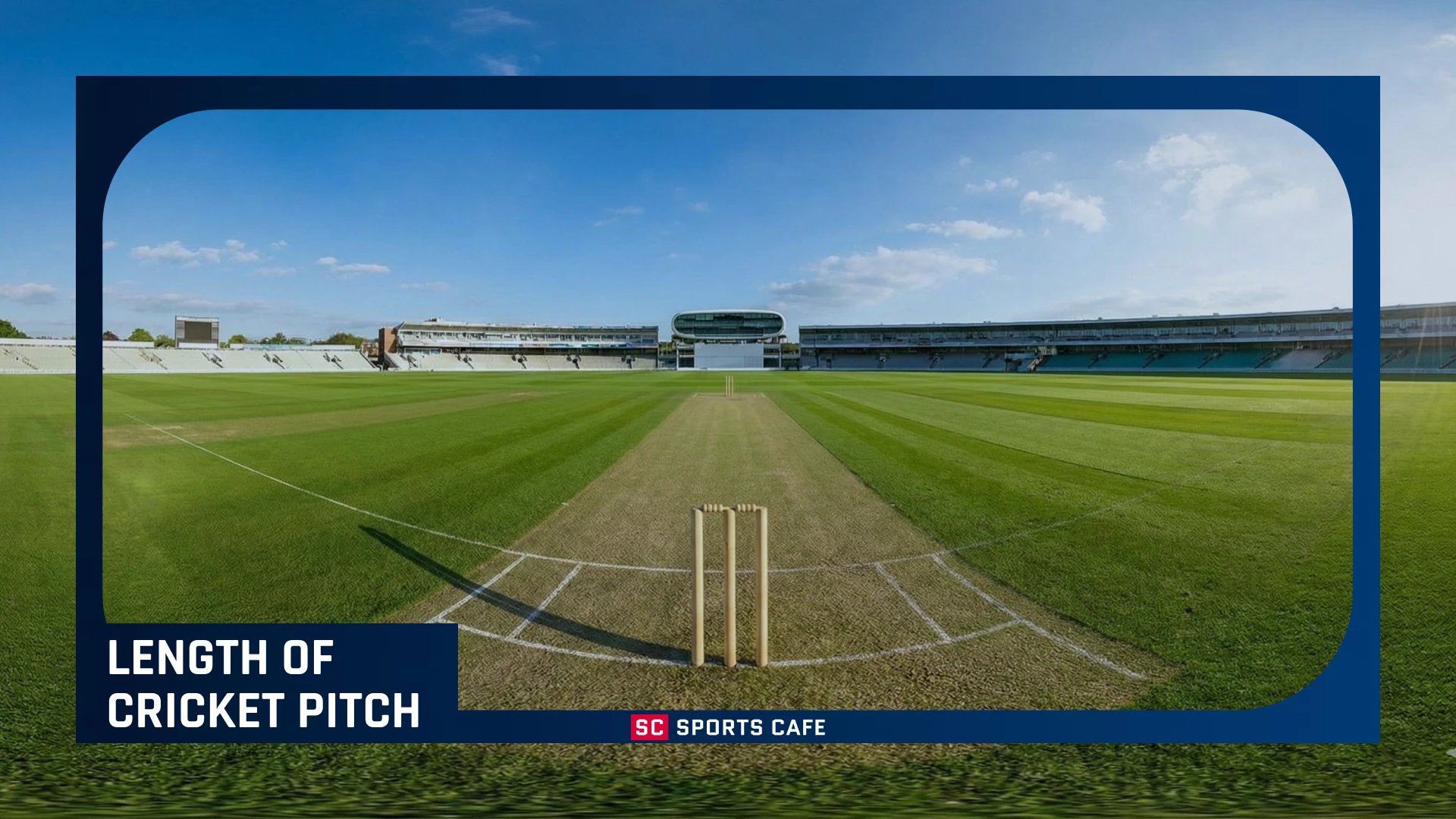
The length of the cricket pitch plays a central role in every match. The fixed distance between bowler and batter shapes how the ball travels, how angles form, and how decisions reach the umpire. Anyone who wants a clear answer to what is pitch length in cricket or how long is a cricket pitch can rely on one figure that never changes: the pitch measures 22 yards from stump to stump, which equals 66 feet or 20.12 meters. The Laws of Cricket define these parameters, and tournaments at every level follow the same base numbers. The guide below shows the standard figures and provides full explanations of the markings, which is essential for understanding the mechanics behind online cricket betting platforms.
Standard Cricket Pitch Length in Yards, Feet, and Meters
Standard length never shifts in professional play because a stable distance supports fair contests on any ground. Tournament regulations for adult cricket refer to the same stump-to-stump value, with only junior formats using reduced lengths. A single table makes it easier to compare the three units, a calculation vital for accurate cricket predictions when assessing bowler speed and trajectory.
Unit
Length
Yards
22 yards
Feet
66 feet
Meters
20.12 meters
All three values point to one distance. Grounds may vary in outfield size or boundary shape, yet the pitch length remains constant from country to country.
The 22 Yards Standard
The 22-yard length has deep roots in early English field measurement. A traditional land chain used by surveyors matched the same distance, and the sport adopted that figure when early rules first appeared. Later revisions kept the same length because the game already relied on that distance, and teams built tactics on it. Modern codes still treat 22 yards as a fixed requirement, so any new ground that hosts adult cricket prepares a pitch to that figure without exception. Matches in Test, ODI, and T20 formats all use the same measurement.
Cricket Pitch Length in Feet
Readers who search for cricket pitch length in feet can rely on a direct conversion. One yard equals three feet, so 22 yards reach 66 feet. Many people in countries with an imperial tradition use feet for practical field setup, yet ground staff always work from the same stump-to-stump measurement. Every full-length pitch in recreational, domestic, or international cricket uses 66 feet as the legal distance from one set of stumps to the other.
Length of Cricket Pitch in Meters
For metric users, the length of the cricket pitch in meters appears as 20.12 meters. That value represents the precise distance from one bowling crease to the other, with the stumps placed on those lines. Grounds with metric measurement tools prepare their surfaces according to this figure because national boards maintain the same guidance. Pitch technicians, umpires, and tournament inspectors all use 20.12 meters as the formal base length.
How Is the Pitch Length Measured?
Measurement follows a clear rule. The length runs from the front edge of one bowling crease to the front edge of the other. The stumps stand on those creases, so the distance between the centres of the two middle stumps matches the same figure. The prepared area around the stumps may extend slightly for practical work with rollers and brushes, but the legal pitch length concerns only the fixed zone between the two sets of stumps. A correct measurement forms the starting point for crease layout, wicket placement, and all umpire decisions.
Pitch Size of Cricket: Width and Surface Details
The full pitch size of cricket includes width, surface type, and preparation methods. Length attracts the most attention, yet width influences bowling angles, run-up control, and how batters cover the line of delivery.
The pitch always measures 10 feet across, which equals 3.05 meters. Ground records for serious competition never show a different value, and this consistency is mirrored on all major online cricket betting websites providing match data. The strip appears cut shorter than the outer playing area and stands as the most controlled surface on the field.
A compact list shows the main parameters and common surface categories:
Pitch width
10 feet
3.05 meters
Natural turf pitch
Built from soil and grass
Needs rolling and moisture control to manage pace and bounce
Hybrid turf pitch
Natural soil reinforced with synthetic fibre
Used for a longer service life in busy venues
Artificial pitch
Often, a synthetic mat is laid on a hard base
Must meet minimum length and width set by standard rules for non-turf surfacing
Different grounds use different soil blends, but all maintain the same basic dimensions. Grass height, moisture, and density influence match play, yet those variations never change the legal pitch size.
Cricket Pitch Markings and Creases Explained
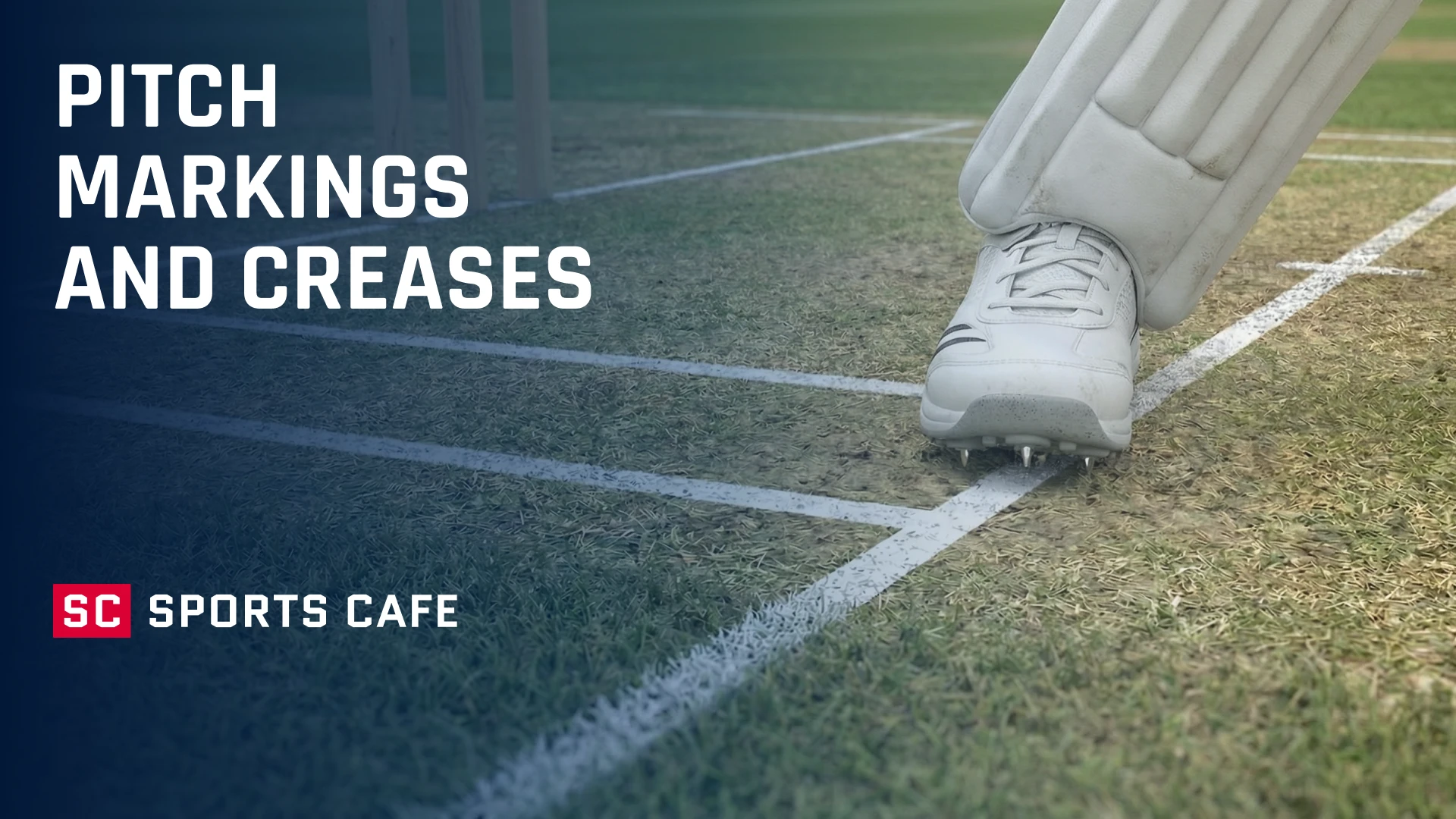
Creases and markings give the pitch its structure. They set safe zones, legal points for delivery, reference spots for run outs and limits for bowler movement. A clear layout supports fair judgment and keeps both teams aware of distance and alignment.
Bowling crease
Popping crease
Two return creases
Wickets with stumps and bails
All markings appear at both ends of the pitch, creating mirrored areas on either half of the playing strip.
Wickets and Stumps Positioning
A wicket consists of three wooden stumps and two bails. Each stump stands 28 inches high, with the middle stump placed on the central line of the pitch and the other two set at a fixed distance on either side. The bails sit in shallow grooves on top, and even a light impact can bring them down. Both ends of the pitch use the same layout, so bowlers deliver toward a matching set of stumps and batters judge their shots against the same target at either end.
The Bowling Crease
The bowling crease marks the line on which the stumps are fixed. Its total length is 8 feet 8 inches, with the stumps placed exactly at the midpoint. The crease acts as the foundation for the rest of the pitch layout because all other lines take their distance and orientation from it. Umpires study its position closely during deliveries, as it helps them confirm the bowler’s approach, stump alignment and any close call at the striker’s end.
The Popping Crease
The popping crease lies in front of the bowling crease, running parallel to it. Its back edge sits 4 feet in front of the line through the centre of the stumps. It plays a major role in judging both fair deliveries and running attempts. A bowler must land the front foot with part of it behind the popping crease at the moment of release or the delivery becomes a no-ball. Batters aim to ground the bat or a part of the body behind this line during a run, as that action determines whether they reach safety in time.
The Return Creases
Return creases rise at right angles to the bowling crease on both sides of the pitch. They set the sideways limits for the bowler’s back foot at the moment of delivery. Landing the back foot outside the return crease line results in a no-ball, so bowlers stay aware of these boundaries throughout their run-up. The lines stretch backward for practical marking, although the Laws treat them as having no fixed end point. Their main role lies in keeping every bowler’s action within a narrow and clearly defined channel.
Why is a Cricket Pitch 22 Yards Long?
The 22-yard distance comes from the old land-survey chain used in England, which measured exactly 22 yards and shaped many field layouts of the period. Early cricket grounds relied on the same chain, so the sport adopted the length naturally and kept it consistent across regions. The Marylebone Cricket Club (MCC) later codified the $22 \text{ yard}$ figure, a standard that now directly influences cricket odds based on how different pitches behave. MCC retained it through every major revision because bowling rhythm, footwork patterns, and batting technique grew around that measurement. Grounds around the world then aligned their preparation with MCC rules. The International Cricket Council (ICC) now follows the same length in its playing conditions and checks pitch dimensions before international events. The combined influence of historical surveying practice, MCC codification, and ICC supervision keeps the pitch length constant everywhere.
Special Zones and Junior Cricket Variations
Some parts of the pitch come with extra restrictions, and younger age groups use shorter pitch lengths to match physical development. A brief introduction helps set the context.
Junior players often move through several pitch lengths before reaching the full adult distance. Meanwhile, the pitch's protective area guards the surface from heavy wear.
The Protected Area of the Pitch
The protected area lies along the centre of the strip. It forms a narrow rectangle about two feet wide and begins five feet in front of each popping crease. The aim is to preserve the surface because repeated foot strikes from bowlers can damage the main bounce zone. Umpires watch each delivery stride, and repeated encroachments can lead to warnings or a removal from the attack. Batters also avoid the central lane during stance and initial movement, so the core playing zone stays firm for the full match.
Pitch Length for Junior Cricket
Junior cricket uses reduced lengths to help young players develop technique. The table below shows common age-group ranges. National boards adjust the figures to match local development plans, and pitch lengths rise gradually until the full adult length returns.
Age group
Pitch length (yards)
Pitch length (meters approx.)
Under 9
15–16 yards
13.7–14.6 m
Under 10
17–19 yards
15.5–17.4 m
Under 11
17–20 yards
15.5–18.3 m
Under 12
18–21 yards
16.5–19.2 m
Under 13
19–21 yards
17.4–19.2 m
Under 14–15
21–22 yards
19.2–20.1 m
Under 17 and above
22 yards
20.12 m
The progression gives bowlers, batters, and fielders a controlled rise in difficulty as players move through age brackets.
FAQ about Cricket Pitch Dimensions
What is the pitch length in cricket?
The pitch measures 22 yards, equal to 66 feet or 20.12 meters.
How long is a cricket pitch in feet?
A full pitch measures 66 feet from one set of stumps to the other.
What is the length of a cricket pitch in meters?
The metric value stands at 20.12 meters from bowling crease to bowling crease.
What is the width of a cricket pitch?
The width remains fixed at 10 feet (3.05 meters).
0
0
0
0
0
0
Comments
0/1000
Sign up or log in to your account to leave comments and reactions




Comments
Sign up or log in to your account to leave comments and reactions
0 Comments