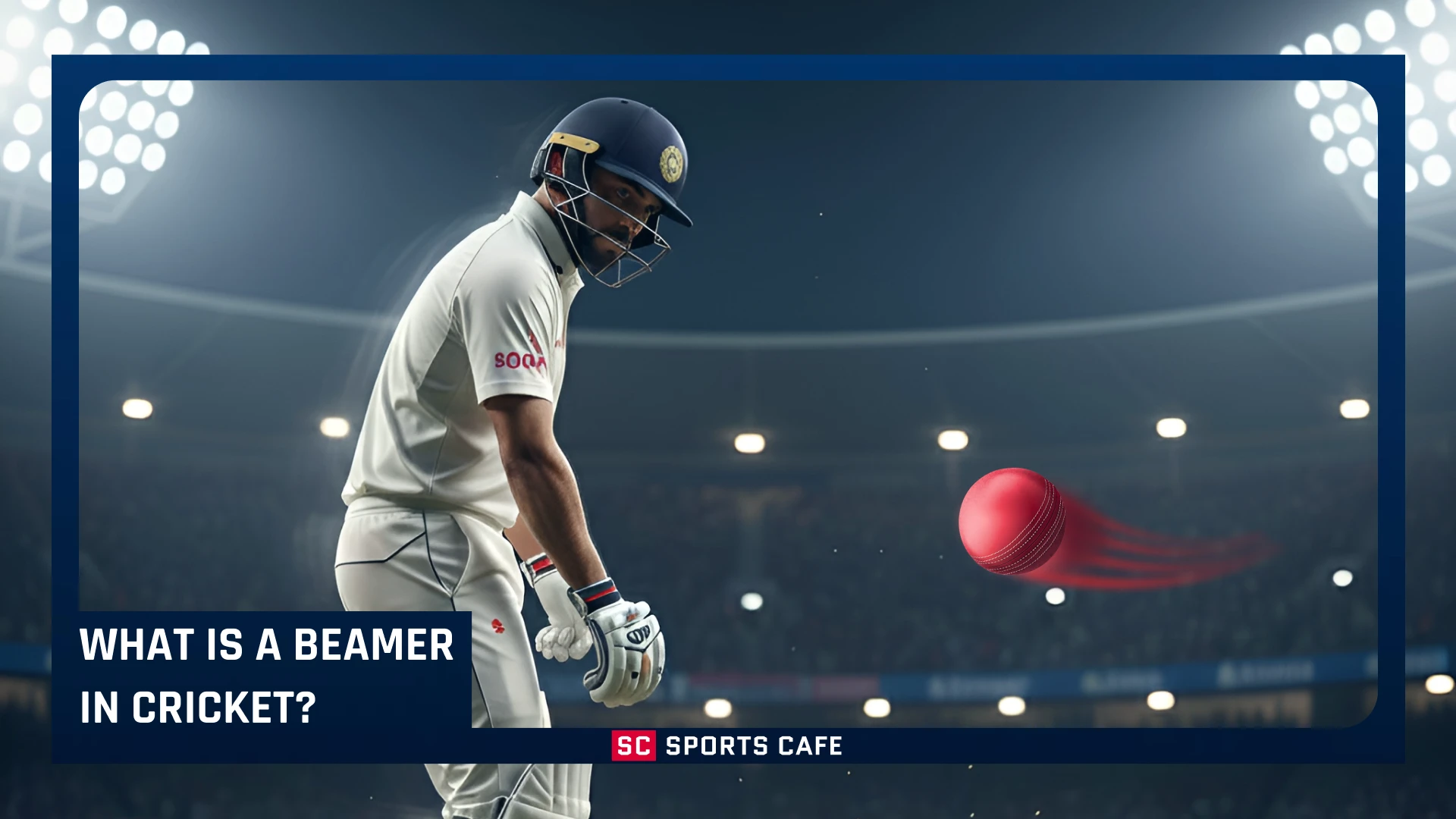
A fast bowler charges in, releases the ball, and the next moment a full toss flies straight toward the batter’s upper body without touching the ground. Such a delivery stops the crowd for a second because it falls under the definition of what is beamer in cricket. The ball travels above the waist at full speed in a direct path and triggers immediate concern from umpires. A beamer stands as one of the most dangerous illegal deliveries in the sport. It threatens the batter’s safety and brings strict penalties under Law 41. The discussion below explains the exact meaning, the risks involved, and how such events impact online cricket betting outcomes.
The Beamer Meaning Explained: Full Toss vs. Bouncer
Confusion often appears among new fans because beamers and bouncers both travel toward the upper body. Only one of them fits within the laws of cricket. Bouncers bounce off the pitch, and their height comes from the surface. Beamers ignore the surface entirely and fly directly at the batter.
The Core Definition of a Beamer Ball
The question of what is beamer ball in cricket can be answered by two requirements:
The ball must be a full toss, with no contact with the pitch
The height must be above the batter’s waist in a normal stance
Umpires judge the height at the moment the ball passes the batter. If either requirement is missing, the delivery does not qualify. A low full toss remains legal; a rising bouncer remains legal. The danger arises when both conditions co-occur.
Beamer vs. Bouncer: A Critical Difference
Bouncers create pressure through bounce, speed, and steep lift, but the batter sees the ball land and has a brief chance to react. A beamer eliminates that moment. The ball leaves the bowler’s hand and heads toward the upper body with no warning from the pitch. Even experienced batters struggle to move out of the way because the reaction window is so narrow. That difference explains why umpires treat beamers far more seriously.
The Beamer Rule in Cricket (Law 41)
Law 41 governs unfair bowling, including everything that endangers the batter. Cricket places safety above interpretation, and accurate predictions often account for these sudden shifts in match momentum.
Is a Beamer Always a No-Ball?
A beamer results in a no-ball every time. Umpires call it as soon as they confirm a full toss above waist height. Even a minor lift above the legal limit triggers the penalty.
The Penalty: No-Ball and a Free Hit
A no-ball award gives one run to the batting side. In limited-overs cricket, which is a major focus for online cricket betting apps, the following delivery becomes a free hit. The batter holds a major advantage on a free hit and can attack with minimal risk. The bowler has no chance to dismiss the batter through bowled, caught, or leg-before decisions on that ball. Those penalties exist not to punish a mistake harshly, but to create a strong incentive for bowlers to stay under control.
The Umpire's Warning System (Law 41)
Law 41 includes a system that identifies, warns, and punishes bowlers who deliver dangerous full tosses.
First beamer:
Umpire signals no-ball
Bowler receives a formal warning
The captain receives notification
Second beamer by the same bowler in the same innings:
Umpire signals no-ball again
Bowler receives a second warning
Bowler is removed from the attack for the rest of the innings
The rule leaves no room for argument. Once removed, the bowler cannot return under any circumstance, and another bowler must finish the over.
Why are Beamers So Dangerous?
A cricket ball travels at fierce speed in professional cricket. When a bowler delivers a beamer at 140 km/h or more, the batter sees the ball only for a fraction of a second. There is no bounce to absorb force or alert the eyes. The trajectory goes straight toward sensitive areas of the body.
Accidental vs. Intentional Beamers
Accidental beamers occur more often than deliberate ones. Common causes include:
slippery fingers
a wet ball
a yorker that does not dip
loss of control at the point of release
Intentional beamers can appear in moments of frustration or during heated battles. Cricket authorities treat intentional beamers as severe breaches, yet the rulebook does not distinguish between intention and outcome. Dangerous deliveries bring automatic penalties regardless of what the bowler meant to do.
The Risk of Serious Injury
Player safety stands at the center of the beamer discussion because a cricket ball released at 140 km/h or more travels straight toward the batter with no warning bounce. A delivery at that speed reaches the body so quickly that the batter has barely any time to react, and even a slight misjudgment can lead to a strike on the helmet, neck, ribs, or arms. The force of a fast, waist-high full toss creates a level of danger unmatched by most other deliveries, which is why the laws treat beamers with such strict attention.
Notable Beamer Incidents in Cricket History
Beamers often become turning points in matches because they create a sudden sense of danger and force umpires to intervene immediately. Several incidents entered cricket’s record and now influence modern cricket predictions, not solely because of controversy, but because they involved world-class fast bowlers whose pace magnified the danger. Several incidents entered cricket’s record not solely because of controversy, but because they involved world-class fast bowlers whose pace magnified the danger.
Shoaib Akhtar — Beamer vs. England (2003)
Shoaib Akhtar delivered some of the fastest balls recorded in cricket, and his ability to bowl above 150 km/h made every mistake far more dramatic. During a match against England in 2003, a yorker attempt slipped at release and turned into a full toss that climbed above the waist of the batter. The reaction inside the stadium changed instantly because a ball at that speed leaves barely any time for a defensive move. The batter jerked backward in one quick motion, and the umpires stepped in at once. The no-ball call came immediately, and Shoaib exchanged brief gestures with the batter to signal that he understood the danger and had not aimed for intimidation. Analysts later discussed the moment in detail, explaining that Shoaib’s unusual speed meant a tiny loss of grip could convert a legitimate attempt at a dipping ball into a delivery capable of inflicting serious harm. The incident reinforced his reputation as one of cricket’s most fearsome pace bowlers and illustrated why beamers require a strict response.
Brett Lee vs. Andrew Flintoff — ODI Series 2005
Brett Lee’s beamer to Andrew Flintoff during the 2005 ODI series between England and Australia became one of the most replayed moments of that summer. Lee tried to push for a late reverse swing at high pace, and the ball left his hand earlier than planned. Instead of shaping into the stumps, the delivery stayed on a flat line and reached Flintoff above waist height. Flintoff reacted instinctively, moving his head and shoulders away from the ball a split second before impact. Umpires halted the game for a short moment, called the no-ball, and delivered the required warning. Lee apologized immediately, and both players exchanged nods before play resumed. Reporters focused heavily on the speed involved because Lee often bowled near the upper end of the speed range, and a beamer from a bowler of that pace highlights how thin the line can be between controlled aggression and a dangerous misfire. The incident never carried the tone of confrontation, yet it reminded viewers how easily a fast bowler’s precision can break under pressure.
Abdur Rehman – Three Beamers in the 2014 Asia Cup
Abdur Rehman’s spell against Bangladesh in the 2014 Asia Cup stands as the clearest example of how strictly the beamer law can work in modern cricket. Pakistan used him as a left-arm spin option in Mirpur, and he entered the attack in the 11th over of the innings. His first ball to Imrul Kayes slipped from the hand, travelled above waist height without bouncing, and went wide outside off stump, so the umpires called a no-ball for height. The second delivery also arrived as a high full toss, was pulled to deep mid-wicket and caught, but replays confirmed that it again passed the batter above the permitted level, so the dismissal did not stand and another no-ball went on the board.
Rehman switched to bowling from around the wicket to Anamul Haque for the third ball, but the pattern continued. The delivery reached the batter as another full toss aimed at the body, and Anamul struck it to the leg-side boundary. Umpires had no choice at that point. Under ICC ODI playing conditions, more than one full toss above waist height from the same bowler in an innings requires removal from the attack, so Rehman was barred from bowling for the rest of the match after conceding eight runs without a single legal ball.
Such cases highlight why fans often search for beamer meaning in cricket when incidents occur. Beamers cause immediate alarm and usually leave both teams waiting for the umpire’s signal.
Conclusion
A beamer represents one of cricket’s most dangerous illegal deliveries. It is a full toss above waist height, and the umpires call it a no-ball as soon as they identify it. The question of the beamer rule in cricket connects directly to player safety. A bowler who delivers one receives a warning; a second one removes the bowler from the attack. Cricket aims to protect the batter from unexpected blows that arrive too quickly to avoid. Beamers underline the importance of discipline and control in fast bowling and remind players that pace must never rise above safety. Understanding these rules is vital for those using online cricket betting sites to ensure they comprehend how match disruptions and player removals are settled.
0
0
0
0
0
0
Comments
0/1000
Sign up or log in to your account to leave comments and reactions





Comments
Sign up or log in to your account to leave comments and reactions
0 Comments