


"I Thought It Was a Prank": Deepak Malik on the Surprise Call from MS Dhoni That Changed His Mindset
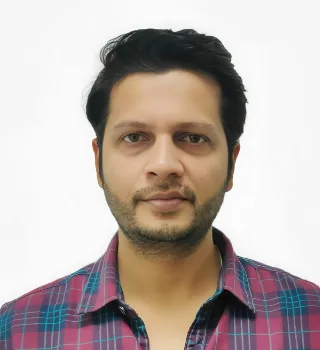

Deepak Malik is one of the fastest and most destructive players to win matches in international blind cricket. In an exclusive conversation with Sportscafe, he talks about his journey from a sprinter who sets a national record (11.1 seconds in the 100 m) to unleashing fierce deliveries at almost 140 km/h, about the strength of spirit behind his rapid performances in competitions, and about the systemic reforms necessary for the development of the sport.
Deepak, in your youth you successfully combined cricket with sprinting (100m and 200m), showing excellent results. How much did your sprinting base and explosive speed help you become one of the fastest bowlers in the world?
"It's true, I used to do athletics earlier. In the 100m and 200m events, even if you check today, I hold the national record with an electronic timing of 11.1 seconds in the 100m. In athletics, you have to put in extraordinary work into your strength. At that time, I was going through great workouts, proper strength training, following a strict diet, and maintaining a disciplined routine. That workout base benefited me immensely when I transitioned to cricket. When you improve your sprinting speed, your entire body: legs, hands, and core, begins to function with high efficiency. So athletics played a massive role in shaping me into a fast bowler."
At the 2014 World Cup, you scored a record fifty in just 17 balls, and then successfully played in the final against Pakistan. How did you feel before entering the field in that legendary match?
"Only one thought was running through my mind. I was intensely fired up from within. When we went to Pakistan in February 2014, I didn't get a spot in the playing XI, and India lost that series. I was frustrated and had a burning desire to prove that I could perform if given a chance. Later, during the Australia series in India, I still didn't get the opportunities I was looking for. Then came the World Cup semifinal against Sri Lanka. The coach asked me, 'Will you go in to bat?' I said, 'Of course, give me a chance!' He told me to pad up and hit from ball one. I told myself that this was my moment to prove my worth. I started attacking right from the first ball and smashed three sixes. People in the dugout were stunned seeing someone bat with that intensity. My only mission was to do whatever it took to win the World Cup for my country."
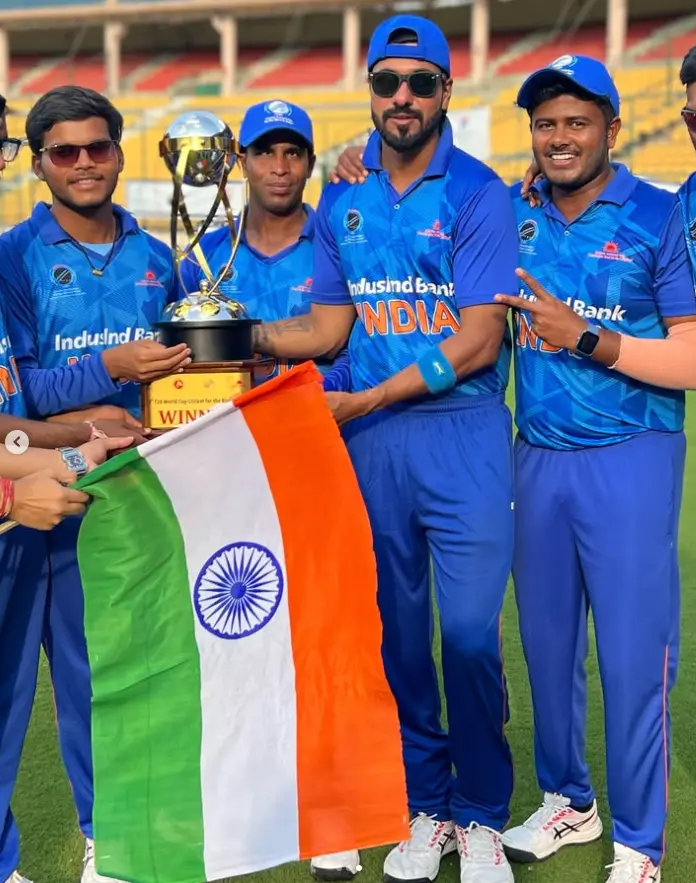
Pic Source: Instagram
It is known that at one time your game was celebrated by professional coaches and cricket stars (including meetings with Sachin Tendulkar and M.S. Dhoni). What is the main advice you have received from them?
"Ahead of the 2018 World Cup, while I was in the national camp, MS Dhoni called me. Initially, I thought someone was playing a prank on me, but then we spoke on a video call. He gave me one vital piece of advice: 'Never let stress overpower you.' He said if your stress is under control, your mind and body will remain aligned. Never worry about how you will score 12 runs off 6 balls, just believe that you will. When you play with a free mind, performance follows naturally.
Later, when I met Sachin Tendulkar sir in Delhi, he appreciated my height and build, telling me: 'Maintain strict discipline on and off the field.' He advised me to stay completely away from substance abuse, give proper rest to my body, and stay committed to discipline, because without discipline, no player can achieve greatness."
Sport has always been central to your family, and your brother Vijender performed kabaddi. How did the competitive atmosphere at home shape your winning spirit?
"In Haryana, sports like kabaddi and wrestling receive immense priority. As a kid, I used to go to the akhada with my brother, train, and play kabaddi. But watching Sachin Tendulkar and Virender Sehwag bat on TV ignited my passion for cricket. When I started out, people told me that conventional cricket would be difficult due to my vision and suggested blind cricket instead. For me, the format didn't matter as long as I got to represent India. Since my brother was an athlete himself, my family was extremely supportive. They never demotivated me; they always said, 'Go ahead, we are right behind you.' When we won the World Cup and returned home to a massive reception in our village, the entire perception of the community changed."
Delivering underarm bowls at speeds close to 140 km/h puts a huge strain on the shoulders and joints. What does your training regime look like and how do you maintain this level of physical fitness?
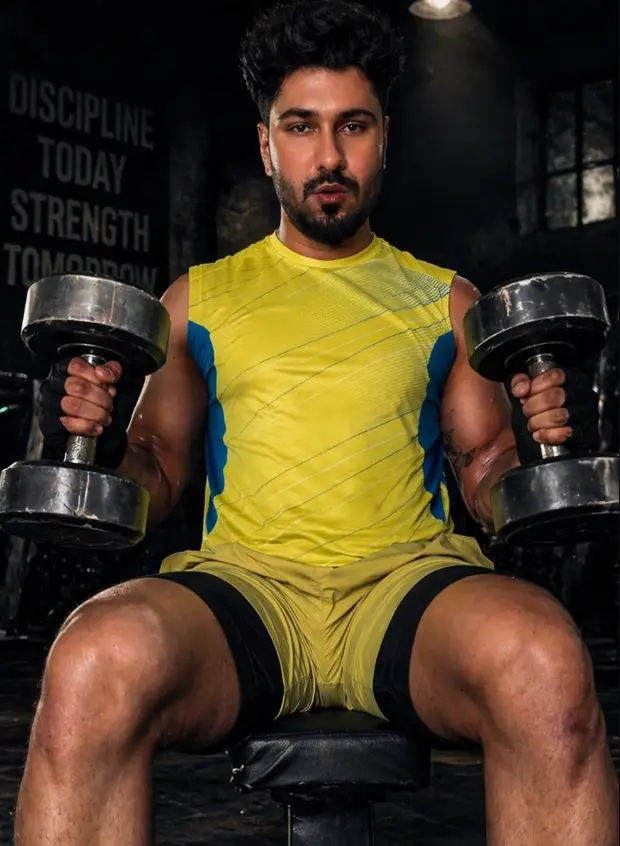
"I follow a very rigorous routine. I dedicate 2 to 2.5 hours daily to a gym session. I work with a personal trainer and focus on agility, explosive speed, and conditioning rather than traditional bodybuilding. If the morning is dedicated to gym work, the evening is reserved for a ground session where I bowl at least 20 overs (120 deliveries) in the nets at a single spot to master my line and length. To sustain that speed and avoid shoulder or joint injuries, maintaining a high-protein diet, structured strength training, and proper recovery is essential."
Pic Source: Instagram
As a batter, you are recognised for closing out games and raising the run rate from any position. How do you assess the situation on the field before launching an aggressive attack from the very first ball?
"Before stepping onto the field, I spoke clearly with my captain and coach. I tell them, 'Whether I get out for a duck or score a fifty, let me play with complete freedom.' When you have the backing of your team and captain, you can express yourself without fear. In the 2018 match against Sri Lanka, when they set a massive target of 357 runs against us, the team management gave me full freedom. I went out and scored an unbeaten 173 runs. When your mindset is positive, even the biggest targets start looking small."
You have secured victories in the T20 World Cup and the Asia Cup and earned medals at the IBSA World Games. How do you handle pressure when a tournament hinges on the final two overs of a match?
"If we need 24 to 25 runs in the last 2 overs (12 balls), we target 35 runs in our minds. The bowling side is under immense pressure too, and the trick is to exploit their nervousness. If we let the pressure get to us, the game slips away. My focus remains on finding at least a couple of runs or a boundary on every delivery. With a confident mindset, your bat swing remains clean, and the runs come naturally."
You have repeatedly raised the issue of the equipment and lack of professional fields for your category of cricket. What systemic steps are needed to ensure that young players receive the best conditions from the very beginning?
"At the end of the day, we play under the same Indian tricolour as mainstream cricketers. True cricket enthusiasts should support every form of the game. Even today, we often struggle to secure well-maintained, standard international grounds and have to play on local grounds. Whenever we win a World Cup, congratulations pour in on social media, but infrastructure at the grassroots level still needs substantial improvement. While state governments like Odisha and Haryana have extended commendable support, we need systemic backing and dedicated facilities from major cricketing bodies."
You mentioned that in the future you would like to try your hand at sports administration and management. How do you see cricket in 10 years and what role do you plan to play in it after your playing career ends?
"My immediate plan is to maintain peak fitness and represent India for another 8 to 10 years. After retirement, since cricket has given me identity and purpose, I want to give back by grooming the next generation. I plan to contribute through sports administration, establishing specialised academies, and working with associations to ensure aspiring young talent gets the right platform and guidance."
Pic Source: Instagram
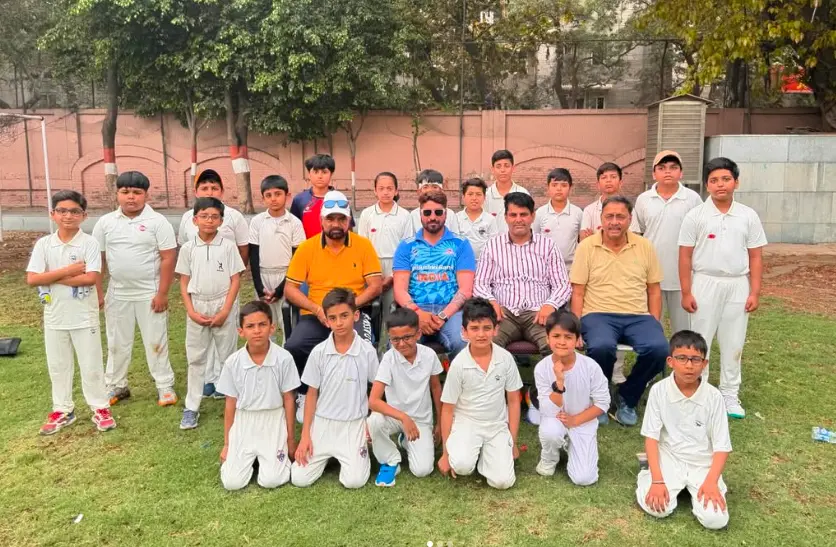
Today, you are a reference point for many young athletes at the academy and sports centres. What is the first thing you teach the younger generation of players, besides purely sports equipment?
"My foremost message to youngsters is to stay disciplined and stay far away from substance abuse, junk food, and poor lifestyle habits. Every individual has abilities and disabilities; what matters is identifying your strengths and putting in the work. Whether in sports or any other profession, wherever you get an opportunity to serve the country, do it with absolute sincerity and dedication."
Thank you Deepak for your time! The editors of Sportscafe wish you further victories on your way!
 0
0 0
0 0
0 4
4 4
4 0
0
Comments
Sign up or log in to your account to leave comments and reactions
0 Comments